Cheezy Crispy Beef Quesadillas
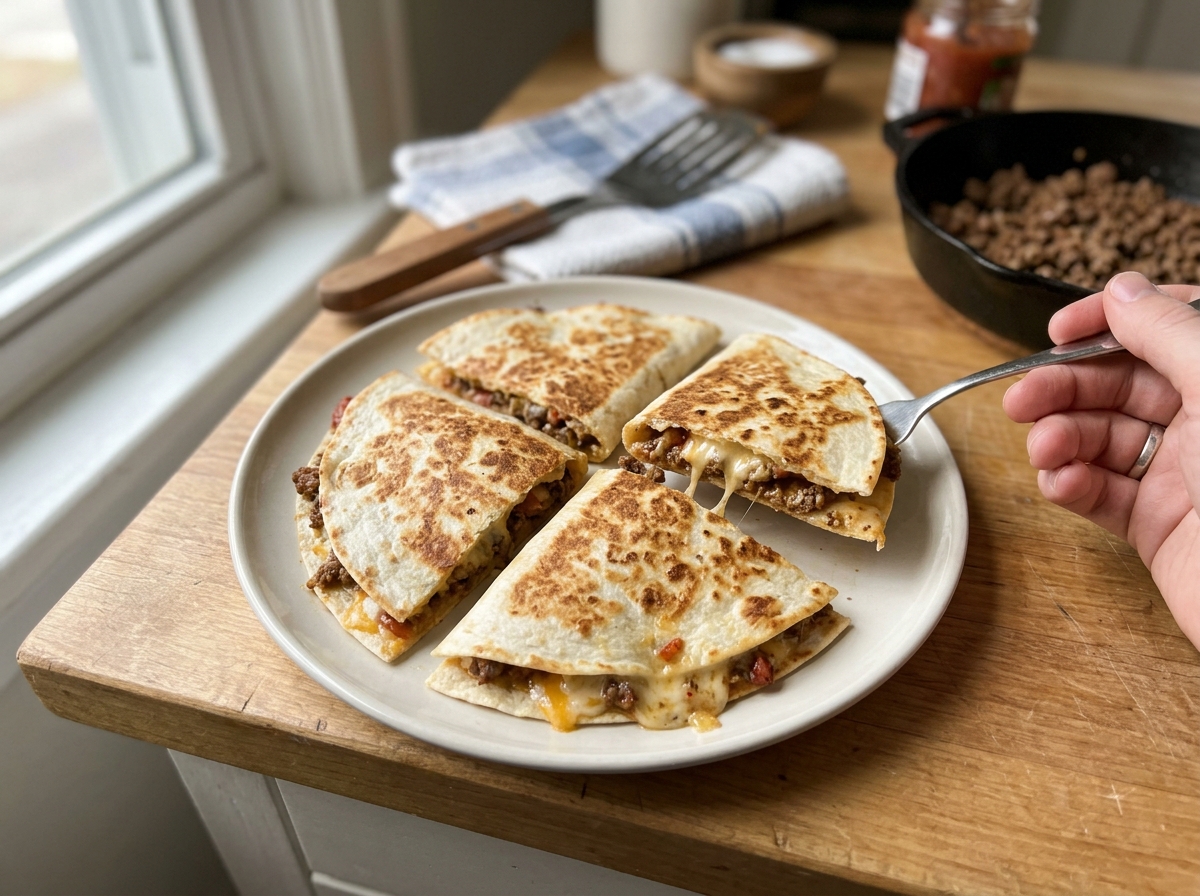
These crispy beef quesadillas are ideal for busy weeknights when you need a hot meal on the table in under thirty minutes. The secret to getting a genuinely crisp shell lies in using butter in a medium-heat skillet rather than oil at high heat. By reducing the liquid in the taco meat before assembling, the tortilla stays structural and snappy without becoming soggy from excess moisture.
The Science Behind a Crisp, Non-Soggy Quesadilla
Achieving a golden, crunchy exterior while keeping the center gooey requires balancing moisture control, fat application, and cheese placement. Standard ground beef taco filling carries excess grease and steam that quickly soften flour tortillas from the inside out. In this recipe, we drain excess fat after browning and simmer the seasoned meat until the liquid fully reduces into a thick coating. This prevents wet steam from destroying the inner surface of the flour dough.
The choice of cooking fat directly influences exterior texture. Butter contains milk solids that brown around 300°F through the Maillard reaction, producing a nutty aroma and a crisp surface faster than plain oil. Furthermore, frying over medium heat gives heat time to penetrate into the center to melt the shredded cheese without burning the wheat starch on the outside.
Cheese acts as a structural barrier in a well-built quesadilla. Placing a layer of shredded cheese both below and above the warm beef creates a double seal when melted. As the cheese melts, it binds the tortilla halves to the meat while blocking residual meat moisture from touching the flour wrapper.
Key Ingredients and Intelligent Substitutions
80/20 Ground Beef: Ground chuck with twenty percent fat yields juicy taco meat that does not dry out during the simmer. If you substitute 93/7 lean ground beef or ground turkey, add one teaspoon of olive oil during browning to make up for lost rendered fat, though the final filling will feel slightly leaner.
Flour Tortillas (8-inch): Medium flour tortillas contain enough gluten and fat to stretch and crisp without shattering. Corn tortillas can be substituted for a gluten-free option, but they require pliable warming in a dry pan beforehand and are prone to cracking when folded over thick filling.
Monterey Jack and Sharp Cheddar Cheese: Monterey Jack provides exceptional meltability and high moisture, while sharp cheddar delivers bold, salty flavor. Pre-shredded bagged cheese contains anti-caking agents like potato starch that prevent a smooth, cohesive melt; grating whole blocks yields superior texture and stretch.
Unsalted Butter: Using unsalted butter lets you control the salinity while ensuring the tortilla surface toasts evenly. Salted butter burns slightly faster due to salt crystals accelerating surface browning, though it can be used if you lower the stove burner slightly.
Mild Red Salsa: A few tablespoonfuls of salsa cooked into the beef supply acidity and tomato solids without adding loose liquid. If you replace salsa with diced fresh tomatoes, cook them down thoroughly first to evaporate raw juices that would otherwise cause soggy tortilla bottoms.
Sensory Cues for Perfect Browning and Melt
Browning the ground beef demands visual attention during the initial phase. Look for deep brown edges on the meat crumbles and listen for a distinct sizzle rather than a wet, boiling sound. When draining the pan, leave about one tablespoon of fat; this carries fat-soluble spices and coats every grain of meat during the reduction step.
When cooking down the taco seasoning, water, and salsa, watch for the liquid to transition from a thin pool to a thick glaze that clings tight to the meat. When you push a spatula through the pan, no free liquid should run back into the cleared path. Let the beef cool for five minutes before building the quesadillas; piping hot meat releases trapped steam that turns raw tortilla dough rubbery before it hits the skillet.
Listen closely while frying the filled quesadillas in butter over medium heat. You should hear a soft, steady crackle. If the butter smokes or turns dark brown instantly, your burner is too hot. Check doneness by slipping a thin spatula under the tortilla: the bottom should display a uniform golden-brown crust with dark speckled patches, and the cheese edge should be bubbling and visibly soft before flipping.
Critical Pitfalls to Avoid
Overfilling the Tortilla: Piling more than one-third cup of beef into an eight-inch tortilla prevents the top half from resting flat. Unsealed edges spill filling into the pan, making flipping impossible without losing cheese and meat to the hot surface.
Frying in Too Much Oil: Submerging quesadillas in heavy oil leads to a greasy, heavy tortilla rather than a crisp shell. Flour tortillas act like sponges; brush or melt just half a tablespoon of butter per quesadilla directly onto the pan surface for a light, crunchy shell.
Using High Heat: Cooking over high heat browns or burns the tortilla exterior within sixty seconds before the internal cheese layer reaches its melting point. Keep the flame at medium or medium-low so heat migrates inward while the crust toasts gradually.
Failing to Layer Cheese Properly: Placing all the cheese on top of the beef leaves the bottom tortilla half unanchored. Layer half the cheese under the meat and half over it to weld both sides securely together.
Adaptations for Dietary Needs and Flavor Profiles
Spicy Jalapeño and Jack: Mix two tablespoons of finely diced pickled jalapeños and a pinch of cayenne pepper into the beef mixture, and swap the standard blend for Pepper Jack cheese for an extra kick of heat.
Refried Bean and Beef Hybrid: Spread two tablespoons of warm refried black beans directly onto the tortilla half before adding cheese and beef. The starch in the beans adds substance and helps hold the lower cheese layer in place.
Sheet Pan Batch Method: When feeding a crowd, place eight open tortillas on two large parchment-lined rimmed baking sheets. Fill, fold, brush the tops with melted butter, and bake at 425°F for 12 to 15 minutes until crispy and golden, flipping once halfway through.
Storing, Freezing, and Restoring Crispness
Cool leftover cooked quesadillas completely on a wire rack for fifteen minutes so lingering heat does not create condensation inside storage containers. Store layered between sheets of parchment paper in an airtight container in the refrigerator for up to three days.
To freeze, wrap individual cooled quesadillas tightly in aluminum foil and store in a heavy-duty freezer bag for up to two months. Thaw in the refrigerator overnight before reheating for best results.
Never reheat quesadillas in a microwave unless soft, chewy tortillas are desired. To restore original crispness, warm a skillet over medium-low heat and toast the quesadilla for two to three minutes per side. Alternatively, heat in a 375°F toaster oven or air fryer for four to five minutes until the cheese inside bubbles again.
Frequently Asked Questions
Why are my quesadillas soft instead of crispy?
Soft quesadillas are usually caused by excessive moisture in the meat filling, using too much cooking fat, or frying over low heat without enough butter to brown the flour surface. Ensure your beef sauce is simmered down to a glaze and fry in a pan lightly coated with melted butter over true medium heat.
What is the best type of tortilla for quesadillas?
Standard flour tortillas (7 to 8 inches in size) are ideal because their wheat gluten and short fat content render them pliable and crisp when browned. Corn tortillas can work for gluten-free diets, but they require heating prior to folding to prevent cracking along the seam.
Can I make the ground beef filling ahead of time?
Yes, the seasoned beef filling can be cooked up to three days in advance and kept in the refrigerator. Reheat the beef slightly before assembling so it warms through completely during the pan-crisping process without over-browning the tortilla.
How do I flip a quesadilla without losing the filling?
Use the single-tortilla half-moon fold rather than stacking two separate full tortillas. Place your spatula under the rounded edge opposite the fold, support the top folded tortilla gently with your fingertips or a fork, and flip with one swift, smooth wrist movement.
Cheezy Crispy Beef Quesadillas
Ingredients
Equipment
Method
- Heat 1 tbsp vegetable oil in a large skillet over medium-high heat until shimmering.
- Add 1 lb ground beef, breaking it apart with a wooden spoon into small, uniform crumbles.
- Cook ground beef for 6 to 8 minutes until fully browned and no pink remains.
- Drain off all but 1 tablespoon of rendered fat from the skillet.
- Stir in 2 tbsp taco seasoning, 0.5 cup water, and 0.25 cup mild red salsa into the beef.
- Simmer over medium-low heat for 3 to 4 minutes until the liquid reduces and tightly glazes the beef.
- Transfer the seasoned beef to a bowl and let cool for 5 minutes.
- Melt 1 tbsp unsalted butter in a clean cast-iron skillet or griddle over medium heat.
- Place two flour tortillas flat in the skillet, moving them to coat the bottoms with melted butter.
- Sprinkle 0.25 cup shredded cheese over half of each tortilla.
- Spoon 0.33 cup taco beef over the cheese, then sprinkle another 0.25 cup shredded cheese over the beef.
- Fold the empty half of each tortilla over the filling to form half-moon shapes.
- Cook for 3 to 4 minutes on the first side until golden brown and crispy underneath.
- Flip carefully with a wide spatula and cook for another 2 to 3 minutes until the second side is golden brown and the cheese is fully melted.
- Repeat the process with the remaining butter, tortillas, cheese, and beef.
- Slice each quesadilla into three triangles and serve warm.