Southern Sausage Balls
How do you keep sausage balls from drying out into hard, floury nuggets? The secret is blending softened cream cheese directly into the raw pork sausage before adding your dry baking mix. Standard three-ingredient versions rely entirely on fat rendered from raw sausage, which often leaves the center dry while grease pools on the pan. By adding cream cheese and shredding your cheddar straight from the block, we get tender, moist bite-sized appetizers with crisp bottoms every single time.
Why This Sausage Ball Ratio Produces Moist Results
Classic sausage ball recipes call for equal parts pork sausage, baking mix, and shredded cheddar cheese. That traditional three-ingredient balance frequently turns out dry because dry biscuit mix absorbs rendered pork fat faster than the meat cooks. Adding four ounces of softened cream cheese introduces moisture and emulsified milk fat directly into the protein binder, creating a tender crumb that holds together without drying out during baking.
Block cheddar plays an equally important role in both texture and structural stability. Pre-packaged shredded cheese contains potato starch and cellulose coatings designed to prevent clumping inside the plastic bag. That anti-caking coating prevents cheese from melting smoothly into raw sausage, leaving dry spots and causing rendered fat to separate during heat exposure.
Baking at 375°F creates rapid heat transfer that sets exterior starches from the baking mix before cheese completely liquefies inside. This sets the round shape and prevents balls from flattening on the pan. A three-minute carryover rest on the hot baking sheet lets rendered juices settle back into the biscuit crumb before serving.
Key Ingredients and Smart Substitutions
Raw Bulk Pork Sausage: Use a standard 16-ounce roll of raw pork breakfast sausage, such as regular, sage, or spicy ground sausage. Do not use pre-cooked sausage links or patties because raw meat protein is required to bind dry baking mix. If using lean ground turkey sausage, add one tablespoon of melted butter to replace missing fat content.
Extra-Sharp Cheddar Cheese: Buy an eight-ounce block of sharp cheddar and shred it on the large holes of a box grater. Sharp cheddar delivers bold flavor that cuts through heavy pork spices. You can substitute sharp yellow cheddar with sharp white cheddar, Colby Jack, or Pepper Jack without altering baking times.
Biscuit Baking Mix: Store-bought mixes like Bisquick supply wheat flour, chemical leavening, and hydrogenated shortening in precise proportions. You can substitute homemade baking mix using 2 cups of all-purpose flour mixed with 3 teaspoons of baking powder, 1/2 teaspoon of salt, and 3 tablespoons of cold unsalted butter cut in thoroughly with a fork.
Cream Cheese: Standard full-fat brick cream cheese provides essential moisture and structure. Soften it at room temperature for 30 minutes so it blends smoothly without leaving cold lumps in the dough. Reduced-fat cream cheese works as a substitute, but avoid tub-style whipped cream cheese because its air bubbles alter dough density.
Garlic and Onion Powder: A quarter teaspoon of each adds savory background notes without introducing unwanted liquid to dry dough. You can substitute 1/2 teaspoon of dried Italian seasoning or omit them entirely if your bulk pork sausage is already heavily seasoned.
Visual and Texture Cues for Perfect Baking
Mixing the Dough: Combine raw sausage and softened cream cheese using clean hands or a stand mixer fitted with a paddle attachment on low speed. The mixture is properly combined when it turns into a light pink, uniform paste without white streaks of cream cheese. Adding biscuit mix next yields a thick, slightly tacky dough that pulls cleanly away from bowl walls.
Portioning and Rolling: Measure dough into 1-inch balls weighing roughly one ounce each. Use a small cookie scoop for uniform sizing so all pieces cook evenly. Roll each portion firmly between your palms until smooth; rough edges crack open in heat and leak melted cheese onto your pan.
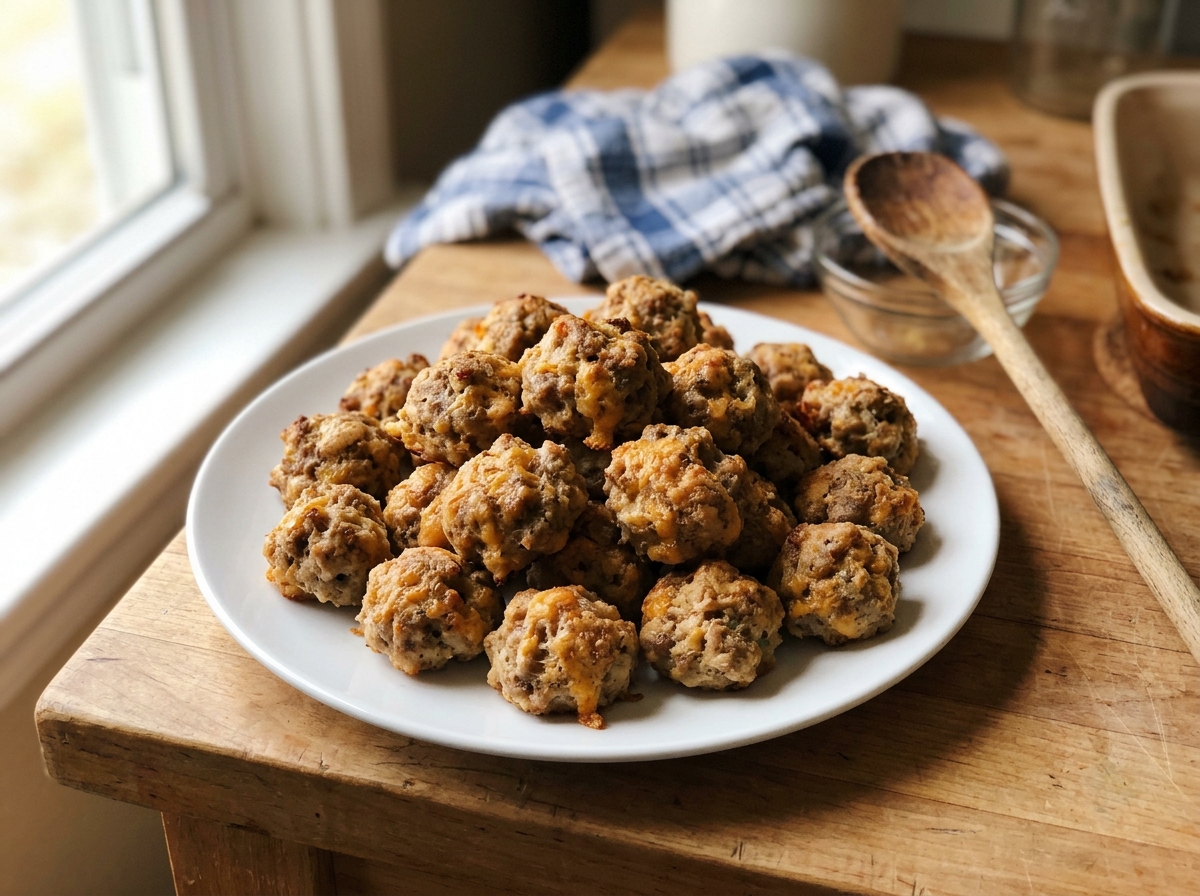
Baking Doneness Cues: Place balls 1 inch apart on a parchment-lined baking sheet. Around minute 15, you will hear a faint sizzle from rendered fat on the pan. Tops should turn light golden brown by minute 18, with rich caramel color forming underneath.
Temperature Cues: Insert a digital meat thermometer into the center of a sausage ball. Internal temperature must reach 160°F (71°C) for food safety. Remove the tray immediately once it reaches 160°F to prevent interior moisture loss.
Troubleshooting Sausage Ball Pitfalls
Using Cold Ingredients: Combining cold sausage straight from the refrigerator with cold cream cheese makes mixing dry biscuit mix difficult. Firm fat leaves dry pockets of unmixed flour in your dough. Pull sausage and cream cheese from the fridge 20 minutes before mixing so fat softens for even distribution.
Buying Pre-Shredded Bagged Cheese: Pre-shredded bagged cheese is coated in cellulose powder to prevent clumping. That powdery coating absorbs moisture and prevents cheddar from melting into raw meat. Always shred fresh cheddar from a block using a box grater for maximum binding strength.
Overbaking Past Doneness: Small bite-sized sausage balls lose interior moisture rapidly if left in the oven too long. Check internal temperature with a digital thermometer at minute 18. Remove them as soon as they reach 160°F, even if top surfaces look light in color.
Baking on Unlined Aluminum Sheets: High-fat dough sticks easily to ungreased aluminum pans, tearing off crispy bottoms during removal. Line your rimmed baking sheet with parchment paper or a silicone mat to ensure easy release and golden bottoms.
Easy Flavor Variations to Try
Spicy Pepper Jack and Jalapeño: Swap sharp cheddar for freshly shredded Pepper Jack cheese and use hot ground sausage. Fold in 2 tablespoons of finely diced fresh jalapeño peppers for extra heat and crisp vegetable texture.
Maple Sage Breakfast Balls: Use maple-flavored pork breakfast sausage and add 1/2 teaspoon of rubbed sage to dry ingredients. Subtle sweet maple notes pair exceptionally well with sharp cheddar cheese for morning breakfast spreads.
Smoked Cheddar and Bacon: Substitute half of the sharp cheddar with freshly shredded smoked cheddar cheese. Fold 1/4 cup of finely crumbled cooked bacon into finished dough for rich smoky depth.
Make-Ahead, Freezing, and Reheating Directions
Refrigeration Storage: Cool baked sausage balls completely on a wire rack. Store leftover baked balls in an airtight container lined with paper towels in the refrigerator for up to 4 days.
Freezing Raw Sausage Balls: Roll raw dough into balls and arrange them in a single layer on a parchment-lined baking sheet. Freeze until solid for 2 hours, then transfer raw balls into a heavy-duty freezer bag for up to 3 months. Bake frozen raw balls directly from the freezer at 350°F for 22 to 24 minutes without thawing.
Freezing Baked Sausage Balls: Cool baked balls completely, freeze them on a tray for 1 hour, and transfer to a sealed freezer bag for up to 2 months. Reheat frozen baked balls at 350°F for 10 to 12 minutes on a rimmed baking sheet.
Reheating Methods: Reheat refrigerated balls in a 350°F oven for 8 to 10 minutes until hot throughout. An air fryer set to 325°F for 4 to 5 minutes restores exterior crispness without drying out interior meat. Avoid microwave reheating, which turns biscuit starch rubbery.
Frequently Asked Questions
Can you make sausage balls without Bisquick?
Yes, you can easily make sausage balls without store-bought Bisquick mix. Substitute 2 cups of all-purpose flour, 3 teaspoons of baking powder, 1/2 teaspoon of salt, and 3 tablespoons of cold butter cut into the dry mix. This homemade blend replicates the rise and tender structure of boxed baking mix without purchasing packaged shortcuts.
Why did my sausage balls turn out flat?
Sausage balls flatten during baking when pork fat melts faster than flour structure sets in heat. This happens if dough is too warm when entering the oven or if pre-shredded cheese with high oil separation was used. Chill rolled raw dough in the refrigerator for 15 minutes before baking to help them retain round form.
Can I prepare sausage balls the night before?
You can assemble and roll sausage balls up to 24 hours in advance. Place rolled balls in a single layer on a parchment-lined baking sheet, cover tightly with plastic wrap, and store in the refrigerator. Bake them straight from the fridge at 375°F, adding 2 extra minutes to total baking time.
How do you keep sausage balls warm for a party?
Place baked sausage balls into a slow cooker set on warm. Line the bottom insert with a paper towel to absorb rendered fat and moisture, preventing bottom layers from becoming soggy. Keep the lid slightly vented so trapped steam escapes while maintaining serving warmth for up to 2 hours.
Southern Sausage Balls
Ingredients
Equipment
Method
- Preheat oven to 375°F (190°C) and line a rimmed baking sheet with parchment paper.
- In a large mixing bowl, combine 1 lb raw pork sausage and 4 oz softened cream cheese.
- Mix with a stand mixer on low speed or by hand until smooth and uniformly combined.
- Add 2 cups freshly shredded cheddar cheese, 1/4 tsp garlic powder, and 1/4 tsp onion powder to the sausage mixture and stir until combined.
- Add 2 cups biscuit baking mix in two batches, mixing thoroughly after each addition until a cohesive dough forms.
- Scoop mixture into 1-inch balls using a small cookie scoop or your hands.
- Roll each portion between your palms until smooth and arrange 1 inch apart on the prepared baking sheet.
- Bake at 375°F for 18 to 20 minutes until golden brown and the internal temperature reaches 160°F on a digital thermometer.
- Remove from oven and let rest on the baking sheet for 3 minutes before serving.