Southern Cornbread Dressing
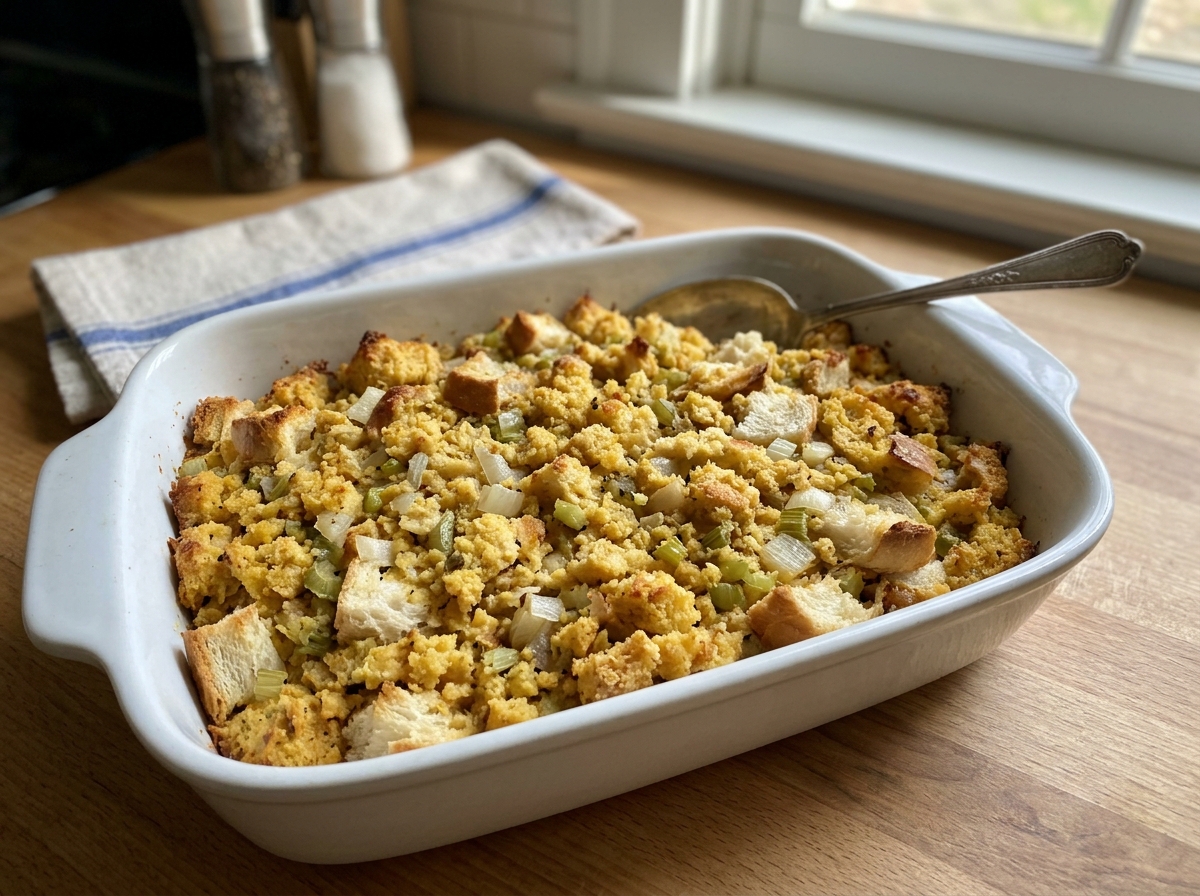
Proper Southern cornbread dressing holds its shape when scooped, revealing a custardy center underneath a crisp, deeply browned crust. We skip sweet cornbread entirely, relying instead on unsweetened buttermilk cornbread baked a day early and crumbled with stale white bread. Adding hot chicken stock and beaten eggs creates a raw mixture with the consistency of loose oatmeal, which bakes into a savory, herb-rich casserole without turning gummy.
The Science Behind a Crisp Crust and Moist Center
Traditional Southern dressing relies on two key structural components: stale, unsweetened cornbread and dried white bread. Cornbread alone lacks gluten, which means a pure cornbread dressing crumbles into paste when mixed with hot liquid. Adding stale sandwich bread supplies gluten threads that absorb turkey stock while maintaining structural integrity.
The moisture ratio dictates whether dressing turns out dry or mushy. We mix raw eggs with boiling chicken or turkey stock before pouring it over the bread crumbs. The hot stock hydrates the starches instantly, initiating gelatinization, while the eggs emulsify the fat from the melted butter and chicken skin. As the dish bakes to an internal temperature of 165°F, egg proteins coagulate around the hydrated starches, locking in moisture while setting the interior firm enough to slice.
Fat selection also changes both flavor and browning. Rendered bacon fat or butter brushed along the edges of the skillet or baking dish triggers the Maillard reaction. This chemical reaction between amino acids and reducing sugars creates a nutty, crunchy outer border that contrasts with the soft center.
Key Ingredients and Recommended Substitutions
Selecting the right foundation ingredients determines whether your dressing tastes authentic and balanced.
Unsweetened Cornbread
Yellow or white self-rising cornmeal made without added sugar provides the necessary corn flavor and sturdy crumb. Sweet Northern-style cornbread turns dressing dessert-like and breaks down too quickly. If you only have sweet cornbread mix, substitute homemade savory cornbread made from plain cornmeal, flour, baking powder, and salt.
Day-Old White Sandwich Bread
White bread acts as a binder by contributing gluten. It traps broth and keeps the cornbread from collapsing into sludge. You can swap this with stale French bread or unsweetened white biscuits, though biscuits will increase the overall butter content.
Poultry Seasoning and Rubbed Sage
Rubbed sage gives dressing its signature earthy aroma, while poultry seasoning adds thyme, marjoram, and black pepper. Dried herbs work better than fresh here because their flavor diffuses evenly through the liquid mix. If sage is unavailable, use additional poultry seasoning, though the classic Southern herbal punch will be milder.
Rich Chicken or Turkey Stock
Homemade gelatin-rich turkey stock yields the richest body and savory taste. Low-sodium store-bought chicken broth works well as a substitute, but you should stir in one tablespoon of unflavored gelatin per four cups of broth to match the mouthfeel of homemade stock.
Visual and Sensory Cues for Every Cooking Stage
Relying on physical cues ensures your dressing reaches the right consistency before it ever enters the oven.
When sauteing the onions and celery in butter, watch for the celery to turn translucent and soft without browning the edges. You should hear a soft sizzling sound as water evaporates from the vegetables. This step softens the plant cell walls so the aromatics blend seamlessly into the bread base.
When combining the crumbled breads and warm stock, look for a texture similar to wet cornbread batter or thick raw oatmeal. If you push a spoon into the center of the mixing bowl, liquid should pool slightly around the edges of the spoon without running freely across the surface. If the mixture looks like dry bread cubes, add more warm stock half a cup at a time.
Bake uncovered at 375°F for 45 to 50 minutes. The top is ready when it turns deep golden brown and feels firm to a light finger tap. An instant-read thermometer inserted into the center should read 165°F, and a toothpick inserted near the middle should come out clean without wet raw batter attached.
How to Fix Common Dressing Mistakes
A few missteps can turn a batch of dressing dry, heavy, or soggy. Here is how to avoid and fix them.
Using Fresh, Soft Bread: Fresh bread contains too much water and turns into a pasty mass when broth is added. Always dry your cornbread and white bread. Cube or crumble the bread and bake it on sheet pans at 275°F for 20 minutes, or let it sit open on the counter overnight.
Under-Salting the Liquid Base: Bread absorbs salt quickly, making raw dressing taste saltier than the baked finished product. Taste your broth before mixing it in; it should taste slightly more seasoned than a drinkable soup. If your baked dressing tastes bland, sprinkle a bit of warm salted turkey gravy over individual portions.
Baking a Dry Pan: If you under-calculate stock, the top dries into hard croutons while the bottom stays dry. To fix dry dressing mid-bake, pour half a cup of hot broth evenly over the top layer during the last 15 minutes of baking, then cover loosely with foil to trap steam.
Over-Packing the Baking Dish: Pressing the mixture tightly into the pan compacts the starches, resulting in a dense, rubbery block. Scoop the wet mixture loosely into the buttered baking dish using a large spoon, smoothing only the top surface gently.
Flavor and Dietary Variations
Southern Sausage Dressing: Brown 1 pound of breakfast pork sausage in a skillet, drain half the fat, and fold the cooked meat into the bread crumbs along with the sauteed vegetables before adding liquid. This adds savory saltiness and extra fat.
Giblet Dressing: Simmer turkey giblets and neck in four cups of water for one hour. Chop the cooked liver, heart, and gizzard finely, then fold them and the strained broth into the cornbread base for traditional deep flavor.
Gluten-Free Dressing: Replace the white sandwich bread with an equal weight of dry gluten-free white bread or homemade gluten-free cornbread made entirely from cornmeal and gluten-free flour blend. Check that your broth and poultry seasoning are certified gluten-free.
Make-Ahead Steps, Freezing, and Reheating
Make-Ahead Instructions: You can bake the cornbread up to three days in advance and keep it sealed at room temperature. You can also assemble the unbaked dressing, cover the dish tightly with plastic wrap, and store it in the refrigerator for up to 24 hours. Add 10 minutes to the total baking time if cooking straight from the fridge.
Storage: Store leftover baked dressing in an airtight container in the refrigerator for up to 4 days. Do not leave baked dressing at room temperature for more than two hours.
Freezing: Freeze fully baked and cooled dressing in freezer-safe glass or aluminum pans wrapped tightly in foil for up to 3 months. Thaw overnight in the refrigerator before reheating.
Reheating: Reheat baked dressing in a 350°F oven covered with foil for 20 minutes, then uncover for 5 minutes to restore the crispy top crust. For single portions, microwave on high in 45-second intervals, drizzling a spoonful of warm broth over the top to keep it moist.
Frequently Asked Questions
Can I make cornbread dressing without eggs?
Eggs bind the dressing and set the custard-like center. If you must skip eggs, substitute two tablespoons of cornstarch whisked into half a cup of cold broth, or use a commercial egg replacer. The texture will be slightly less firm, but it will hold together when baked.
Why did my cornbread dressing turn out mushy?
Mushy dressing happens when too much broth is added or when soft, fresh bread is used instead of dry, stale bread. It can also occur if the casserole is covered with foil during the entire baking time, which traps steam. Bake uncovered during the final 20 minutes to allow moisture to evaporate.
Is cornbread dressing the same as stuffing?
Stuffing is cooked inside the cavity of a turkey or chicken, absorbing juices as the bird roasts. Dressing is baked separately in a casserole dish or cast-iron skillet. Dressing usually yields a crispier exterior and a lighter overall texture than stuffing.
Should dressing be baked covered or uncovered?
Bake dressing uncovered at 375°F to ensure the top layer browns and turns crispy while moisture bakes off. If the top browns too quickly before the center reaches 165°F, tent a sheet of aluminum foil loosely over the pan for the remaining minutes.
Southern Cornbread Dressing
Ingredients
Equipment
Method
- Preheat oven to 375°F (190°C) and grease a 9x13-inch baking dish with 1 tablespoon of softened butter.
- Combine 6 cups crumbled unsweetened cornbread and 3 cups torn stale white bread in a large mixing bowl.
- Melt 7 tablespoons of butter in a large skillet over medium heat.
- Add 1.5 cups chopped yellow onion and 1 cup chopped celery to the skillet and cook for 8 to 10 minutes until vegetables are soft and translucent.
- Stir 1.5 teaspoons poultry seasoning, 1 teaspoon rubbed sage, 1 teaspoon salt, and 0.5 teaspoon black pepper into the vegetable mixture and cook for 1 minute until fragrant.
- Transfer the warm vegetable and spice mixture into the bowl with the crumbled breads and stir gently to distribute.
- Whisk 3 large eggs into 3.5 cups of warm chicken stock in a separate pitcher or bowl.
- Pour the stock and egg mixture over the bread mixture and fold gently with a large spoon until fully saturated.
- Transfer the wet dressing mixture into the prepared 9x13-inch baking dish and smooth the top lightly without pressing down.
- Bake uncovered at 375°F for 45 to 50 minutes until the top is golden brown and the internal temperature reaches 165°F.
- Remove from the oven and let rest for 10 minutes before serving warm.