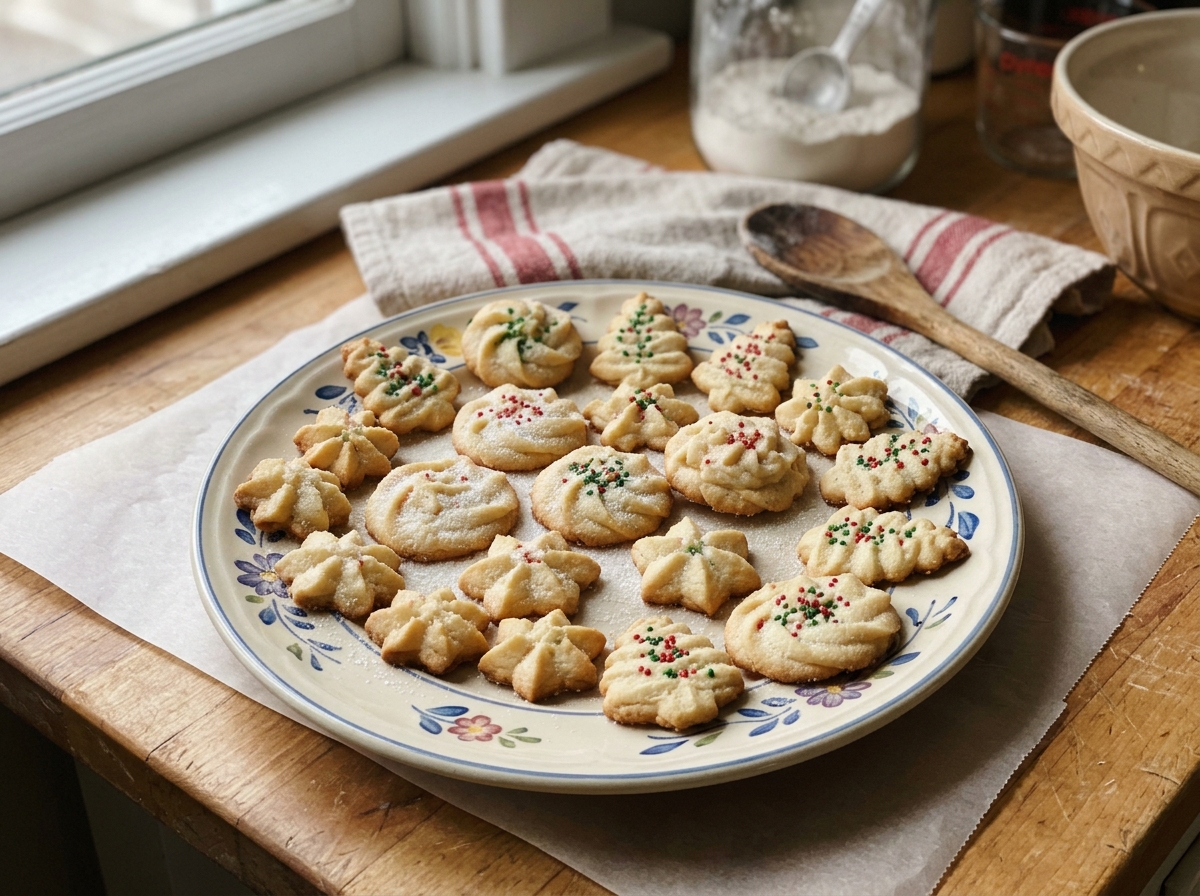
Classic Spritz Cookies
Pressing spritz cookies often turns frustrating when dough sticks to the barrel or refuses to release onto the pan. We solve this by controlling butter temperature to exactly 65°F and skipping dough chilling entirely. This precise temperature creates a pliable emulsion that sticks to bare aluminum sheets while holding crisp, defined ridges in the oven.
The Science of Pressable Butter Dough
Spritz cookies rely on a fragile balance between fat structure, moisture content, and surface adhesion. Softened butter at 65°F maintains just enough solid fat crystal structure to trap air during creaming without liquefying. If butter warms past 70°F, oil separates from milk solids, causing pressed designs to slump and spread flat across the sheet under oven heat.
Limiting dough moisture is critical for proper press mechanics. Using an egg yolk instead of a whole egg supplies rich fat and natural lecithin emulsifiers while cutting out egg white water. Excess water hydrates flour proteins, generating gluten strands that make dough elastic. Elastic dough pulls back into the press nozzle rather than breaking cleanly onto the baking pan.
Physical surface adhesion makes or breaks the pressing process. Raw spritz dough requires direct contact with ungreased, cool metal surfaces to grip and release from the press disc pattern. Grease, parchment paper, or silicone baking mats destroy surface friction, causing extruded dough to lift off the pan when you raise the press cylinder.
The fat-to-flour ratio determines final crumb firmness. A high fat proportion relative to flour yields a tender shortbread texture that snaps cleanly under light pressure. Excess flour dries the mixture, causing extruded shapes to crack before reaching the baking pan surface.
Key Ingredients and Smart Substitutions
Unsalted Butter: Real butter with 80% to 82% milk fat provides necessary structural body and flavor. Avoid margarine or spreadable butter; high water content creates gummy dough that clogs press discs. Substitution: European-style butter (83% butterfat) works well and yields sharp cookie edges, though dough feels slightly firmer to press.
Granulated Sugar: Fine white sugar dissolves evenly during creaming, adding crispness as it caramelizes in the oven. Avoid brown sugar or liquid sweeteners, which introduce excess moisture and ruin shape definition. Substitution: Superfine caster sugar integrates even faster during creaming without changing moisture levels.
Egg Yolk: A single large egg yolk binds ingredients and enriches dough while keeping water content low. Substitution: Use 1 tablespoon of heavy whipping cream if an egg allergy is present. Note that cream adds extra moisture, so cookies spread slightly more in the oven.
Almond and Vanilla Extracts: Pure vanilla extract paired with pure almond extract produces the distinct bakery aroma classic to spritz cookies. Substitution: Swap almond extract for 1/2 teaspoon of pure lemon extract or anise extract for regional flavor variations.
All-Purpose Flour: Standard unbleached all-purpose flour (10-11% protein content) forms strong enough walls to preserve intricate disc shapes. Substitution: Use a 1-to-1 gluten-free baking flour blend containing xanthan gum; allow dough to sit 5 minutes before pressing to absorb liquids fully.
Step-by-Step Pressing and Baking Cues
Cream butter and sugar on medium speed for three minutes. Stop when mixture turns pale yellow and creamy. Over-creaming incorporates excess air pockets, which expand rapidly in the oven and cause intricate cookie designs to collapse downward during baking.
Mix in flour in two batches on low speed just until dry streaks vanish. The finished dough should feel pliable and soft, similar to clean playdough. If dough feels greasy, butter has warmed too much; set bowl in the refrigerator for five minutes to restore firmness.
Pack dough into the press barrel tightly using a spoon to prevent air pockets. Air gaps cause broken shapes and inconsistent extrusion. Attach disc, hold press flat against an ungreased aluminum sheet at 90 degrees, and click handle once.
Hold press steady for one second after clicking, then pull straight upward. The dough must stick firmly to raw metal. Bake at 375°F for 6 to 8 minutes; remove when bottoms display light golden coloring while tops remain pale with crisp ridges.
How to Avoid Common Spritz Failures
Mistake 1: Greasing baking sheets or using parchment paper. Extruded dough slides around with the press nozzle instead of separating cleanly. Fix: Use clean, completely bare aluminum pans wiped free of oil and residue.
Mistake 2: Chilling dough in the refrigerator. Cold butter hardens, making dough impossible to force through patterned disc slits without breaking press mechanisms. Fix: Keep dough at comfortable room temperature (68°F to 72°F) throughout pressing.
Mistake 3: Reusing warm baking sheets between batches. Heat from freshly baked pans melts butter in press tips before dough touches metal. Fix: Cool sheets under cold running tap water and dry completely before pressing next batch.
Mistake 4: Adding excess flour to fix soft dough. Flour over-addition turns dough crumbly and dry, causing pressed shapes to split. Fix: Let soft dough rest five minutes on counter to allow flour starches to absorb fat naturally.
Flavor and Decorative Variations
Chocolate Spritz: Replace 1/4 cup of all-purpose flour with 1/4 cup of Dutch-process unsweetened cocoa powder. Sift cocoa with remaining flour to eliminate small clumps before mixing into wet ingredients.
Citrus Cardamom Spritz: Mix 1 teaspoon of freshly grated lemon zest and 1/2 teaspoon of ground cardamom into butter-sugar mixture during creaming phase. Citrus oils enhance rich butter flavors without adding moisture.
Colored Festive Spritz: Separate finished dough into portions and fold in gel food coloring using a rubber spatula. Avoid liquid food dyes, which alter dough moisture. Top pressed raw cookies with colored sanding sugar prior to baking.
Storage, Freezing, and Make-Ahead Steps
Room Temperature Storage: Cool cookies completely on wire racks. Store in airtight metal tins or plastic containers with parchment paper between layers for up to two weeks at room temperature.
Freezing Baked Cookies: Pack completely cooled cookies into rigid plastic containers separated by wax paper sheets. Freeze up to three months; thaw at room temperature for fifteen minutes before serving.
Freezing Unbaked Dough: Shape unpressed dough into thick logs, wrap tightly in plastic wrap and aluminum foil, and freeze up to two months. Thaw completely at room temperature until dough reaches 65°F before loading into press barrel.
Frequently Asked Questions
Why are my spritz cookies spreading and losing their detailed shape?
Spritz cookies spread when the butter is too warm, the dough is over-creamed, or the baking sheets are hot. Warm butter melts prematurely in the oven, destroying the structural ridges. Keep butter at 65°F during mixing, cream for no more than three minutes, and use completely cooled baking sheets.
Can I use parchment paper or silicone mats for spritz cookies?
No, spritz dough requires direct adhesion to raw metal to pull away from the press nozzle. Parchment paper and silicone baking mats create a non-stick surface that causes extruded dough to lift up with the press barrel. Stick strictly to ungreased aluminum pans for clean shape release.
Why does dough get stuck or fail to extrude from the cookie press?
Dough sticks inside the barrel when trapped air pockets disrupt extrusion pressure or when the dough gets too cold and stiff. Pack dough tightly into the cylinder using a spoon to eliminate air voids. If dough feels overly firm, let it sit at room temperature for five minutes before pressing.
What type of cookie press works best for consistent cookie shapes?
Clear plastic or metal ratchet-style presses with a hand trigger offer the most consistent pressure per click. Screw-top twist presses work fine but require manual estimation of extruded dough volume. Ensure your press discs are flat and clean so dough pushes through evenly.
Classic Spritz Cookies
Ingredients
Equipment
Method
- Preheat your oven to 375°F (190°C) and set aside two ungreased, cool aluminum baking sheets.
- Add 1 cup of softened unsalted butter and 3/4 cup of granulated sugar to a large mixing bowl.
- Beat the butter and sugar on medium speed for 3 minutes using an electric mixer until pale and creamy.
- Add 1 large egg yolk, 1 teaspoon of vanilla extract, and 1/2 teaspoon of almond extract to the butter mixture.
- Beat on medium-low speed for 1 minute until completely incorporated and smooth.
- Whisk 2 1/4 cups of all-purpose flour and 1/2 teaspoon of sea salt together in a small bowl.
- Add half of the flour mixture to the wet ingredients and mix on low speed just until combined.
- Add the remaining flour mixture and mix on low speed until a cohesive, soft dough forms without dry streaks.
- Pack a portion of dough tightly into your cookie press barrel, pressing down to remove air pockets.
- Attach your desired patterned disc and screw the bottom ring securely onto the press.
- Hold the press vertically against an ungreased aluminum sheet and squeeze the trigger once to extrude dough.
- Lift the press straight up off the sheet, leaving the extruded cookie shape intact on the metal pan.
- Repeat pressing cookies about 1 inch apart across the entire ungreased baking sheet.
- Bake at 375°F for 6 to 8 minutes until cookie bottoms turn light golden brown while tops stay pale.
- Remove sheet from oven and let cookies set on the hot pan for 2 minutes.
- Transfer cookies with a thin spatula onto wire cooling racks to cool completely.