Slow Cooker Ham and Potato Soup
Most slow cooker potato soups end up watery or separate into an oily mess because cold dairy sits in the slow cooker for hours. We solve this by cooking the potatoes and ham in broth first, mashing a portion for natural starch body, and whisking in a quick butter-flour stovetop roux with evaporated milk during the final thirty minutes. This produces a silky, rich soup base that never curdles or turns grainy.
The Culinary Mechanics of a Non-Separating Soup
Slow cookers excel at breaking down root vegetables, but they create a hostile environment for dairy products. Extended heat breaks down milk proteins, causing fat solids to separate into an unappealing film on top of thin broth. To overcome this, our recipe uses a two-phase cooking method that separates starch extraction from dairy emulsification.
Russet potatoes contain high levels of amylose starch. As the diced russets simmer in chicken stock under sealed low heat, their cell walls soften and release starch into the surrounding liquid. Mashing roughly half of the cooked potatoes directly inside the slow cooker stoneware frees bound starch granules, thickening the broth without excess flour.
The remaining structure comes from a quick butter-and-flour roux combined with canned evaporated milk cooked separately on the stovetop. Evaporated milk has sixty percent of its water content removed, which concentrates its protein structure and makes it resistant to curdling. Whisking this warm roux mixture into the slow cooker for the last thirty minutes allows the starch molecules to trap fat droplets, securing a smooth finish that holds up during storage and reheating.
Ingredient Selections and Smart Substitutions
Choosing the right potato variety and ham cut makes the difference between a structured soup and a pot of watery liquid. Here is what you need to know about the core ingredients before shopping.
- Russet Potatoes: Starchy Russet potatoes are mandatory for this recipe. Their dry texture causes them to break down easily when mashed, creating a naturally thick broth while maintaining soft chunks. Yukon Golds work as an acceptable substitute, though they yield a slightly waxier texture. Avoid red skin potatoes, as their high moisture and low starch content prevent proper liquid thickening.
- Diced Cooked Ham or Leftover Ham Bone: A smoked ham shank or leftover holiday ham bone adds deep, savory flavor to the broth while it simmers. If using a leftover bone, leave plenty of meat attached, or add two cups of diced smoked ham to the pot. Boneless diced ham steaks provide good meat density, but lack the collagen gelatin that a bone contributes.
- Low-Sodium Chicken Broth: Using low-sodium broth is critical because ham releases significant salt as it cooks. Full-sodium store-bought broths combined with cured ham often make the finished soup overly salty. Vegetable stock works as a substitute, though it lacks chicken stock’s background depth.
- Evaporated Milk: Unsweetened evaporated milk adds creaminess without excess fat, and its thermal stability prevents curdling in the crockpot. If substituting, use heavy cream added in the final fifteen minutes. Do not use non-fat skim milk, as it lacks sufficient fat to form a stable emulsion.
- Sharp Yellow Cheddar Cheese: Shredding your own block of sharp cheddar ensures seamless melting. Pre-shredded bagged cheese is coated in cellulose powder, which creates a chalky texture when melted into hot soup broth.
Visual Doneness Cues and Timing Milestones
Relying solely on clock times can lead to overcooked potatoes or under-extracted flavors. Use these visual and tactile signs to check your soup at every step.
Searing the Aromatics
Before putting vegetables into the slow cooker liner, cook the diced onions, celery, and garlic in melted butter until the onions turn translucent. You should smell a sweet, savory aroma after about five to seven minutes. Skipping this step leaves raw onion bite in the finished soup.
Testing Potato Doneness
Insert a fork directly into a large potato cube through the steam. The tines should slide in with zero resistance, and the potato piece should crack slightly under light pressure. If the center feels firm, cover the crockpot and cook on LOW for thirty more minutes.
Mashing for Texture
When mashing half the pot with a hand potato masher, look for a thick, cloudy broth with distinct half-inch potato chunks remaining. Do not use an immersion blender; mechanical shearing breaks starch cells too aggressively, transforming the soup into a gummy paste.
Incorporating the Dairy
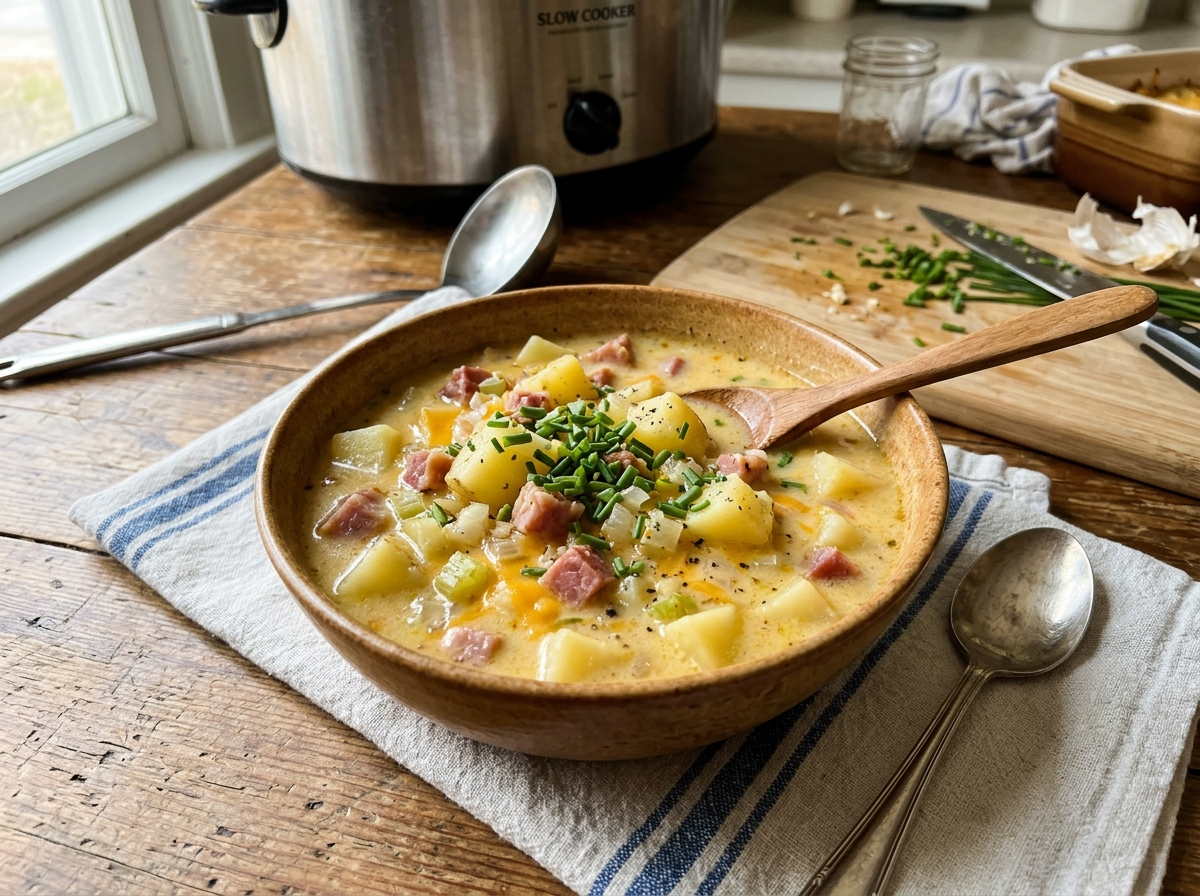
After whisking the roux and evaporated milk into the slow cooker, cover and cook on HIGH for twenty minutes. The soup is ready when small bubbles form along the stoneware rim, and the liquid coats the back of a spoon thick enough that a line drawn through it remains clear.
Four Common Mistakes to Avoid
Avoid these four frequent errors to guarantee a smooth, well-balanced pot of soup every time.
- Adding Dairy at the Start: Pouring milk, cream, or cheese into the slow cooker at the beginning of a long cook cycle causes proteins to break down and curdle into an oily liquid. Always add dairy elements during the final thirty minutes of cooking.
- Using Pre-Shredded Bagged Cheese: Bagged shredded cheese contains anti-caking agents that hinder melting. These additives prevent cheese proteins from fusing smoothly into the soup, resulting in a gritty texture. Grate a fresh block of cheddar on a box grater instead.
- Cutting Potatoes into Uneven Sizes: If potato pieces range from tiny bits to huge chunks, small pieces dissolve into sludge long before large pieces soften. Aim for uniform half-inch cubes so everything cooks evenly.
- Salting the Pot Too Early: Ham is inherently salty and releases sodium continuously into the broth. Adding salt at the beginning often leads to an oversalted soup. Wait until the cheese melts at the end, taste the broth, and adjust seasoning only if necessary.
Flavor and Dietary Variations
Customize the base recipe to suit your dietary needs or flavor preferences using these tested adjustments.
- Broccoli and Smoked Gouda Variation: Replace one cup of diced potatoes with two cups of small broccoli florets. Add broccoli during the last forty-five minutes of cooking so it stays bright green and tender. Swap half of the sharp cheddar cheese for shredded smoked gouda to complement the smoky ham.
- Loaded Baked Potato Style: Reduce diced ham to one cup and stir in six strips of cooked, crumbled bacon right before serving. Top individual bowls with chopped fresh chives, sour cream, and extra shredded cheddar cheese.
- Spicy Poblano and Corn Ham Chowder: Dice one medium poblano pepper and sauté it alongside the onions and celery. Add one cup of sweet corn kernels into the slow cooker at the start of cooking. Replace black pepper with half a teaspoon of ground cumin and a dash of cayenne pepper for a subtle smoky kick.
Storage, Freezing, and Reheating Guidelines
Proper handling preserves the smooth texture of this soup for weekday lunches or advance prep.
Refrigeration: Cool the soup to room temperature for no longer than one hour. Transfer into airtight containers and store in the refrigerator for up to four days. As it chills, natural potato starches will cause the soup to thicken significantly.
Freezing Considerations: Potato soups containing dairy can change texture after freezing, as water separates from potato starches and fat molecules. If freezing, prepare the soup through the slow-cooking step without adding the roux, evaporated milk, or cheese. Freeze the potato and ham broth base in airtight containers for up to three months. Thaw overnight in the fridge, heat on the stovetop, and whisk in the freshly prepared roux, evaporated milk, and cheese just before serving.
Reheating: Reheat individual portions in the microwave on medium power in ninety-second intervals, stirring between cycles. For larger quantities, warm the soup in a heavy saucepan over low heat on the stovetop. Stir frequently and add a splash of warm chicken broth to loosen the texture without breaking the dairy emulsion. Never bring stored soup to a rapid boil, as harsh heat causes cheese to break.
Frequently Asked Questions
Can I make this slow cooker ham and potato soup on HIGH instead of LOW?
Yes, cook the soup on HIGH for 3 to 4 hours instead of LOW for 6 to 8 hours. Ensure the Russet potatoes are fully tender and easily pierced with a fork before proceeding with the mashing and dairy steps. Cooking on LOW yields tenderer ham meat, but HIGH works well when time is limited.
Why is my slow cooker potato soup thin and watery?
Thin soup usually results from using low-starch waxy potatoes like red skins, skipping the potato mashing step, or adding excess liquid. Russet potatoes provide essential starches that thicken liquid when partially mashed. If your soup remains thin after adding the roux and dairy, simmer uncovered on HIGH for twenty minutes or stir in a slurry of two teaspoons cornstarch mixed with two tablespoons cold water.
Can I use heavy cream instead of evaporated milk?
Heavy cream makes a rich substitution for evaporated milk. Add one cup of heavy cream along with the butter-flour roux during the last thirty minutes of cooking. Avoid boiling the soup after adding heavy cream to keep the fat from separating.
What is the best way to use a leftover ham bone in this soup?
Nestled in the center of the slow cooker stoneware with the potatoes, stock, and vegetables, a ham bone releases gelatin and smoky flavor into the broth as it simmers. Remove the bone before mashing the potatoes, scrape off any tender meat clinging to it, chop the meat, and return it to the pot.
Slow Cooker Ham and Potato Soup
Ingredients
Equipment
Method
- In a medium skillet over medium heat, melt 1 tablespoon of butter and sauté the diced onion, celery, and garlic for 5 to 7 minutes until soft and translucent.
- Transfer the sautéed vegetables into a 6-quart slow cooker stoneware liner.
- Add the diced Russet potatoes, diced cooked ham, freshly ground black pepper, and low-sodium chicken broth to the slow cooker, stirring to combine.
- Cover and cook on LOW for 6 hours (or HIGH for 3 to 4 hours) until the potatoes are completely fork-tender.
- Using a hand potato masher, mash roughly half of the potatoes directly inside the slow cooker to thicken the broth while leaving whole potato chunks intact.
- In a small saucepan over medium heat, melt the remaining 2 tablespoons of butter, whisk in the flour, and cook for 1 minute until bubbling.
- Gradually whisk the evaporated milk into the roux saucepan and cook for 2 minutes until hot and slightly thickened.
- Pour the warm milk roux mixture into the slow cooker and stir thoroughly to combine.
- Cover and cook on HIGH for 20 to 30 minutes until the soup is hot and bubbling around the edges.
- Turn off the heat, stir in the freshly grated sharp cheddar cheese until melted and smooth, taste for seasoning, and add salt if needed.
- Ladle into warm bowls and garnish with chopped fresh chives before serving.