Make-Ahead Cheesy Scalloped Potatoes
Yes, you can assemble cheesy scalloped potatoes up to 24 hours in advance without the raw potatoes turning grey or the cream sauce separating. The secret is simmering the sliced potatoes directly in a lightly thickened cheese sauce for five minutes before transferring them to your baking dish. This par-cooking step coats each slice in protective fat and starch, sealing out oxygen and locking in smooth moisture so your dish bakes evenly on cooking day.
Why This Make-Ahead Method Keeps Potatoes Fresh and Creamy
Making scalloped potatoes ahead of time usually fails for two distinct reasons: raw potato slices oxidize and turn an unappealing dark grey, or the cold dairy separates into watery curds during baking. We solve both problems through starch management and emulsion control.
Simmering 1/8-inch potato slices in the warm, roux-based cheese sauce for 5 minutes coats the cell walls of the potato. This prevents air exposure, stopping enzymatic browning instantly. At the same time, the starch released from the potatoes naturally thickens the sauce, creating a stable bond between the milk proteins and butter fats.
When you chill the assembled dish overnight, the starches gelatinize and set. When baked the next day, the sauce heats gradually without breaking, yielding a smooth sauce with distinct potato layers instead of a watery casserole.
Key Ingredients for Sturdy Layers and a Smooth Sauce
Choosing the right potato and cheese combination determines whether your dish holds its shape or turns into mush. Here is what to look for at the grocery store.
Yukon Gold Potatoes
Yukon Golds have a medium starch content and thin skin, holding their shape through par-cooking and baking while offering a naturally buttery texture. Russet potatoes absorb more liquid but tend to break down and fall apart during long baking times. If you substitute Russets, slice them slightly thicker (3/16 inch) to prevent them from becoming mushy.
Sharp Yellow Cheddar Cheese
Block cheddar provides robust flavor and melts smoothly when freshly grated. Pre-shredded bag cheese contains anti-caking agents like cellulose, which prevent proper melting and create a gritty sauce texture. Gruyère makes an excellent substitute for cheddar, adding a nuttier profile, though it is slightly higher in fat and price.
Whole Milk and Heavy Cream
A half-and-half ratio of whole milk and heavy cream gives enough fat to prevent curdling under heat without making the dish unpleasantly greasy. Using all whole milk reduces calories but increases the risk of sauce separation. If you use half-and-half liquid as a shortcut, whisk in an extra half-tablespoon of flour to compensate for the lower fat content.
Unsalted Butter and All-Purpose Flour
A classic roux of equal parts butter and flour builds the structure of the sauce. The flour coats the milk proteins, protecting them from curdling when exposed to acid or prolonged heat. Do not skip the flour, as a pure cheese-and-cream sauce will break when stored overnight in the refrigerator.
Step-by-Step Cues for Sauce and Baking Accuracy
Relying on kitchen timers alone can lead to undercooked centers or scorched tops. Use these visual and physical cues at each critical stage of preparation.
Building the Sauce: After cooking the butter and flour for 1 minute, the mixture should bubble softly and smell faintly nutty without taking on brown color. When whisking in the warm milk and cream, bring it to a bare simmer until it coats the back of a wooden spoon. A line traced through the sauce on the back of the spoon should hold its shape clean for 3 seconds.
Par-Cooking the Slices: Add the potato slices to the simmering sauce and stir gently with a silicone spatula. After 5 minutes, the edges of the potato slices will look slightly translucent while the centers remain opaque. The sauce will feel noticeably thicker as surface starches release into the pan.
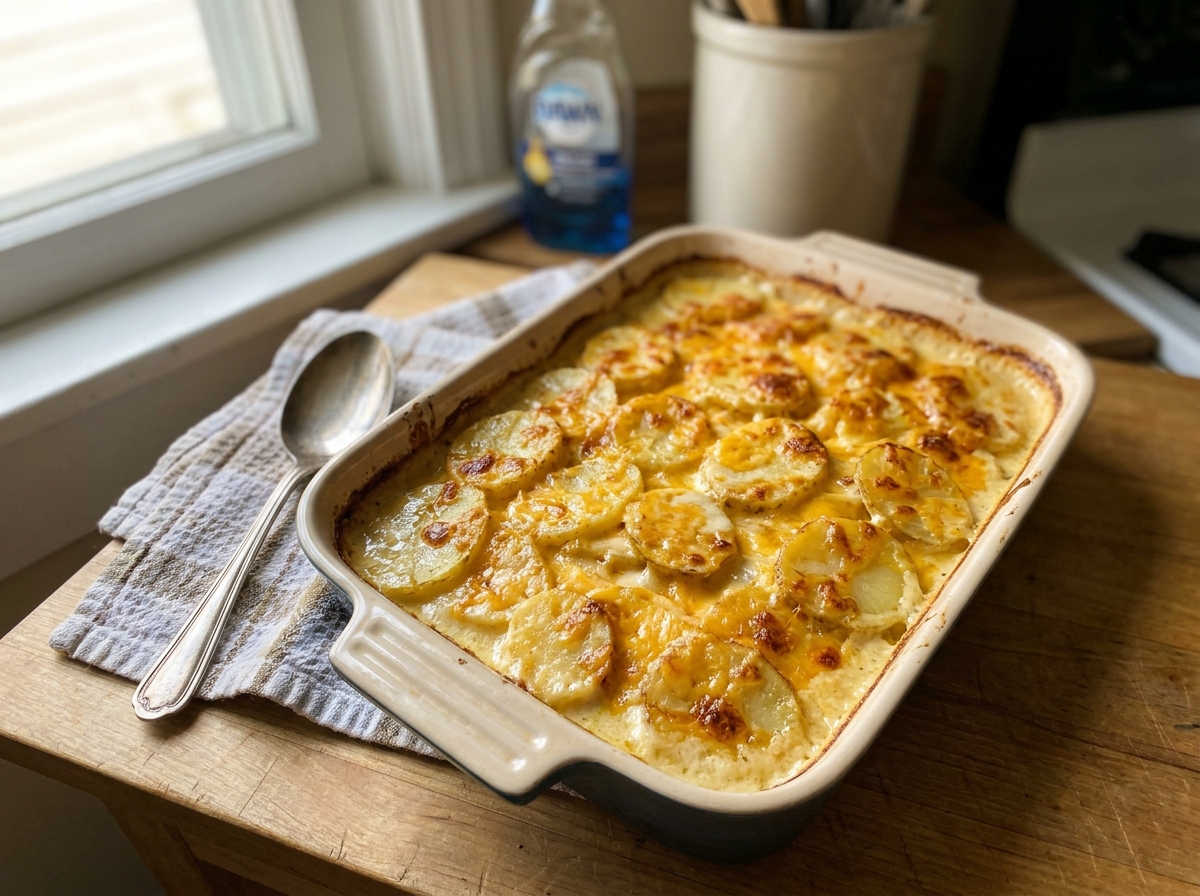
Baking and Resting: Bake covered with aluminum foil for 45 minutes, then uncover for 25 to 30 minutes. The casserole is done when the top crust turns deep golden brown, and the sauce bubbles vigorously around the pan edges. Insert a thin paring knife into the center; it should slide through all potato layers with zero resistance. Let the dish sit uncovered for 15 minutes before serving to allow the sauce to set into clean slices.
How to Avoid Curdling, Grey Potatoes, and Raw Centers
Avoid these common cooking pitfalls to ensure your make-ahead casserole comes out perfect every time.
Layering raw potatoes into cold liquid: Placing raw potato slices straight into cold milk and baking causes two problems. The potatoes release water as they heat, diluting the sauce, and the top potatoes turn grey before the baking heat penetrates the dish. Always par-cook the potatoes in the warm sauce before layering.
Using pre-shredded cheese: Potato starch coated with cellulose from pre-shredded bagged cheese will not integrate with the milk fats. Shred your cheese from a block using a box grater for a smooth, cohesive texture.
Baking cold straight from the fridge: If you assemble this dish the night before, placing a cold dish into a hot oven results in an uneven bake where the edges overcook before the center reaches temperature. Remove the dish from the refrigerator 30 minutes before baking to take off the chill.
Slicing potatoes too thick or unevenly: Thick slices require double the baking time and often stay crunchy in the center. Use a mandoline set to 1/8 inch to ensure every slice cooks at the exact same rate.
Flavor and Dietary Adjustments
This sturdy make-ahead base adapts easily to simple additions. Keep total added volume under 1.5 cups to preserve sauce balance.
Smoked Ham and Swiss: Fold 1 cup of diced cooked ham and 1 cup of shredded Swiss cheese into the potato and sauce mixture before transferring to the baking dish. Reduce added kosher salt in the sauce to 3/4 teaspoon to account for the ham’s sodium.
Garlic Thyme and Gruyère: Add 4 cloves of minced garlic and 1 tablespoon of fresh chopped thyme leaves to the butter while making the roux. Swap the cheddar cheese entirely for aged Gruyère cheese for a rich, aromatic side dish.
Jalapeño Bacon Cheddar: Cook 6 slices of thick-cut bacon until crisp, chop into bits, and stir into the layers along with 2 finely diced seeded jalapeños. The pepper heat cuts through the richness of the cheese sauce while remaining make-ahead friendly.
How to Store, Freeze, and Reheat Without Drying Out
Managing temperatures correctly keeps your scalloped potatoes as creamy on day three as on day one.
Make-Ahead Assembly (Unbaked): Assemble the dish fully in an oven-safe casserole dish, let it cool to room temperature for 20 minutes, then cover tightly with plastic wrap and aluminum foil. Store in the refrigerator for up to 24 hours. When ready to bake, remove plastic wrap, cover back up with foil, and add 10 extra minutes to the initial covered bake time.
Refrigerating Leftovers: Cool baked leftovers completely before storing them in an airtight container for up to 4 days. Reheat individual portions in the microwave on 70% power for 2 minutes, or heat the whole baking dish in a 350°F oven covered with foil for 20 minutes.
Freezing Advice: We recommend freezing this dish after it is fully baked, not raw. Freezing raw potato slices breaks down their cell walls, releasing water upon thawing and causing a grainy sauce texture. Freeze the fully baked, completely cooled casserole wrapped tightly in foil for up to 2 months. Thaw overnight in the refrigerator before reheating in a 350°F oven for 35 to 40 minutes until hot in the center.
Frequently Asked Questions
Why do scalloped potatoes turn grey when prepared ahead?
Potatoes turn grey due to enzymatic oxidation when raw cut surfaces react with oxygen in the air. Simmering the potato slices briefly in warm cheese sauce deactivates oxidation enzymes and coats the slices in protective fat, preserving their pale golden color.
What is the difference between scalloped potatoes and potatoes au gratin?
Scalloped potatoes traditionally feature potatoes sliced thin and baked in a milk or cream sauce thickened with a flour roux. Potatoes au gratin traditionally include cheese layered throughout and a breadcrumb topping, though modern versions like this one combine cheese directly into the cream base.
Can I use low-fat milk instead of whole milk and heavy cream?
Low-fat milk contains more water and less protein-stabilizing fat, which causes the sauce to curdle during long baking times. If you must use low-fat milk, increase the flour in the roux by 1 tablespoon to help bind the liquid and prevent breaking.
How do I prevent the cheese sauce from breaking or separating oil?
Sauce breaking occurs when high baking heat cooks the dairy proteins too fast or when using oily, aged cheeses without enough emulsifiers. Whisking flour into the butter before adding milk builds a stable matrix, while stirring shredded cheese off the heat prevents oil separation.
Make-Ahead Cheesy Scalloped Potatoes
Ingredients
Equipment
Method
- Melt 4 tablespoons of unsalted butter in a large Dutch oven or heavy saucepan over medium heat.
- Whisk in 1/4 cup of all-purpose flour and cook for 1 minute until bubbling and golden, stirring constantly.
- Slowly pour in 2 cups of warmed whole milk and 1 cup of warmed heavy cream while whisking continuously to prevent lumps.
- Add 2 teaspoons of kosher salt, 1/2 teaspoon of black pepper, 1/2 teaspoon of garlic powder, and 1/4 teaspoon of ground nutmeg, then bring to a gentle simmer for 2 minutes until slightly thickened.
- Remove the pot from heat and stir in 2 cups of shredded sharp yellow cheddar cheese until smooth and fully melted.
- Add the 3 pounds of sliced Yukon Gold potatoes to the warm cheese sauce, stirring gently with a silicone spatula to coat every slice.
- Return the pot to low heat and simmer gently for 5 minutes, stirring carefully to avoid breaking the potato slices.
- Grease a 9x13-inch baking dish with butter or nonstick cooking spray.
- Transfer the potato and cheese sauce mixture into the prepared baking dish, spreading the slices into an even layer.
- Cover the baking dish tightly with aluminum foil and refrigerate for up to 24 hours.
- Preheat oven to 375°F (190°C) and let the refrigerated baking dish sit at room temperature for 30 minutes before baking.
- Bake covered with aluminum foil at 375°F for 45 minutes.
- Remove aluminum foil, then sprinkle the remaining 1/2 cup of shredded cheddar cheese and 1/2 cup of grated Parmesan cheese evenly over the top.
- Return to the oven uncovered and bake for an additional 25 to 30 minutes until the top is golden brown and the center is tender when pierced with a knife.
- Rest at room temperature for 15 minutes before serving to allow the sauce to thicken and set.