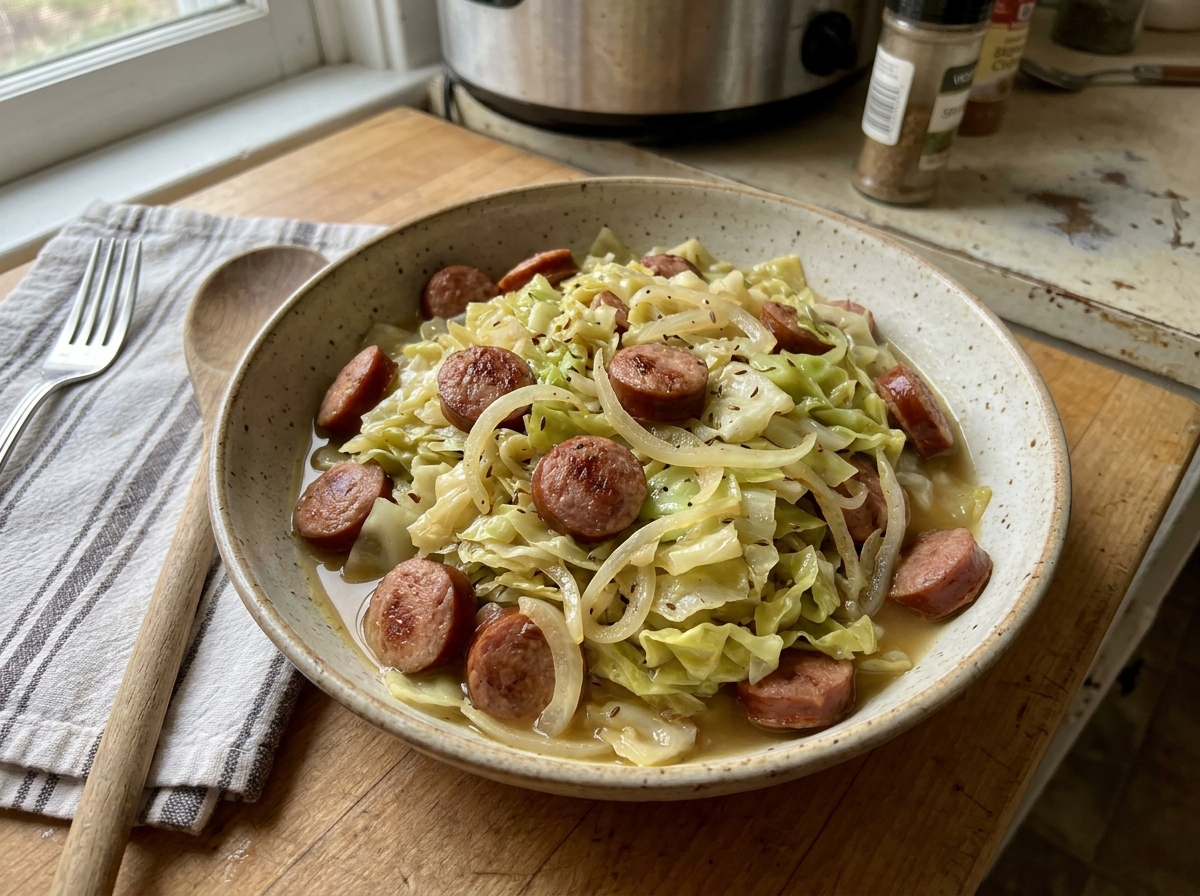
Crockpot Cabbage and Smoked Sausage
This slow cooker cabbage and smoked sausage dish is most useful for busy weeknights when you need a low-prep meal waiting for you at the end of the day. Many slow cooker cabbage recipes end up watery or bland because cooks pour in broth and toss raw meat straight into the crock. We pan-sear the sausage slices first to build deep savory depth, then let the cabbage cook entirely in its own natural moisture and rendered sausage fat. A splash of apple cider vinegar right at the end cuts through the richness and brightens the entire pot.
The Science Behind Flavorful, Non-Watery Crockpot Cabbage
Cabbage contains roughly 92 percent water by weight. When you trap it under a closed crockpot lid, the plant cells break down and release that liquid as steam and broth. Adding extra liquid to the pot before cooking leaves you with boiled, diluted cabbage floating in grey water. By relying solely on the cabbage’s natural moisture and 2 tablespoons of butter to start the process, the vegetable braises in its own concentrated juices rather than boiling in added stock.
Browning the smoked sausage in a skillet before adding it to the slow cooker creates a Maillard reaction on the meat’s exterior. This surface browning adds complex, savory compounds that raw sausage simply cannot produce inside a moist crockpot environment. The rendered fat from the browned sausage coats the cabbage leaves, protecting them from breaking down into complete mush while carrying fat-soluble seasonings throughout the dish.
Finally, long slow cooking degrades natural plant acids, which can leave rich meats feeling heavy on the palate. Adding apple cider vinegar during the final 10 minutes restores the acid balance. The vinegar reacts with the fat and natural sugars released by the softened onions and cabbage, creating a balanced, savory finish without making the dish taste sour.
Key Ingredients and Recommended Substitutions
Choosing the right ingredients keeps this simple dish from turning bland or greasy. Here are the core components that dictate the texture and flavor profile:
- Smoked Sausage or Kielbasa: Fully cooked pork or beef smoked sausage yields the best balance of smoke, salt, and fat. Pre-cooked sausage holds its shape during a four-hour slow cook without turning rubbery. Substitution: Smoked turkey sausage reduces total fat by about half. However, turkey sausage releases less fat to coat the cabbage, so add 1 extra tablespoon of butter to keep the cabbage tender.
- Green Cabbage: Fresh green cabbage heads should feel dense and heavy for their size with tight leaves. A medium 3-pound head cuts down to roughly 10 cups of chopped leaves, which shrinks by half as it cooks. Substitution: Savoy cabbage cooks faster and offers a crinkled texture, but it turns soft about 45 minutes sooner than standard green cabbage. Reduce cook time by 30 to 45 minutes if using Savoy.
- Yellow Onion: Yellow onions contain high levels of natural sugars that caramelize slowly as the crockpot heats, adding subtle sweetness to balance the smoked sausage saltiness. Substitution: White onions work as a direct 1-to-1 swap, though they provide a sharper bite and less natural sweetness after long braising.
- Butter: Unsalted butter melted at the bottom of the crockpot helps start the cooking process before the cabbage releases its moisture, preventing scorching on the heating element. Substitution: Bacon grease adds smoky depth in place of butter at a 1-to-1 ratio.
- Apple Cider Vinegar: Unfiltered apple cider vinegar provides fruity acidity that cuts through smoked fat. Substitution: Red wine vinegar or fresh lemon juice works equally well, though red wine vinegar will slightly tint white onion slices pink.
Visual Cues for Doneness and Texture Control
Cooking times in slow cookers vary based on the appliance model, age, and crock size. Instead of relying strictly on the clock, monitor these visual and sensory checkpoints to ensure proper texture:
Skillet Sear: Slicing smoked sausage into 1/2-inch coins exposes maximum surface area to the pan. Sear over medium-high heat until the edges crisp and turn deep reddish-brown, about 3 to 4 minutes per side. You should hear a sharp sizzling sound and see rendered oil pooling in the pan. Do not crowd the skillet, or the meat will steam instead of brown.
Mid-Point Check: At the 2-hour mark on LOW setting, open the lid briefly. The top layer of cabbage will look bright green and bulky. Use tongs to gently turn the bottom cabbage up to the top. The cabbage at the bottom of the pot should look translucent and softened, floating in a small pool of buttery rendered drippings.
Final Doneness: The dish is complete when the cabbage leaves are completely tender to the prick of a fork but still hold their ribbon shape. The color will change from pale green to a warm yellowish-tan. If the cabbage feels squeaky when chewed, it needs another 30 minutes. If it dissolves into a paste, it has overcooked.
Common Pitfalls and How to Avoid Them
Even simple recipes fail when critical details are overlooked. Avoid these four common mistakes when preparing this slow cooker meal:
1. Adding Water or Chicken Broth
Pouring liquid into the slow cooker is the single most frequent error. Cabbage releases over a cup of liquid as it cooks. Extra broth dilutes the smoked sausage juices and turns the cabbage soggy. Trust the dry-bottom method; the cabbage will generate all the liquid it needs within the first hour.
2. Chopping the Cabbage Too Thin
Shredding cabbage on a mandoline or using fine coleslaw cuts causes the leaves to dissolve into mush during a multi-hour cook. Cut the cabbage head into sturdy 1-inch to 1.5-inch squares. Larger pieces retain structural integrity and absorb flavor without losing texture.
3. Skipping the Pre-Browning Step
Dumping cold, un-seared sausage into the crockpot leaves the casing soft and rubbery. Browning renders out excess surface grease and locks in firmness. It takes six minutes on the stovetop and makes a noticeable difference in final meat texture.
4. Under-Salting Early in the Process
Cabbage absorbs a large amount of salt as its cell walls break down. While smoked sausage is naturally salty, relying on the sausage alone leaves the cabbage bland. Season the cabbage layers with 1 teaspoon of coarse kosher salt when building the crockpot layers.
Easy Variations for Flavor and Diet Needs
Adjust the ingredient balance to fit your dietary preferences or modify the profile using these tested variations:
Smoked Sausage and Potato Bake
Add 1.5 pounds of quartered baby red potatoes or cubed Yukon Gold potatoes to the bottom of the slow cooker before layering the cabbage. The potatoes absorb the sausage drippings as they soften. Extend total cooking time by 45 minutes on LOW to ensure the potato centers reach tender doneness (205°F internal temperature).
Cajun Spicy Style
Swap standard smoked sausage for spicy andouille sausage. Replace the caraway seeds with 1.5 teaspoons of Cajun seasoning blend and add 1 chopped green bell pepper with the onions. Keep the salt at 1/2 teaspoon since commercial Cajun spice blends often contain added sodium.
Bacon and Caraway Classic
Dice 4 strips of thick-cut bacon and cook them in your skillet until crispy before browning the sausage. Pour the crisp bacon pieces and rendered grease directly into the slow cooker with the butter. Add 1 teaspoon of toasted caraway seeds to enhance the classic Eastern European flavor profile.
Storage, Reheating, and Make-Ahead Instructions
This dish keeps exceptionally well in the refrigerator because the cabbage continues to absorb the savory sausage flavor as it rests.
Refrigeration: Allow the crockpot insert to cool uncovered for 20 minutes before transferring leftovers into airtight glass or food-grade plastic containers. Store in the refrigerator for up to 4 days. The rendered fats will solidify slightly when chilled; they melt quickly upon reheating.
Freezing Advice: Freezing cooked cabbage changes its texture slightly, as ice crystals expand and fracture the plant walls. If you choose to freeze it, let the dish cool completely, then store in heavy-duty freezer bags for up to 2 months. Thaw overnight in the refrigerator before reheating. Expect the reheated cabbage to be slightly softer than fresh cooked.
Best Reheating Method: Reheat leftovers on the stovetop over medium heat in a covered skillet for 6 to 8 minutes, stirring once, until hot throughout (165°F). Stovetop reheating evaporates excess liquid and restores the firm texture of the sausage. For quick single portions, microwave in a covered microwave-safe bowl on high for 90 seconds to 2 minutes, stirring halfway through.
Frequently Asked Questions
Can I make crockpot cabbage and smoked sausage on HIGH speed?
Yes, you can cook this dish on HIGH for 2 to 2.5 hours instead of LOW for 4 hours. Cooking on LOW yields a more uniform tender texture and allows the sausage fat to permeate the cabbage leaves without boiling them.
Can I cut up the ingredients the night before?
You can chop the cabbage, onions, and sausage 24 hours in advance. Store the cut cabbage in an airtight bag with a dry paper towel to catch excess moisture, and keep the sliced sausage and onions in separate containers in the fridge. Assemble and start the slow cooker in the morning.
Why is my slow cooker cabbage tough after 4 hours?
Dense green cabbage heads picked late in the season can take longer to soften. If your cabbage remains tough after 4 hours on LOW, stir the pot, replace the lid, and extend cooking time by 30 to 45 minutes. Ensure your slow cooker lid forms a tight seal so heat and moisture do not escape.
Do I need to add water to the slow cooker so it does not burn?
No, do not add water. The butter melted at the bottom protects the bottom layer of cabbage for the first 30 minutes, after which the cabbage and onions release their natural water content to create plenty of braising liquid.
Crockpot Cabbage and Smoked Sausage
Ingredients
Equipment
Method
- Melt 1 tablespoon of butter in a large skillet over medium-high heat.
- Add the sliced smoked sausage to the skillet in a single layer and sear for 3 to 4 minutes per side until browned, then transfer to a plate.
- Place the remaining 1 tablespoon of butter into the bottom of a 6-quart slow cooker insert.
- Layer half of the chopped green cabbage into the bottom of the slow cooker.
- Spread the sliced yellow onion evenly over the cabbage layer.
- Sprinkle with 1/2 teaspoon of kosher salt, 1/4 teaspoon of black pepper, 1/4 teaspoon of garlic powder, and 1/4 teaspoon of onion powder.
- Add the remaining chopped cabbage on top of the onion layer.
- Top with the seared smoked sausage slices and any accumulated pan juices from the plate.
- Sprinkle the top layer with the remaining 1/2 teaspoon of salt, 1/4 teaspoon of black pepper, 1/4 teaspoon of garlic powder, 1/4 teaspoon of onion powder, and the optional caraway seeds.
- Cover with the lid and cook on LOW for 4 hours (or on HIGH for 2 to 2.5 hours) until cabbage is fork-tender.
- Remove the lid, pour the apple cider vinegar over the top, and gently toss with tongs to distribute the juices and vinegar.
- Cover and let sit on the WARM setting for 5 minutes before serving.