Dutch Apple Pie
The biggest issue with Dutch apple pie is a soggy bottom crust underneath a pool of thin apple juice. We solve this by macerating the sliced apples to release excess moisture, reducing that juice on the stove, and par-baking the pie shell. This technique yields a thick, set apple filling, a crisp bottom crust, and a crunchy brown sugar oat topping that stays crisp.
Why This Technique Prevents Soggy Crusts and Runny Filling
A standard apple pie releases up to half a cup of liquid as the fruit cooks. When raw juices boil inside an unbaked pie shell, the dough absorbs moisture before its starches set. The outcome is a damp lower crust and a loose filling.
We eliminate this problem by tossing raw apple slices with sugar, lemon juice, and spices, then letting them rest for 30 minutes. This maceration process uses osmotic pressure to draw out surplus water from the fruit cell walls while keeping the apple slices intact. We drain that liquid, reduce it on the stovetop to concentrate the natural sugars, and fold it back in with cornstarch. Cornstarch reaches full gel strength at 203°F, binding the remaining liquids into a rich filling.
Par-baking the pie shell for 15 minutes creates a firm starch-and-fat barrier. When the fruit and crumble go into the par-baked crust, the pastry remains crisp. Cold cubed butter in the brown sugar topping melts slowly in the oven, allowing the flour and oats to toast into a crunchy crumble rather than sinking into the fruit.
Selecting and Substituting Key Ingredients
Choosing the right apple varieties and using cold fats ensures the proper balance of flavor and structural integrity.
Granny Smith and Honeycrisp Apples
We use a 50/50 combination of Granny Smith and Honeycrisp apples. Granny Smith provides sharp acidity and firm pectin structure that holds up under long heat. Honeycrisp adds natural sweetness and fresh aroma. If Honeycrisp is unavailable, Braeburn or Pink Lady apples work well. Avoid McIntosh or Red Delicious, as their flesh breaks down into soft mush when baked.
Cornstarch
Cornstarch acts as our primary thickener for the filling liquid. It sets clear and glossy without masking the fruit flavor. Tapioca starch is an equal substitute, but avoid using flour alone to thicken the fruit. Flour creates a cloudy filling and requires larger quantities that dull the apple taste.
Dark Brown Sugar
Dark brown sugar gives the streusel topping its deep caramel note and rich color. The moisture and natural molasses content help the crumble stick together in clumps. Light brown sugar works as a direct substitute, though the flavor profile will be milder.
Unsalted Butter
Cold unsalted butter provides the fat needed for crisping both the crust and the streusel topping. Salted butter can be substituted, but you should cut the added salt in the topping recipe by half to avoid an over-salted crumb.
Rolled Oats
Old-fashioned rolled oats add texture and body to the Dutch topping. Quick-cooking oats can be used if needed, but they absorb butter faster and yield a softer crumble with less crunch.
Step-by-Step Visual Doneness Cues
Relying on sensory indicators ensures every component is cooked correctly.
Par-Baking the Shell: After 12 minutes of baking with weights at 400°F, remove the weights and foil. The bottom of the pastry should appear matte and pale gold. If it still looks wet or shiny, bake for 2 to 3 minutes longer until dry to the touch.
Filling Texture Before Baking: After tossing the apples with reduced syrup and cornstarch, the fruit slices should be coated in a thick, velvety sheen without dry starch pockets at the bottom of the bowl. The slices should feel pliable but firm.
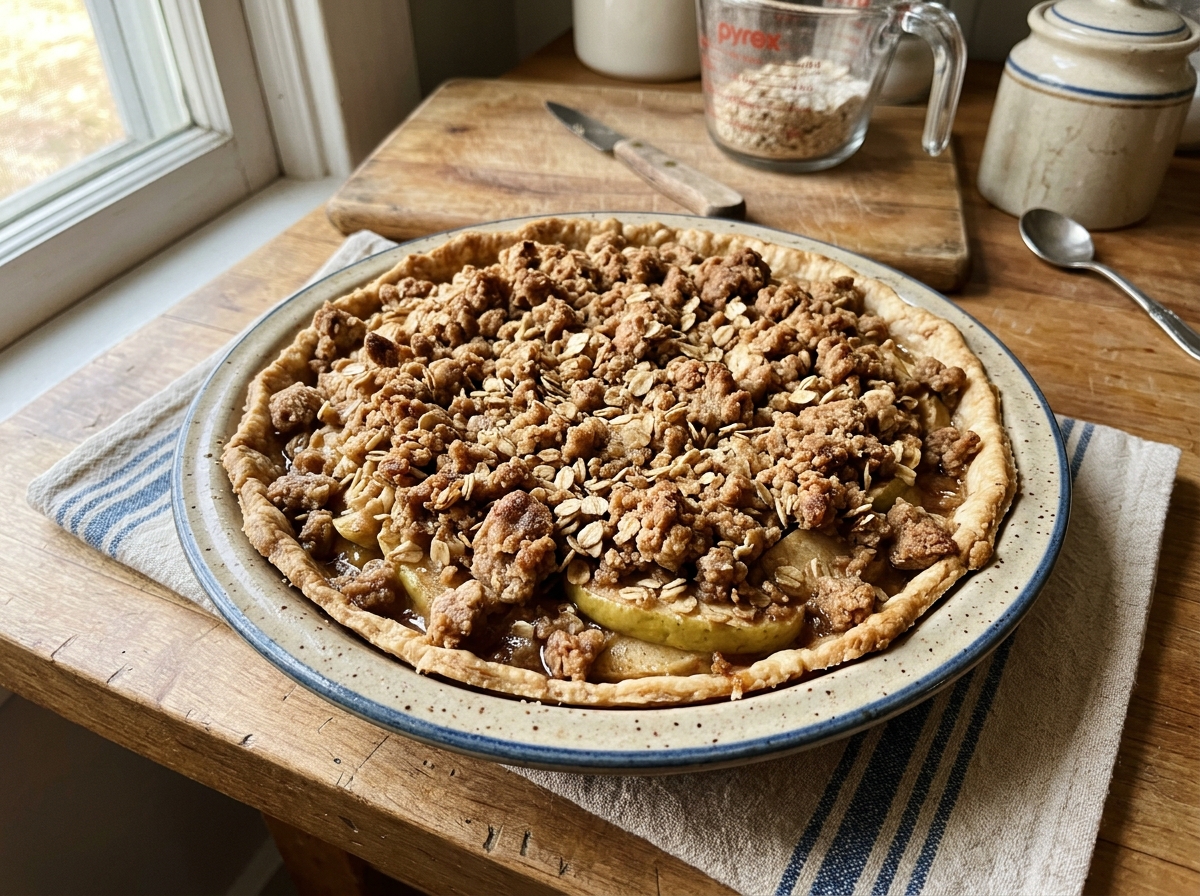
Streusel Crumb Size: Cut cold butter into the topping mixture until you see irregular clumps ranging from pea-sized bits to walnut-sized clusters. Fine crumbs bake into a dry dust, while oversized lumps fail to cook through in the middle.
Final Bake Doneness: The pie is fully baked when the streusel turns deep golden brown and thick, clear liquid bubbles slowly near the crust edges. An instant-read thermometer inserted into the center of the fruit should read between 200°F and 205°F.
Avoiding Common Dutch Apple Pie Mistakes
Steer clear of these four errors to achieve consistent results.
1. Cutting Apples Too Thin
Slicing apples thinner than 1/4 inch causes them to break down completely during the long bake. Slicing them thicker than 1/2 inch leaves firm, undercooked centers. Aim for uniform slices between 1/4 inch and 3/8 inch thick.
2. Adding Streusel Topping Uncovered
Placing the crumble topping on top for the entire bake time can burn the sugar before the apples soften. Tent the pie loosely with foil after 30 minutes if the top darkens too quickly while the filling is still firm.
3. Slicing the Pie While Warm
Cutting into a hot pie causes the warm filling to spill across the plate. Cornstarch needs to cool to roughly 110°F to set into a sliceable gel. Allow the pie to cool at room temperature for 3 hours before slicing.
4. Overworking the Topping Mixture
Using warm hands or mixing the streusel too long melts the butter into the flour, turning a crisp crumble into a dense paste. Keep the butter cold until it goes into the bowl, and work it quickly with a pastry cutter.
Easy Flavor and Seasonal Variations
Try these simple modifications to adjust the flavor profile of the base recipe.
Salted Caramel Dutch Apple
Drizzle 3 tablespoons of thick caramel sauce directly over the apple filling before adding the crumble topping. Reduce the granulated sugar in the filling by 2 tablespoons to balance the overall sweetness.
Cranberry Apple Streusel
Fold 1 cup of fresh or frozen whole cranberries into the apple slice mixture. The tartness cuts through the sweet sugar crumb, and natural fruit pectin helps set the filling firm.
Pecan Bourbon Dutch Apple
Mix 1/2 cup of finely chopped pecans into the streusel topping for extra crunch. Stir 1 tablespoon of bourbon into the apples during maceration for a subtle oak flavor.
Storage, Reheating, and Make-Ahead Instructions
Dutch apple pie stores well when handled properly.
Room Temperature and Fridge Storage: Keep the baked, completely cooled pie loosely covered with foil at room temperature for up to 2 days. Refrigerate in an airtight container for up to 5 days. Refrigeration softens the streusel topping slightly, but reheating restores the texture.
Freezing Baked Pie: Freeze the fully baked and cooled pie by wrapping it tightly in two layers of plastic wrap and one layer of aluminum foil for up to 3 months. Thaw in the refrigerator overnight before reheating. Avoid freezing an unbaked pie with topping, as the crumble absorbs moisture from the raw fruit and turns gummy.
Reheating Method: Warm whole pies or single slices in a preheated 350°F oven for 15 to 20 minutes until the filling is warm and the top crisp. Avoid microwave reheating, which makes the crust rubbery and softens the topping.
Frequently Asked Questions
Why is my Dutch apple pie filling runny?
A runny filling happens when the apples release excess moisture that was not properly bound by starch, or when the pie was not baked long enough to reach 203°F. It also happens when the pie is sliced while warm. Letting the pie cool for 3 hours at room temperature allows the cornstarch gel to fully set.
What is the difference between regular apple pie and Dutch apple pie?
A traditional apple pie features a top crust made of rolled pastry dough, often lattice-cut or solid with steam vents. Dutch apple pie replaces the top pastry dough with a sweet crumble or streusel topping made of flour, butter, brown sugar, and rolled oats.
Can I use a store-bought pie crust for Dutch apple pie?
Yes, a refrigerated or frozen 9-inch store-bought pie crust works well. Thaw frozen crusts completely before fitting them into the pie dish, and always par-bake the shell with pie weights at 400°F for 12 minutes before filling.
Should I peel the apples for Dutch apple pie?
Peeling the apples is essential for proper pie texture. Apple skins do not break down during baking, resulting in tough, papery ribbons inside the filling that prevent the fruit slices from settling compactly.
Dutch Apple Pie
Ingredients
Equipment
Method
- Preheat your oven to 400°F and fit the 9-inch unbaked pie crust into a 9-inch deep-dish pie plate, crimping the top edges firmly.
- Line the crust with parchment paper, fill to the top rim with pie weights, and bake at 400°F for 12 minutes.
- Remove the parchment paper and pie weights, then return the crust to the oven for 3 minutes until the bottom appears dry and pale gold.
- Remove the par-baked crust from the oven, reduce the oven temperature to 375°F, and let the crust cool on a wire rack.
- In a large mixing bowl, combine 1.75 lbs sliced Granny Smith apples, 1.75 lbs sliced Honeycrisp apples, 0.5 cup granulated sugar, 0.25 cup packed dark brown sugar, 1 tbsp lemon juice, 1.5 tsp ground cinnamon, 0.25 tsp ground nutmeg, and 0.25 tsp salt.
- Set the apple mixture aside at room temperature for 30 minutes to release excess fruit juices.
- Drain the liquid from the apples into a small saucepan, keeping the apple slices in the bowl.
- Simmer the drained juices in the saucepan over medium heat for 5 minutes until reduced to 3 tablespoons of syrup, then pour the syrup back over the apples.
- Sprinkle 3 tbsp cornstarch over the apples and toss thoroughly until no dry white starch remains visible.
- In a separate medium bowl, mix 1 cup all-purpose flour, 0.5 cup rolled oats, 0.5 cup packed dark brown sugar, 0.25 cup granulated sugar, 0.5 tsp ground cinnamon, and 0.25 tsp salt.
- Add 0.5 cup cold cubed unsalted butter to the dry topping ingredients and work it with a pastry cutter until irregular crumb clusters form.
- Arrange the apple slices in the par-baked crust, pressing them down firmly to avoid gaps.
- Spread the streusel topping evenly over the apples, pressing lightly so the crumbs cling together.
- Bake at 375°F for 55 minutes until the streusel is deep golden brown and thick juices bubble around the edges.
- Set the pie on a wire rack to cool for 180 minutes before cutting into slices.