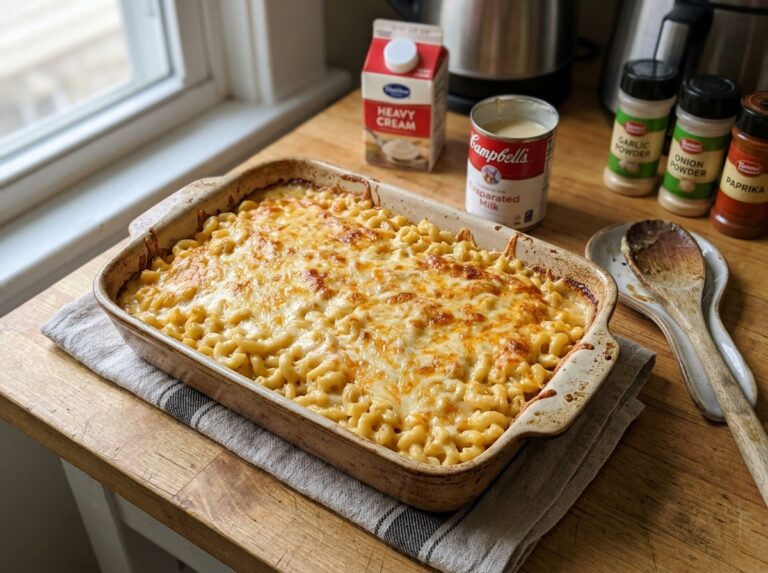
Amish-Style Thousand Island Baked Macaroni
Before boiling your pasta, know that the single factor deciding success in Amish-style Thousand Island baked macaroni is undercooking the noodles by exactly two minutes. Boiling elbow macaroni to full tenderness before baking causes the pasta to absorb excess liquid in the oven, turning the casserole mushy and breaking the emulsion of the cheese sauce. Combining tangy Thousand Island dressing with sharp yellow cheddar creates a rich, sweet-savory baked pasta with a tender crumb topping and a stable sauce.
The Culinary Science Behind Thousand Island Baked Macaroni
Amish baked macaroni dishes differ from standard roux-based cheese sauces because they rely on a liquid egg custard and emulsified dressings to bind the pasta. Understanding how these components behave under oven heat ensures a sliceable casserole with a creamy texture.
Emulsion Stability and Acid Balance
Thousand Island dressing contains oil, egg yolk, tomato paste or ketchup, and sweet pickle relish. The egg yolks and mayonnaise base act as secondary emulsifiers when mixed into warm milk and shredded cheese. When exposed to heat, these emulsifiers hold liquid fat and water molecules together, preventing the cheese sauce from breaking into a greasy layer at the bottom of the dish.
Sharp cheddar cheese contains high amounts of saturated butterfat and casein protein. The acetic acid in pickle relish and the citric acid in tomato paste cut directly through this dairy fat. This acid reduces the heavy mouthfeel common in baked pastas, balancing rich cheese notes with a clean, tangy finish.
Starch Hydration and Carryover Heat
Durum wheat semolina elbow macaroni absorbs water continuously throughout cooking. By undercooking the pasta in boiling water by 2 minutes, you keep the central core of starch partially dehydrated. When mixed with the liquid custard and baked at 350°F, the pasta draws in the seasoned milk, egg, and dressing mixture from the inside out.
Allowing the dish to rest for 15 minutes after baking lets the internal temperature cool slightly from 195°F to around 165°F. During this window, gelatinized starches and set egg proteins bind residual liquid. Slicing immediately out of the oven causes liquid to pool, whereas resting results in clean, intact portions.
Essential Ingredients and Smart Substitutions
Selecting the right ingredients ensures proper binding and flavor structure in this regional bake. Each ingredient plays a functional role in the final dish.
- Thousand Island Dressing: Use a full-fat jarred dressing or homemade mixture. Full-fat dressing provides the necessary lecithin to emulsify the liquid bake. Substitution: Russian dressing adds a bolder horseradish note, though it is slightly less sweet. Avoid reduced-fat dressings, which contain extra water and thickeners that break during baking.
- Sharp Yellow Cheddar Cheese: Buy a block of aged sharp cheddar and shred it yourself on a box grater. Block cheese contains natural moisture and melts into smooth strands. Substitution: Medium cheddar or Colby Jack works well for a milder flavor. Avoid pre-shredded bagged cheese, as anti-caking additives like cellulose powder produce a gritty texture.
- Elbow Macaroni: Classic ridged medium elbow pasta provides outer grooves and inner hollows that trap shredded cheese and custard. Substitution: Cavatappi or small shell pasta can be used. If using larger shapes, increase the bake time by 3 minutes to ensure heat penetrates to the center of the pasta mass.
- Whole Milk and Heavy Cream: A combination of 1 cup whole milk and 1/2 cup heavy cream provides the liquid volume for the egg custard without lowering the butterfat content too much. Substitution: Evaporated milk can replace both the milk and cream in equal volume (1.5 cups total) for an extra velvety texture.
- Crushed Ritz Crackers and Butter: Rich butter crackers crushed into medium crumbs form a protective shield across the top layer of noodles, keeping them moist while crisping under heat. Substitution: Panko breadcrumbs tossed with melted butter and a pinch of paprika provide equal crunch with less sweetness.
Sensory Cues for Boiling, Mixing, and Baking
Relying on physical signs rather than strictly timer minutes guarantees consistent results when preparing this casserole.
Testing Pasta Doneness
When you bite into an elbow noodle at minute 6 of boiling, you should feel firm resistance in the middle. Cutting the noodle in half reveals a tiny white ring of uncooked flour right at the center wall. The exterior of the noodle should be pliable, but the pasta should not collapse when pressed between your fingers.
Checking Liquid Consistency
When whisking the milk, cream, eggs, Thousand Island dressing, and spices together, look for a uniform salmon-pink liquid without yellow oil streaks. The mixture should coat the back of a spoon lightly. When you fold in the warm pasta and 2.5 cups of shredded cheddar, the cheese will soften into long, sticky threads that cling to the noodles rather than dissolving entirely into a smooth liquid.
Recognizing Oven Doneness
Place the dish on the center oven rack. At minute 35, watch for these specific visual signs through the oven door:
- Small, slow-popping bubbles active around the inside edge of the baking pan.
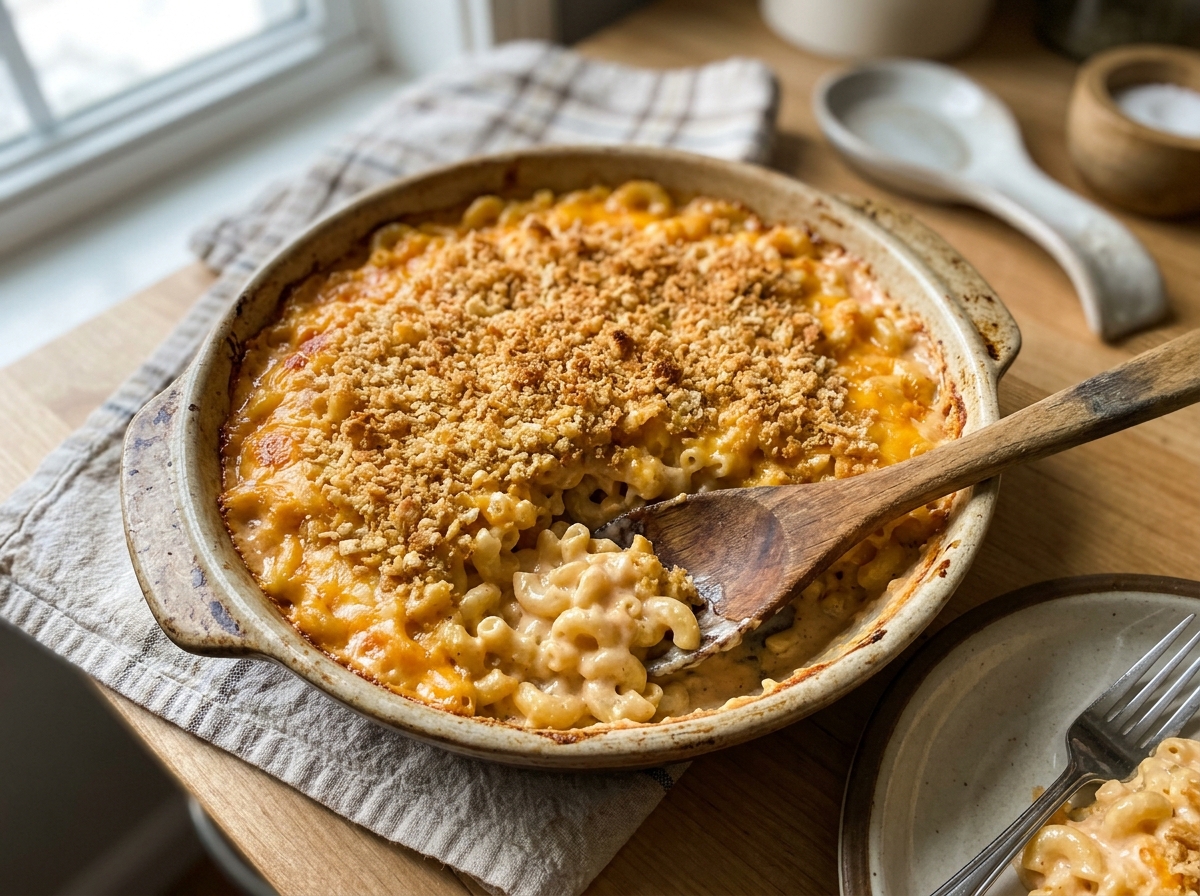
- A cracker topping that has changed from pale tan to a deep, golden mahogany shade.
- A set center that gently wobbles as a single unit when the pan is nudged, with no wet sloshing underneath the topping.
Common Mistakes That Ruin Amish Baked Pasta
Avoid these frequent preparation errors to maintain proper texture, structural integrity, and balanced flavor in your baked macaroni.
- Boiling the Pasta to Softness: Boiling elbow macaroni past the 6-minute mark fully hydrates the wheat starches before baking. In the oven, the noodles collapse into mush and absorb all liquid, leaving the casserole dense and gummy. Correction: Set a timer for 6 minutes the moment noodles hit boiling water and drain immediately.
- Rinsing Drained Noodles: Rinsing warm pasta with cold tap water washes away surface starch and cools the noodles prematurely. Surface starch helps the egg-and-dressing mixture adhere to the pasta walls. Correction: Pour drained noodles straight from the colander into the mixing bowl while still steaming.
- Using Pre-Shredded Bagged Cheese: Potato starch and cellulose coatings on pre-shredded cheese absorb liquid from the egg custard and prevent proper melting, causing a gritty sauce base. Correction: Shred fresh block cheese on the coarse side of a box grater just before assembling.
- Baking Uncovered the Entire Time: Exposing the cracker crust to hot oven air for 35 straight minutes burns the butter crumbs before the internal custard sets to 160°F. Correction: Cover the dish loosely with foil for the first 20 minutes, then uncover for the final 15 minutes to brown the topping.
- Slicing Without Resting: Cutting into the casserole immediately upon removal from the oven causes warm custard liquid to spill out, leaving the top noodles dry. Correction: Place the pan on a cooling rack for 15 minutes so the starch gel sets before serving.
Crust and Protein Variations to Try
Customize this classic baked macaroni base by integrating secondary proteins, herbs, or cheese blends while preserving the core dressing custard structure.
Bacon and Swiss Amish Bake
Replace 1 cup of the sharp yellow cheddar with freshly shredded Swiss cheese. Fold 6 slices of cooked, coarsely chopped thick-cut bacon and 2 tablespoons of chopped fresh chives into the macaroni mixture along with the Thousand Island dressing base. Swiss cheese adds a nutty profile that pairs naturally with the dressing acidity.
Smoky Ham and Sweet Onion
Sauté 1/2 cup of finely diced yellow onion in 1 tablespoon of butter over medium heat for 5 minutes until translucent. Stir the sautéed onion and 1.5 cups of diced cooked smoked ham into the pasta before transferring to the baking dish. The ham adds savory protein that balances the sweet pickle relish notes in the dressing.
Jalapeño Cracker Crunch
For subtle heat, mix 2 tablespoons of drained, finely chopped pickled jalapeños into the liquid dressing mixture before combining with the pasta. Swap the Ritz cracker topping for crushed spicy cheddar crackers tossed with melted butter to double down on the savory heat layer.
Make-Ahead Instructions, Storage, and Gentle Reheating
Managing temperature during prep, storage, and reheating keeps the macaroni moist without breaking the milk-and-dressing sauce.
Make-Ahead Prep
Assemble the entire dish in your 9×13-inch pan up through adding the cheese, but hold off on adding the buttered cracker crumbs. Cover the dish tightly with plastic wrap, then a layer of aluminum foil, and refrigerate for up to 24 hours. When ready to cook, remove the plastic wrap, scatter the buttered cracker topping over the cheese, cover loosely with foil, and bake at 350°F for 45 minutes total (25 minutes covered, 20 minutes uncovered) to account for the cold pan start.
Storage Limits
Store leftover baked macaroni in an airtight glass or plastic container in the refrigerator for up to 4 days. Do not freeze this dish; mayonnaise-based dressings and milk-egg custards split upon thawing, resulting in a watery, grainy texture when reheated.
Reheating Methods
Reheat individual portions in the microwave at 50% power for 1 minute and 30 seconds, covered with a damp paper towel. The reduced power prevents the butterfat in the cheese from separating. To reheat half or full pans, cover the baking dish with foil and heat in a 325°F oven for 20 minutes until the internal temperature reaches 165°F on an instant-read thermometer.
Frequently Asked Questions
Can I use homemade Thousand Island dressing instead of store-bought?
Yes, you can whisk together 1/2 cup of mayonnaise, 1/4 cup of ketchup, 2 tablespoons of sweet pickle relish, 1 teaspoon of yellow mustard, and 1/2 teaspoon of white vinegar. This homemade mixture yields 1 cup of dressing with the exact flavor balance needed for the dish. Fresh homemade dressing produces a brighter relish crunch in the finished bake.
Why is my baked macaroni greasy or oily on top?
Greasiness happens when block cheese melts too rapidly or when oil separates from low-quality salad dressing during baking. Using sharp cheddar shredded at home rather than pre-shredded cheese keeps the emulsion intact. Maintaining the 350°F oven temperature prevents the fats from rendering out before the egg custard sets.
Can I make this baked macaroni with gluten-free pasta?
You can substitute sturdy gluten-free elbow macaroni made from brown rice and corn blend. Cook gluten-free pasta 3 minutes less than package directions and test frequently to prevent mushiness. Use gluten-free butter crackers or crushed cornflakes for the breadcrumb topping.
What side dishes should I serve with Amish Thousand Island baked macaroni?
This rich baked macaroni pairs well with crisp, fresh vegetable side dishes that balance the dairy density. Serve it alongside a tangy cucumber salad, steamed green beans, or a simple garden salad tossed with apple cider vinaigrette. Roasted broccoli or stewed tomatoes also provide good acid balance.
Amish-Style Thousand Island Baked Macaroni
Ingredients
Equipment
Method
- Preheat your oven to 350°F (175°C) and grease a 9x13-inch baking dish with butter or nonstick cooking spray.
- Bring 4 quarts of heavily salted water to a rolling boil in a large stockpot over high heat.
- Add 16 ounces of elbow macaroni to the boiling water and cook for 6 minutes, which is exactly 2 minutes less than the package directions for al dente.
- Drain the cooked elbow macaroni thoroughly in a colander, shaking off excess water, and do not rinse the warm pasta with cold water.
- Whisk together 1 cup of Thousand Island dressing, 1 cup of whole milk, 0.5 cup of heavy cream, 2 beaten large eggs, 0.5 teaspoon of garlic powder, 0.5 teaspoon of onion powder, 0.5 teaspoon of salt, and 0.25 teaspoon of black pepper in a large mixing bowl until fully combined.
- Fold the warm drained macaroni into the dressing mixture, then stir in 2.5 cups of the shredded sharp yellow cheddar cheese until evenly mixed.
- Transfer the macaroni mixture into the prepared 9x13-inch baking dish and smooth the surface into an even layer using a spatula.
- Sprinkle the remaining 0.5 cup of shredded sharp yellow cheddar cheese evenly across the top layer of pasta.
- Combine 1 cup of crushed Ritz crackers and 3 tablespoons of melted unsalted butter in a small bowl until the crumbs are uniformly coated, then scatter them over the cheese layer.
- Cover the baking dish loosely with aluminum foil and bake at 350°F for 20 minutes.
- Remove the aluminum foil and continue baking for 15 minutes, until the crumb top is golden brown and small bubbles form along the edges of the pan.
- Remove the dish from the oven and let it rest at room temperature on a wire rack for 15 minutes before slicing and serving.