Cinnamon Roll Bake with Sweet Cream Custard Pour
How do you stop a cinnamon roll casserole from becoming raw or soggy in the middle? You cut chilled dough into equal pieces and pour a warm, whisked egg-and-cream custard around the dough pieces rather than drenching the tops. We set our oven to 350°F and bake until the center reaches 195°F, giving you tender cinnamon roll bites encased in a silky custard base. It takes ten minutes of prep work using canned dough, making it a reliable dish for weekend mornings.
The Science of Custard Absorption and Dough Structure
How Custard and Dough Interact in the Oven
Baking canned cinnamon rolls inside a custard base requires balancing moisture absorption with structure setting. Starch granules in canned dough expand and absorb liquid as they heat up, a process known as starch gelatinization. If you pour liquid over whole rolls, the heavy exterior layer blocks the liquid from penetrating, leaving raw dough pockets under a soggy top. Cutting the rolls into 1-inch quarters exposes internal layers, allowing the milk and egg mixture to soak evenly into every surface.
Egg proteins begin coagulating between 160°F and 180°F, setting the liquid into a soft structure surrounding the bread. Meanwhile, the fat from the heavy whipping cream and melted butter coats gluten strands, keeping the baked dough soft even after it cools. Maintaining an oven temperature of 350°F ensures the outer edges brown without scorching before the center reaches the proper internal temp of 195°F.
Key Ingredients and Smart Substitutions
Choosing Ingredients for the Best Texture
Refrigerated Grand Cinnamon Rolls: We use two 17.5-ounce cans of standard Grand-style rolls because their dense wheat structure absorbs custard without dissolving into paste. Flaky-style rolls contain too many layers of laminating fat, which can cause the bake to turn oily. If substituting homemade brioche dough, reduce the custard liquid by two tablespoons to account for higher hydration in scratch dough.
Heavy Whipping Cream: Heavy cream contains at least 36 percent butterfat, which stabilizes the custard and prevents curdling during baking. You can substitute half-and-half, but the custard will be slightly runnier and yield a firmer bread pudding texture.
Eggs: Four large eggs create the essential protein network that binds liquid cream into a tender custard layer. For an egg-free version, substitute two tablespoons of cornstarch whisked into one cup of whole milk, though the setting structure will feel more like a pudding than a baked custard.
Light Brown Sugar: Brown sugar supplies moisture and molasses flavor that deepens the cinnamon filling. Dark brown sugar works fine as a direct 1:1 substitute, adding a stronger caramel undertone, while granulated white sugar lacks the depth needed for this dish.
Melted Unsalted Butter: Butter carries fat-soluble cinnamon aroma throughout the bake and coats the bottom of the pan to form a caramelized crust. Salted butter can be substituted; simply omit the added sea salt in the recipe.
Visual and Temperature Doneness Cues
Key Signs Your Casserole Is Cooked Correctly
Getting the timing right depends on monitoring visual changes and internal temperature rather than relying solely on the clock. Follow these critical indicators during prep and baking:
- Arranging the Pan: Grease a 9×13-inch baking dish thoroughly with butter or nonstick spray. Place the quartered dough pieces in an even layer, leaving roughly 1/4 inch of space between pieces so heat circulates evenly around each bite.
- Pouring Custard: Whisk the eggs, cream, milk, melted butter, brown sugar, cinnamon, and vanilla until completely smooth. Pour the custard around the sides and into the gaps between dough pieces rather than dumping it over the top surfaces, which preserves top crust browning.
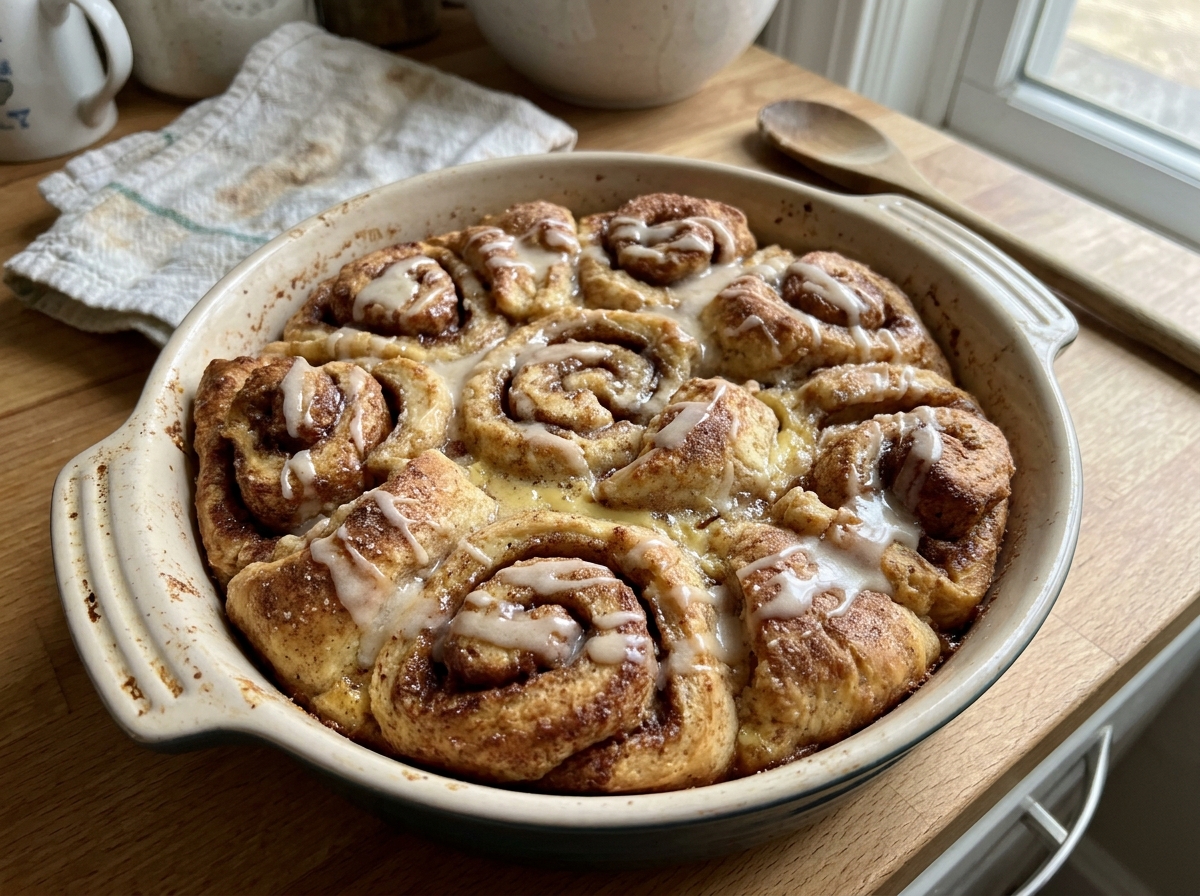
- Midway Check (20 Minutes): At the 20-minute mark, the custard around the pan edges should begin setting and small bubbles will appear. The tops of the dough quarters should look golden yellow.
- Doneness Testing (32 to 35 Minutes): Insert an instant-read thermometer into the center of a dough piece in the middle of the pan. It should read between 190°F and 195°F. The custard between pieces should be set with a gentle center wobble when you shake the pan lightly, but no liquid milk should pool at the bottom.
- Resting Period: Allow the dish to sit for 10 minutes at room temperature before drizzling with the included icing. This rest period lets carryover heat finish setting the center custard so slices hold together clean.
Preventing Common Cinnamon Roll Bake Pitfalls
Mistakes to Avoid for Consistent Results
Using Warm Dough: Cutting warm or room-temperature canned dough squashes the spiral layers together, preventing custard from seeping into the crevices. Keep your dough cans in the refrigerator until the moment you cut them so the pieces maintain crisp edge definitions.
Pouring Cold Custard over Hot Butter: Whisking chilled eggs and milk directly into hot melted butter causes the butterfat to solidify into tiny floating greasy specks. Allow your melted butter to cool for 3 to 5 minutes before whisking it into room-temperature dairy and eggs.
Baking in a Deep Square Pan: Attempting to bake this volume of liquid and dough in an 8×8 or 9×9-inch pan creates a deep layer that traps steam. The center remains raw while the outer edges dry out. Always spread the ingredients across a shallow 9×13-inch dish.
Icing Too Early: Spreading icing on hot rolls straight out of the oven melts the sugar instantly, causing it to run off into the bottom of the pan. Wait until the rest period is nearly finished so the icing stays creamy on top of each bite.
Flavor Variations for Holidays and Weekends
Easy Flavor Swaps and Add-Ins
Pecan Praline Style: Stir 3/4 cup of chopped toasted pecans into the brown sugar custard mixture before pouring over the dough. Drizzle 2 tablespoons of pure maple syrup over the baked casserole right before adding the icing layer.
Spiced Apple Cinnamon: Peel and core one medium Granny Smith apple, then cut it into 1/2-inch dice. Saute the apple pieces in 1 tablespoon of butter for 4 minutes until slightly tender, then toss them evenly with the quartered dough before adding the custard.
Orange Cream Casserole: Whisk 1 tablespoon of freshly grated orange zest into the custard liquid. Stir 1/4 teaspoon of orange extract into the provided icing containers before drizzling over the finished bake.
Storage, Reheating, and Make-Ahead Instructions
Keeping Leftovers Soft and Fresh
Refrigeration: Allow the casserole to cool completely to room temperature. Cover the baking dish tightly with aluminum foil or transfer individual portions to an airtight container. Store in the refrigerator for up to 4 days.
Freezing Instructions: Wrap individual cooked slices tightly in plastic wrap, then wrap in a layer of heavy-duty foil. Freeze for up to 2 months. Thaw overnight in the refrigerator before reheating.
Reheating Methods: Warm individual portions in the microwave on medium power (50%) for 35 to 45 seconds to keep the custard moist. To reheat the entire dish, cover with foil and bake in a 325°F oven for 15 to 20 minutes until an internal probe reads 165°F.
Overnight Prep: You can cut the dough and mix the custard ingredients the night before. Keep the dough quarters in an airtight container and store the whisked custard mixture in a covered jar in the fridge. In the morning, arrange the dough in your baking pan, pour the custard over, and bake immediately.
Frequently Asked Questions
Can I make this cinnamon roll bake without eggs?
Yes, you can replace the eggs with a cornstarch slurry. Whisk 2 tablespoons of cornstarch into 1 1/4 cups of heavy cream and milk combined. The bake will set like a pudding-style sauce around the cinnamon rolls, though it will lack the light cake-like structure that eggs provide.
Why is my cinnamon roll bake raw in the center?
A raw center usually happens if the pan size was too small or the oven temperature was too high, causing the top to brown before internal heat reached 190°F. Using a standard 9×13-inch pan and checking internal temperature with a probe thermometer ensures the center cooks completely without drying out the edges.
Can I use homemade cinnamon rolls instead of canned dough?
Yes, you can use fully proved, unbaked homemade cinnamon roll dough cut into 1-inch pieces. Since homemade dough is often less dense than canned rolls, reduce the custard liquid volume by about 3 tablespoons to maintain the correct dough-to-liquid balance.
Do I need to bake the cinnamon rolls before adding the custard?
No, the dough must go into the pan raw along with the poured custard mixture. Baking raw dough directly in the custard allows the starches to expand and absorb the sweet cream as everything cooks together simultaneously.
Cinnamon Roll Bake with Sweet Cream Custard Pour
Ingredients
Equipment
Method
- Preheat oven to 350°F (177°C) and grease a 9x13-inch baking dish with nonstick cooking spray or 1 tablespoon of softened butter.
- Open the two cans of cinnamon rolls, set the icing containers aside, and place cold dough rolls onto a clean cutting board.
- Cut each cinnamon roll into four equal quarter pieces using a sharp chef knife or bench scraper.
- Spread the quartered dough pieces evenly across the bottom of the prepared 9x13-inch baking dish, leaving small spaces between pieces.
- In a medium mixing bowl, whisk together the eggs, heavy whipping cream, whole milk, melted butter, light brown sugar, ground cinnamon, pure vanilla extract, and fine sea salt until smooth.
- Slowly pour the sweet cream custard mixture around and between the dough quarters in the baking dish, avoiding pouring directly over top of the dough.
- Place the baking dish on the center rack of the preheated oven and bake uncovered for 32 to 35 minutes.
- Check for doneness when the tops are deep golden brown and an instant-read thermometer inserted into the center dough piece reads 195°F.
- Remove the baking dish from the oven and let rest on a wire cooling rack for 10 minutes to allow the custard to set.
- Warm the reserved icing containers in the microwave for 10 seconds, then drizzle evenly over the top of the warm casserole before serving.