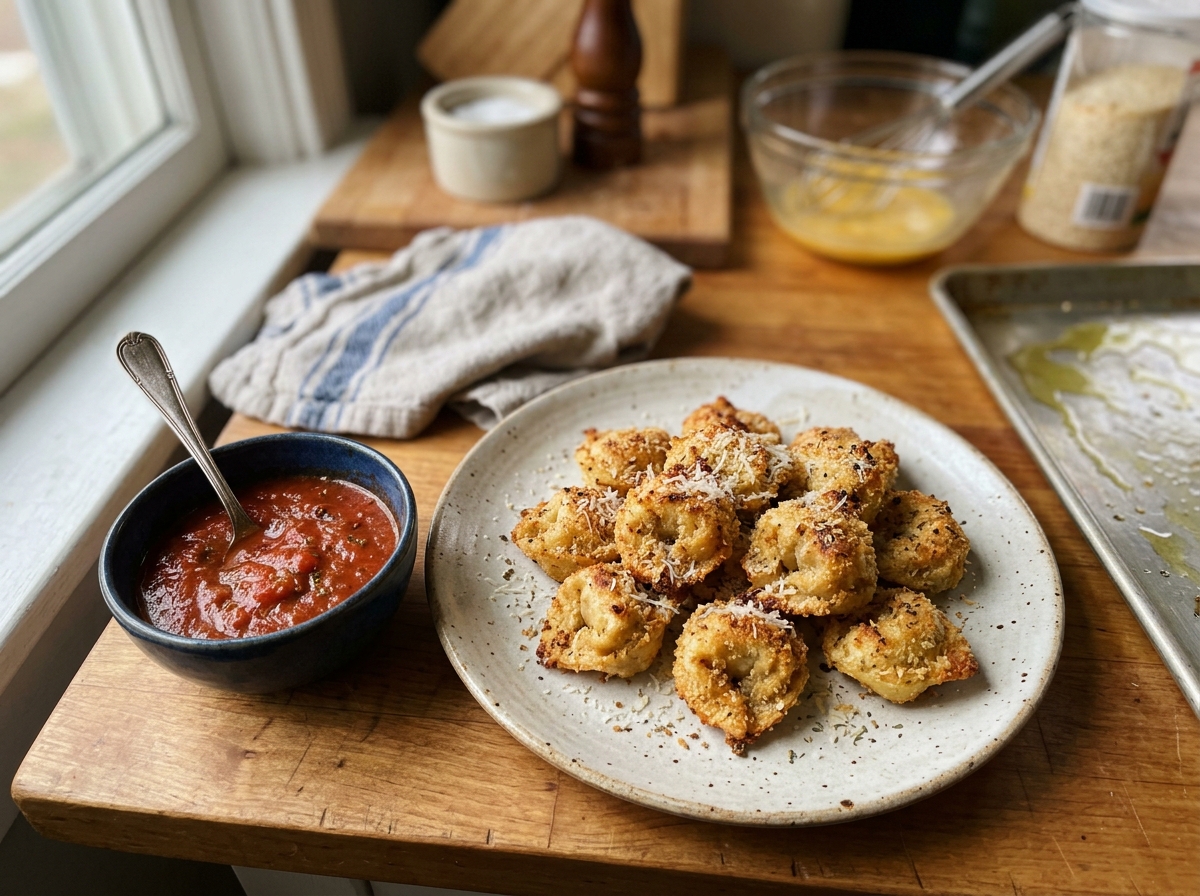
Crispy Baked Cheese Tortellini
Do you need to boil tortellini before baking them until crispy? You only need to boil refrigerated tortellini for exactly 60 seconds to soften the dough slightly so it hydrates without expanding so much that the cheese leaks out. Dredging the damp pasta in flour, egg wash, and season-dusted panko creates a thick coating that browning oil crisps to perfection at high heat. We skip deep frying entirely by baking at 425°F on a preheated sheet pan.
The Science Behind a Truly Crispy Baked Tortellini
Why Brief Par-Boiling Changes Everything
Many recipes tell you to bake raw tortellini straight from the package, but that results in tough, chewy pasta dough under a burnt crust. Boiling refrigerated tortellini for exactly 60 seconds gelatinizes the surface starches without cooking the center completely. This brief bath hydrates the gluten matrix in the pasta sheet just enough to make it pliable while allowing the breading flour to form a tight bond.
Panko Structure Versus Fine Breadcrumbs
Standard fine breadcrumbs pack down tightly around the pasta, creating a dense shield that traps moisture inside. Coarse Japanese panko flakes feature an airy structure with high surface area. When tossed with fine Parmesan cheese, the panko flakes absorb heat directly from the oiled baking sheet, crisping rapidly into a crunchy shell before internal steam can make the dough gummy.
High-Heat Sheet Pan Browning
Baking at 425°F on pre-greased metal sheets creates direct thermal conduction to the bottom of each piece. This initial contact sears the lower breadcrumb layer instantly. Flipping the tortellini halfway through ensures both sides develop even browning and a uniform crunch, eliminating the need for a messy deep fryer.
Key Ingredients and Substitutions
Refrigerated Cheese Tortellini
Refrigerated tortellini contain fresh pasta dough with high natural moisture, which cooks evenly and holds its shape during dredging. Dried shelf-stable tortellini takes too long to hydrate and often splits open in the oven. If substituting frozen cheese tortellini, thaw them completely in the refrigerator overnight and pat them dry before boiling.
Panko Breadcrumbs
Panko provides the distinct crunchy coating that makes baked tortellini feel fried. You can substitute standard Italian seasoned breadcrumbs, but the exterior texture will be noticeably denser and flatter. If using unseasoned standard breadcrumbs, add an extra 1/4 teaspoon of salt to compensate.
Grated Parmesan Cheese
Finely grated Parmesan acts as both a seasoning and a structural binder in the crumb mixture. As the cheese warms, its fats melt into the panko flakes and crisp up into savory edges. Pecorino Romano works as a direct substitute, though it is slightly saltier, so reduce added kosher salt by 1/8 teaspoon.
Garlic and Onion Powder
Dry aromatic powders distribute evenly throughout the dry dredging mixture without adding liquid. Fresh minced garlic burns quickly at 425°F, creating a bitter flavor. Stick to dry garlic and onion powder for consistent heat tolerance, or substitute smoked paprika if you prefer a subtle smoky warmth.
Olive Oil
Drizzling oil onto the baking sheets is necessary for thermal transfer and rich browning. It transforms the oven heat into a sizzling contact surface for the panko. You can substitute avocado oil or vegetable oil, both of which handle 425°F temperatures without smoking.
Visual and Sensory Cues for Perfect Doneness
Par-Boiling Cues
Watch the pot closely during the 60-second boil. The tortellini will bob to the surface and transition from a shiny cream color to a dull, matte yellow. As soon as the timer hits one minute, dump them into a colander. The pasta should feel pliable when pinched, not soft or swollen.
Dredging Texture Cues
After dredging through flour, egg wash, and panko, each tortellini should look fully coated without any yellow pasta showing through. The panko layer should feel rough and firmly pressed onto the dough. If the coating slides off when you pick up a piece, the pasta was too wet before entering the flour step.
Oven Sizzle and Browning Cues
Around 8 to 10 minutes into baking, you will hear a distinct, steady sizzle from the pan as oil contacts the hot metal tray. When you pull the pan to flip the tortellini, the undersides should be light golden brown and firm when touched with tongs. After 16 to 18 total minutes, the entire crust turns a rich amber color, sounding crisp when tapped lightly with a fork.
Critical Mistakes That Ruin Baked Tortellini
Over-Boiling the Pasta
Boiling tortellini according to standard package instructions (3 to 4 minutes) causes the pasta to absorb too much water. When placed in a hot oven, this excess water rapidly turns to steam, causing the pasta to split open and dump cheese across the pan. Always cap your boiling time at 60 seconds.
Skipping the Dry Pre-Dusting
Dipping wet pasta straight into liquid egg wash prevents the egg proteins from clinging to the smooth dough. Without flour, the egg wash slides off, leaving bald spots where breadcrumbs cannot stick. Dusting with flour first absorbs surface moisture and creates a tacky surface for the egg wash.
Overcrowding the Baking Sheets
Placing tortellini too close together on the sheet pan traps escaping steam between pieces. Instead of crisping, the panko absorbs this steam and becomes soft and soggy. Maintain a clear 1/2 inch of space around every piece by dividing the batch between two large baking sheets.
Baking at Low Temperatures
Baking at 350°F slows down browning and allows heat to penetrate the cheese filling before the exterior crust hardens. This leads to leaked filling and pale, rubbery crusts. Baking at 425°F cooks the crust fast enough to set the structure before internal pressure builds up.
Flavor Variations to Try
Spicy Calabrian Herb
Add 1/2 teaspoon of crushed red pepper flakes and 1/4 teaspoon of dried oregano into the panko breadcrumb mixture. Use spinach-and-cheese tortellini to create visual contrast. Serve these with a side of warm spicy arrabbiata sauce for dip.
Everything Bagel Crust
Replace the Italian seasoning with 1.5 tablespoons of everything bagel seasoning (poppy seeds, sesame seeds, garlic, onion, and coarse salt). Bake as directed, then lightly brush the hot tortellini with 2 tablespoons of melted unsalted butter as soon as they come out of the oven.
Meat Lover’s Style
Swap standard cheese tortellini for sausage or prosciutto-filled tortellini. Follow the same par-boiling and breading steps, then serve the crispy finished bites with warm marinara or warm creamy garlic dip.
Storage, Reheating, and Make-Ahead Instructions
Refrigerating Leftovers
Cool leftover tortellini completely on a wire rack to prevent moisture buildup. Transfer them to an airtight container lined with paper towels in a single layer. Store in the refrigerator for up to 3 days.
Freezing Instructions
You can freeze breaded tortellini before baking them. Lay the freshly breaded, uncooked tortellini on a baking sheet lined with parchment paper and freeze for 1 hour until firm. Transfer the frozen tortellini to a zip-top freezer bag for up to 2 months. Bake directly from frozen at 425°F for 20 to 22 minutes, adding 3 minutes to the standard baking time.
Reheating for Maximum Crunch
Never use a microwave to reheat crispy tortellini, as it breaks down the starches and yields a rubbery texture. Reheat leftover baked tortellini in an oven preheated to 400°F for 5 to 6 minutes on a baking sheet. Alternatively, heat them in an air fryer at 375°F for 3 to 4 minutes until hot and crisp throughout.
Frequently Asked Questions
Can I make crispy baked tortellini in an air fryer?
Yes, air frying works very well. Preheat your air fryer to 375°F, spray the basket lightly with nonstick spray, and arrange breaded tortellini in a single layer without overlapping. Cook for 8 to 10 minutes, shaking the basket gently halfway through, until golden brown and crisp.
Why did the cheese leak out of my tortellini while baking?
Leaking occurs when tortellini are overcooked during the boiling step or baked for too long at a low temperature. The cheese filling expands as steam builds up inside the pasta shell. Boiling for only 60 seconds and baking at 425°F for under 18 minutes seals the crust before the cheese expands enough to burst.
Can I use frozen tortellini instead of fresh refrigerated tortellini?
Yes, you can use frozen tortellini, but you must thaw them completely in the refrigerator overnight before starting the recipe. Once thawed, pat them dry with paper towels and boil for 60 seconds just like refrigerated pasta. Do not boil frozen tortellini directly from the freezer, as the center will stay cold while the outer dough gets waterlogged.
How do I keep the breadcrumbs from falling off during baking?
Using the standard three-step dredging method (flour, egg wash, panko) is essential for crumb adhesion. Flour absorbs surface moisture so the egg wash sticks, and the egg protein acts as glue for the panko. Be sure to press the panko firmly onto each piece with your hands before placing them on the pan.
Crispy Baked Cheese Tortellini
Ingredients
Equipment
Method
- Bring a large pot of salted water to a rolling boil over high heat.
- Add 20 oz refrigerated cheese tortellini to the boiling water and cook for exactly 60 seconds.
- Drain the tortellini immediately into a colander and rinse with cold water for 15 seconds to stop the cooking process.
- Spread the drained tortellini across a layer of paper towels and pat them thoroughly dry.
- Preheat your oven to 425°F and coat two large rimmed baking sheets with 1.5 tbsp olive oil each.
- Set up three shallow bowls in a row for your breading station.
- Place 0.5 cup all-purpose flour into the first bowl.
- Whisk 2 large eggs and 2 tbsp whole milk together in the second bowl.
- Combine 1.25 cups panko breadcrumbs, 0.5 cup grated Parmesan cheese, 1 tsp Italian seasoning, 0.5 tsp garlic powder, 0.5 tsp onion powder, 0.5 tsp kosher salt, and 0.25 tsp black pepper in the third bowl.
- Working in batches of 5 to 6 tortellini, toss the dry tortellini in the flour to lightly coat all sides.
- Dip the flour-coated tortellini into the egg mixture, allowing excess liquid to drip back into the bowl.
- Press the tortellini firmly into the panko breadcrumb mixture so the coating adheres evenly to the entire surface.
- Arrange the breaded tortellini in a single layer on the prepared baking sheets, leaving 1/2 inch of space between each piece.
- Bake at 425°F for 16 to 18 minutes, flipping each piece halfway through, until golden brown and crispy.
- Remove from the oven and let rest on the baking sheets for 5 minutes before serving alongside 1.5 cups warmed marinara sauce.