Sweet Alabama Pecanbread Loaf
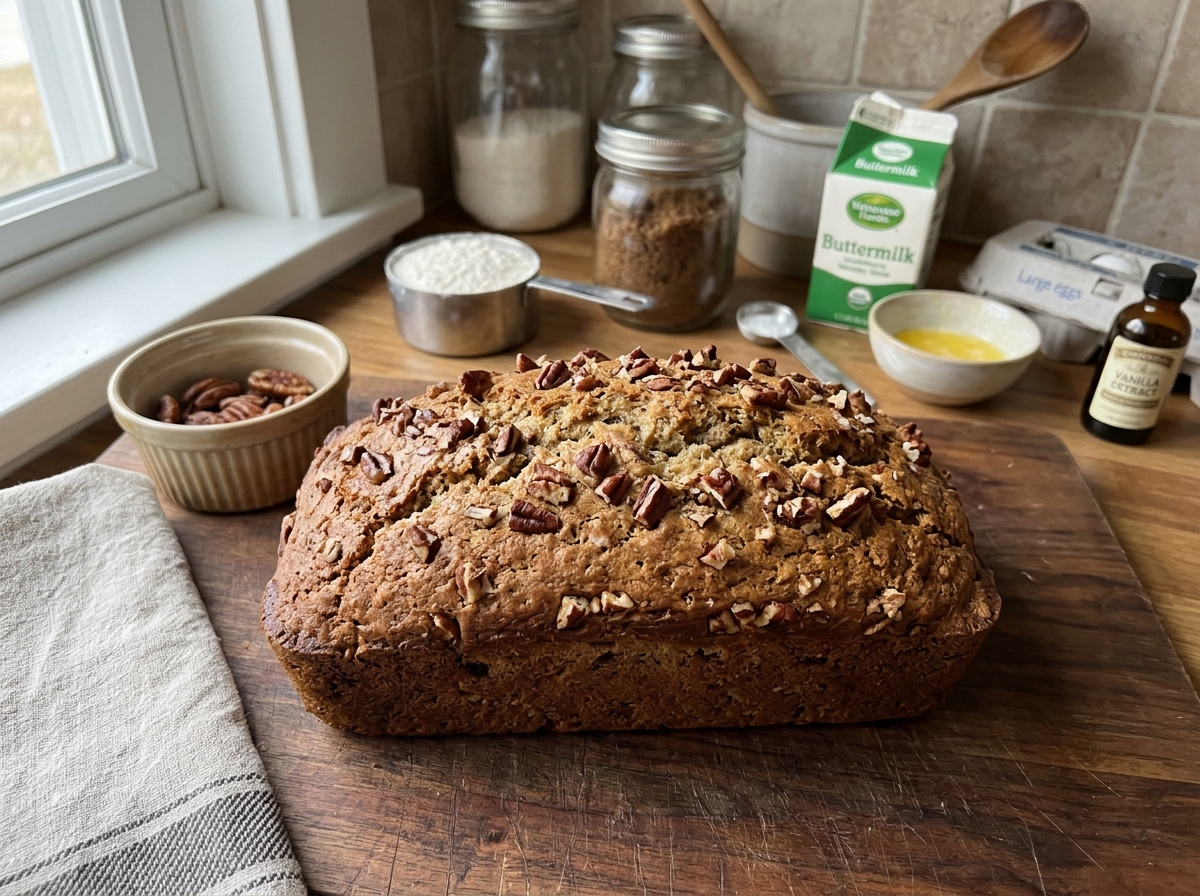
A slice of Sweet Alabama Pecanbread yields a dense, tight crumb with a crackly brown sugar crust and butter-toasted pecans in every bite. We toast the pecans in butter before folding them into a buttermilk batter, locking rich nutty oils into the bread instead of letting them dry out during baking. This version skips yeast entirely, using baking soda and powder for a quick rise that turns out soft inside without sinking in the middle.
The Food Science Behind a Soft, Nutty Pecan Loaf
Toasting the pecans before mixing them into the batter transforms this loaf. Raw nuts absorb liquid from the batter during baking, which leaves the pecans rubbery and drains moisture from the surrounding crumb. Sautéing chopped pecans in melted butter toasts their skin, unleashes essential oils, and creates a fat barrier that keeps the nuts crunchy after baking.
Using dark brown sugar instead of white granulated sugar provides hygroscopic properties. Brown sugar contains molasses, which actively retains moisture over several days and lowers the pH of the batter. This acidity works alongside buttermilk to break down gluten strands, producing a tender, cake-like texture rather than a chewy, bread-like structure.
Resting the batter for ten minutes in the pan before putting it in the oven allows the starches in the unbleached flour to hydrate fully. This short rest helps the baking powder react with the liquid initial stage, creating fine air pockets that support the heavy pecans so they stay suspended throughout the loaf instead of sinking straight to the bottom.
Choosing Your Ingredients and Acceptable Swaps
Pecans: Buy fresh, raw pecan halves rather than pre-chopped pieces. Pre-chopped nuts lose their volatile oils on store shelves and turn stale quickly. If you must substitute, raw walnuts provide a similar fat content, though they add a slightly bitter tannin edge to the loaf.
Dark Brown Sugar: Dark brown sugar delivers deep caramel notes and essential moisture due to its high molasses content. Light brown sugar works as a direct 1:1 substitute, but the finished loaf will have a lighter color and slightly less rich flavor profile.
Full-Fat Buttermilk: The acid in buttermilk reacts with the baking soda to create lift while tenderizing the flour proteins. If you do not have buttermilk, mix one cup of whole milk with one tablespoon of fresh lemon juice or white vinegar and let it sit for five minutes until curdled.
Unsalted Butter: Melted unsalted butter adds rich flavor and coats flour proteins to restrict gluten development. If using salted butter, reduce the added kosher salt in the recipe card from one teaspoon down to half a teaspoon.
All-Purpose Flour: Standard all-purpose flour provides just enough structural protein (10 to 12 percent) to hold the pecans without turning tough. A 1:1 gluten-free baking flour blend with xanthan gum works well as a direct swap, though the crumb will be slightly denser.
Step-by-Step Sensory Cues for Perfect Doneness
Toasting Nuts: Watch the pecans closely in the skillet over medium-low heat. They are ready when the butter foams, the skin turns a rich mahogany shade, and a fragrant, buttery aroma fills the kitchen. This usually takes four to five minutes; remove them immediately from the hot pan so they do not scorch.
Mixing Batter: Stir the dry and wet ingredients together using a silicone spatula just until the dry flour pockets vanish. The batter should look thick, glossy, and slightly lumpy. Stop mixing immediately once blended; over-stirring makes the bread tough and rubbery.
Checking the Rise: At the 30-minute mark in the oven, the loaf should form a distinct dome with a natural split running down the center. The top should look golden brown, but the interior is still undercooked at this stage, so refrain from opening the oven door excessively.
Testing Doneness: Insert a long wooden skewer or cake tester into the highest point of the crown at 50 to 55 minutes. It should come out clean or with a few moist crumbs attached, but no wet batter. An instant-read digital thermometer inserted into the center should register between 200°F and 205°F.
Avoidable Errors That Ruin Pecan Loaf
Using Cold Ingredients: Adding cold buttermilk or eggs to melted butter causes the butter to solidify into tiny cold clumps. This leads to uneven fat distribution and greasy pockets in the finished loaf. Bring buttermilk and eggs to room temperature thirty minutes before mixing.
Over-packing the Flour: Scooping flour directly out of the bag with a measuring cup packs down the grains, adding up to 25 percent extra flour. This extra dry weight turns a moist loaf into a dry, crumbly block. Always fluff your flour with a fork, spoon it into the measuring cup, and level it off with a butter knife.
Slicing Warm Bread: Cutting into the loaf while it is hot allows trapped steam to escape rapidly, collapsing the delicate starch structure inside. This leaves the center gummy and wet. Allow the bread to cool in the pan for 15 minutes, then transfer it to a wire rack to cool completely for at least one hour before slicing.
Greasing the Pan with Cooking Spray Alone: Nonstick aerosol sprays often leave a film that bakes into the edges, causing the sweet bread to stick to the corners. Line your loaf pan with parchment paper, leaving a two-inch overhang on the sides to easily lift the entire loaf out cleanly.
Flavorful Twists on the Classic Loaf
Bourbon Maple Pecanbread: Replace two tablespoons of the buttermilk with heavy Kentucky bourbon, and add two tablespoons of pure maple syrup to the brown sugar mixture. The alcohol accentuates the nutty caramel notes while leaving a deep, aromatic warmth in the finished loaf.
Spiced Orange Pecan Loaf: Fold one tablespoon of freshly grated orange zest and half a teaspoon of ground cardamom into the dry ingredients. The bright citrus oils cut through the rich butter and dark sugar, giving the loaf a fresh fall aroma.
Cinnamon Sugar Swirl: Mix two tablespoons of dark brown sugar and one teaspoon of ground cinnamon in a small bowl. Pour half the batter into the pan, sprinkle the cinnamon sugar mixture evenly over it, then top with the remaining batter and swirl gently with a butter knife before baking.
Storage, Freezing, and Reheating Guidelines
Room Temperature Storage: Wrap the completely cooled loaf tightly in plastic wrap or store it in an airtight container at room temperature. The moisture from the brown sugar will keep the loaf fresh and tender for up to four days. Avoid refrigerating the loaf, as cold temperatures cause the starch to crystallize and dry out the bread.
Freezing Whole or Sliced: Slice the loaf into individual portions and place parchment paper between slices, or freeze the whole loaf intact. Wrap double-layer in plastic wrap followed by heavy-duty aluminum foil. Store in the freezer for up to three months; thaw frozen slices at room temperature for 20 minutes.
Reheating Methods: Warm individual slices in a toaster oven at 300°F for 5 minutes to restore the crispy outer crust. Alternatively, microwave a single slice on medium power for 12 to 15 seconds, then spread with unsalted butter.
Frequently Asked Questions
Can I use store-bought toasted salted pecans instead of raw pecans?
Yes, you can use pre-toasted salted pecans to save prep time. If you choose this option, skip sautéing them in butter and reduce the added kosher salt in the batter recipe to 1/2 teaspoon so the loaf does not taste overly salty.
Why did my pecan bread sink in the middle?
Loaves usually sink when the batter contains too much leavening agent or if the oven door was opened too early during baking. Opening the oven lets cold air drop the internal temperature before the starch structure sets, causing the delicate center dome to collapse.
Can I bake this pecanbread recipe in a muffin pan?
Yes, this recipe translates smoothly into 12 standard muffin cups. Line the cups with paper liners, fill each two-thirds full, and bake at 375°F for 18 to 22 minutes until a toothpick inserted into the center comes out clean.
Is Sweet Alabama Pecanbread considered a quick bread or a cake?
It is classified as a quick bread because it relies on baking soda and powder for lift rather than yeast, requiring no kneading or rising time. However, its high sugar and fat content gives it a moist, delicate crumb reminiscent of a classic snack cake.
Sweet Alabama Pecanbread Loaf
Ingredients
Equipment
Method
- Preheat your oven to 350°F (175°C) and line an 8.5x4.5-inch loaf pan with parchment paper, allowing 2 inches of overhang on the long sides.
- Melt 3 tablespoons of unsalted butter in a medium skillet over medium-low heat.
- Add the coarsely chopped pecans to the skillet and sauté for 4 to 5 minutes until fragrant and toasted, then remove from heat and set aside to cool.
- Whisk together the all-purpose flour, dark brown sugar, baking powder, baking soda, kosher salt, and ground cinnamon in a large mixing bowl.
- Whisk the full-fat buttermilk, melted unsalted butter, room-temperature eggs, and vanilla extract together in a separate liquid measuring cup until smooth.
- Pour the wet mixture into the dry ingredients and stir with a rubber spatula just until combined, leaving no dry spots of flour.
- Fold the butter-toasted pecans and any butter remaining in the skillet gently into the batter.
- Transfer the batter to the prepared loaf pan and smooth the top evenly with your spatula.
- Let the filled loaf pan sit at room temperature for 10 minutes prior to baking.
- Bake at 350°F for 50 to 55 minutes, or until a tester inserted into the center comes out clean and the internal temperature reaches 200°F.
- Cool the bread in the pan on a wire rack for 15 minutes.
- Lift the loaf out of the pan using the parchment paper overhang and cool completely on the wire rack for 60 minutes before slicing.