Southern Buttermilk Biscuits from Scratch
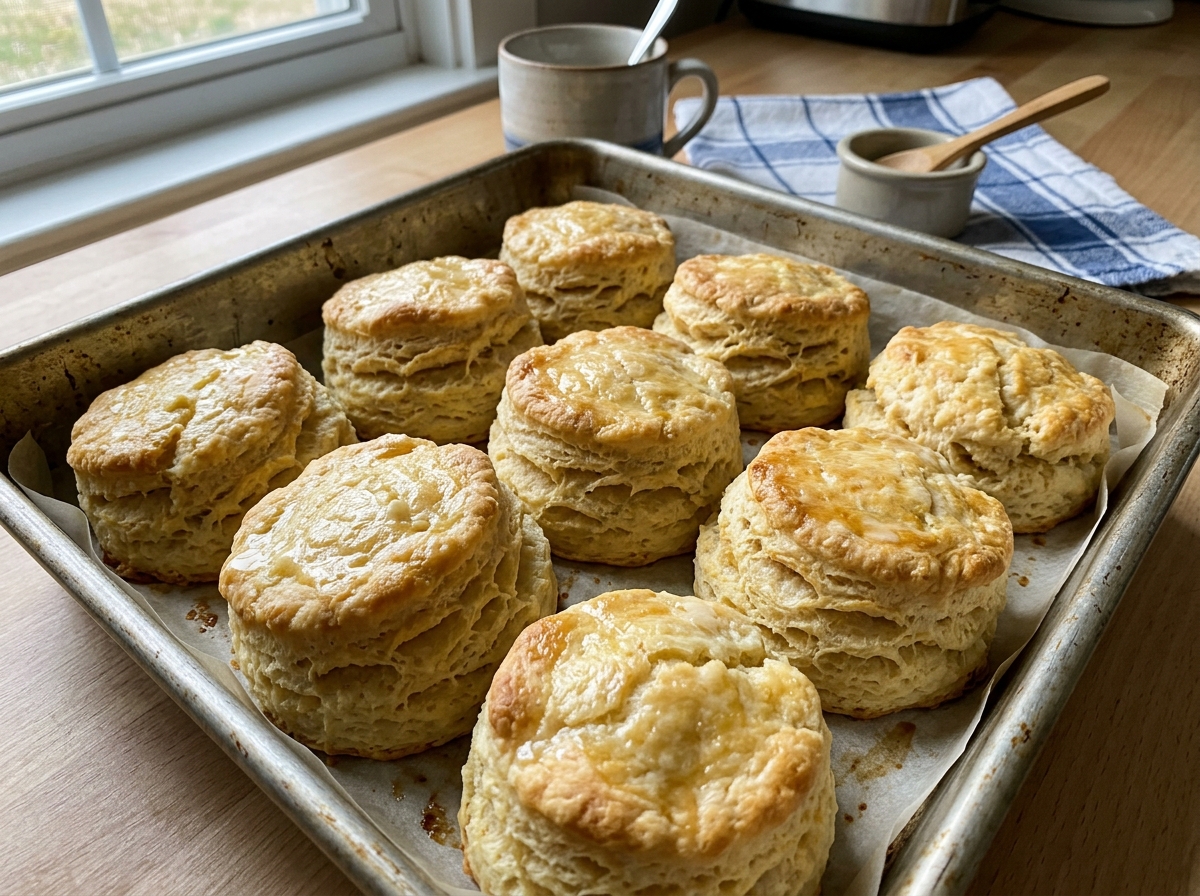
Southern buttermilk biscuits need only a handful of ingredients, which means technique makes all the difference. The goals are tall biscuits, layers you can peel apart, and a tender inside. This recipe gets there with grated cold butter, a quick folding step, and a very hot oven.
What Makes Biscuits Rise and Flake
Cold butter makes the layers. Pieces of butter stay solid in the dough. In a 450°F oven, the water in that butter turns to steam and pushes the layers of dough apart before the dough sets. Warm, soft butter blends into the flour and gives flat, dense biscuits. Grating frozen or very cold butter on a box grater spreads it evenly in small flakes without warming it with your hands.
Folding stacks the layers. Folding the dough into thirds like a letter, turning it and patting it out again four times creates dozens of thin layers of butter and dough. This is the main difference between a flaky biscuit and a fluffy, cake-like one.
Buttermilk and baking soda add lift and tang. The acid in buttermilk reacts with baking soda for extra rise, and it keeps the crumb tender.
Ingredient Notes
- All-purpose flour: Chilling it in the freezer for 15 minutes helps keep the butter cold. Southern soft-wheat flours like White Lily make an even more tender biscuit; reduce to about 2⅓ cups if using one.
- Unsalted butter: Freeze the stick for 20 minutes before grating. Salted butter works; reduce the salt to ½ teaspoon.
- Whole buttermilk: Low-fat buttermilk works but gives a slightly drier biscuit. For a substitute, stir 1 tablespoon of lemon juice into 1 cup of whole milk and let it sit 5 minutes.
- Baking powder: Make sure it is fresh. Old baking powder is one of the most common reasons biscuits do not rise.
Cues for Each Step
After tossing the butter into the flour, the mixture should look like coarse, shaggy crumbs with visible flakes of butter. Stir in the buttermilk just until the dough comes together; it should look rough and slightly sticky, not smooth.
During folding, the dough goes from crumbly to cohesive. If butter starts to look greasy or the dough feels soft, slide it onto a sheet and chill for 10 minutes.
Press the cutter straight down and lift straight up. Twisting seals the edges, which stops the biscuit from rising evenly. Placing biscuits so their sides touch helps them rise taller by supporting each other.
They are done when the tops are deep golden and the sides look set, 12 to 14 minutes.
Common Mistakes
- Flat biscuits. Warm butter, expired baking powder or twisting the cutter.
- Tough biscuits. Overmixing or overworking the dough. Fold gently and stop at four turns.
- Dry biscuits. Too much flour pressed in while patting out. Flour the surface lightly, not heavily.
- Pale bottoms or tops. The oven was not fully preheated. Give it 20 minutes at 450°F.
Variations
- Cheddar biscuits: Toss ¾ cup of shredded sharp cheddar into the flour with the butter.
- Honey butter: Mix the melted butter for brushing with 1 tablespoon of honey.
- Drop biscuits: Add 2 extra tablespoons of buttermilk, skip the folding, and drop spoonfuls onto the sheet.
- Herb: Add 1 tablespoon of chopped fresh chives or rosemary to the dry ingredients.
Make-Ahead, Storage and Freezing
Cut the biscuits, place them on a sheet and freeze until firm, then transfer to a freezer bag for up to 3 months. Bake straight from frozen at 450°F, adding 3 to 5 minutes. This is the easiest way to have fresh biscuits on a busy morning.
Baked biscuits are best the same day. Store leftovers in an airtight container for up to 2 days and rewarm wrapped in foil at 350°F for 5 to 8 minutes.
Frequently Asked Questions
Why didn’t my biscuits rise?
The most common causes are warm butter, old baking powder and twisting the cutter. Keep everything cold and press the cutter straight down.
Can I use a food processor?
Yes. Pulse cold cubed butter into the flour in short bursts until it is pea-sized, then stir in the buttermilk by hand.
What do I do with the scraps?
Gently press them together, pat out and cut again. Second-cut biscuits are a little less tender but still good.
What should I serve with them?
Sausage gravy, butter and jam, honey, or alongside fried chicken, soups and stews.
Southern Buttermilk Biscuits from Scratch
Ingredients
Method
- Preheat your oven to 450°F (232°C) and line a large baking sheet with parchment paper.
- In a large mixing bowl, whisk together 2.5 cups of chilled all-purpose flour, 1 tablespoon of baking powder, 0.5 teaspoon of baking soda, and 1 teaspoon of fine sea salt.
- Add 0.5 cup of grated cold unsalted butter to the dry ingredients and toss gently with a fork until coated and crumbly.
- Pour 1 cup of cold whole buttermilk into the center and stir with a wooden spoon until a shaggy dough just comes together.
- Turn the dough onto a lightly floured surface and pat into a 1/2-inch thick rectangle.
- Fold the dough into thirds like a letter, rotate 90 degrees, and pat down again; repeat this folding process 4 times to create flaky layers.
- Pat the dough into a 3/4-inch thick rectangle and cut out biscuits using a 2.5-inch round cutter pressed straight down without twisting.
- Arrange the biscuits on the prepared baking sheet so their edges lightly touch each other.
- Bake at 450°F for 12 to 14 minutes until the tops are golden brown and puffed tall.
- Brush the tops immediately with 2 tablespoons of melted unsalted butter and serve warm.