Apple Pie Monkey Bread
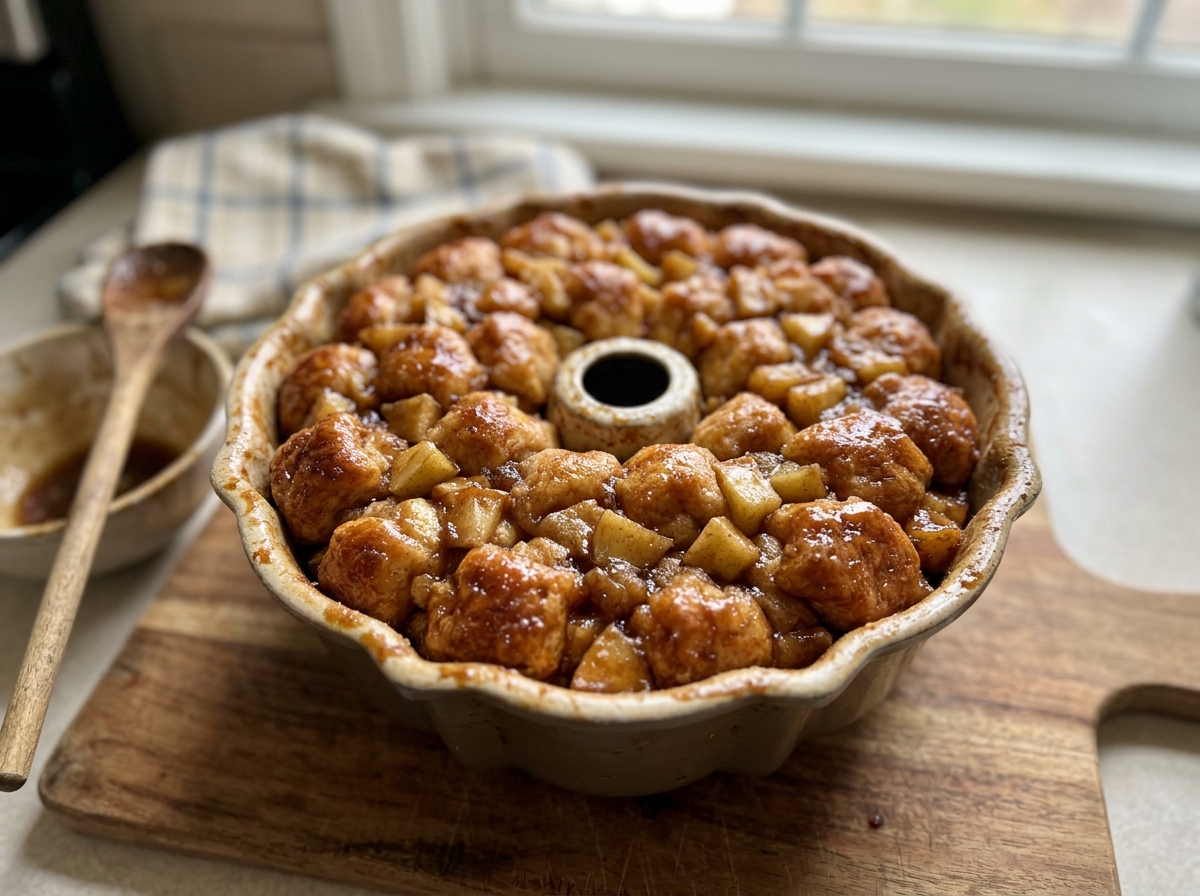
The exterior dough nuggets form a crisp, caramelized brown sugar crust that snaps slightly when pulled apart, revealing soft, steamy cinnamon center biscuits packed with tender diced apples. Many apple monkey bread recipes suffer from soggy dough pockets caused by raw apples releasing excess moisture during baking. Pre-cooking the diced Granny Smith apples in butter and brown sugar burns off that excess water and creates a thick, syrupy filling that clings to each dough piece instead of turning the pan bottom into sludge. This approach ensures every pull-apart piece holds its structure while delivering concentrated apple pie flavor.
The Science Behind Crisp Sugar Crusts and Soft Center Dough
Creating monkey bread with fruit requires balancing excess fruit juice and dough baking times. Raw apples contain about 86 percent water by weight. When raw diced apples heat inside a closed ring of dough, that internal water turns to steam, pooling at the bottom of the pan and turning the surrounding biscuit dough into a gummy, unbaked slurry. Pre-cooking the diced apples in butter over medium heat releases and evaporates that surface moisture ahead of time, while concentrating natural apple sugars through light caramelization.
Coating each piece of biscuit dough in granulated sugar before assembly creates a physical barrier. The individual sugar granules melt during the initial minutes of baking, forming a micro-layer of syrup that prevents the raw dough pieces from fusing into a dense, solid brick of bread. This enables heat to circulate through the tiny air pockets between pieces.
The choice of a tube pan or Bundt pan is equally structural. Dough pieces packed in a solid deep pan struggle to transfer heat into the very center. The central metal chimney of a Bundt pan conducts heat directly into the middle ring of dough. This brings internal bread temperatures up to 190°F, fully setting the gluten matrix while setting the outer brown sugar and butter glaze into a thick caramel crust.
Key Ingredients and Smart Substitutions
Selecting the right ingredients keeps this pull-apart bread structured rather than soggy. Here is what to look for at the grocery store and how to make realistic swaps when needed.
- Refrigerated Buttermilk Biscuits: Standard 16.3-ounce cans of buttermilk biscuits provide a sturdy, uniform crumb that rises predictably. Avoid flaky layer varieties, which split apart when shaken in sugar and absorb excess butter. Substitution: Thawed frozen yeast roll dough works well. Trade-off: Yeast dough requires 2 hours of proofing time before baking.
- Granny Smith Apples: High acidity (pH around 3.1) cuts through the rich sugar glaze, while high natural pectin preserves structural shape during double cooking. Substitution: Honeycrisp or Braeburn apples. Trade-off: They are noticeably sweeter, so reduce the brown sugar in the glaze by 2 tablespoons to avoid an overly sweet finish.
- Dark Brown Sugar: Packed dark brown sugar supplies about 10 percent molasses, delivering deep butterscotch flavor notes and natural acidity. Substitution: Light brown sugar. Trade-off: Yields a lighter color crust and a milder caramel profile.
- Unsalted Sweet Cream Butter: Using unsalted butter lets you control the precise salt content in both the sautéed apples and the final glaze. Substitution: Salted butter. Trade-off: Omit the separate 1/4 teaspoon of fine sea salt added to the caramel glaze.
- Ground Cinnamon and Nutmeg: Freshly ground spices offer essential warm aromatics that penetrate the sugar shell. Substitution: Pre-mixed apple pie spice. Trade-off: Adds small amounts of allspice and ginger, which subtly alters the traditional cinnamon profile.
Visual Cues and Temperature Milestones for Success
Relying solely on oven timers can lead to underbaked dough or burnt sugar glaze. Pay close attention to these clear sensory indicators at each phase of cooking.
1. Pre-Cooking the Apples
Sauté the diced apples until the outer edges turn translucent and yield slightly when pressed with a spatula, about 6 to 8 minutes. You should hear a steady sizzle that quietens as liquid evaporates. The pan bottom should look shiny with concentrated butter glaze, with no pooling liquid remaining.
2. Coating and Layering Dough
Cut each biscuit into four distinct quarters. Shake them in cinnamon-sugar until every surface is completely opaque. Drop the coated pieces into the pan without pressing them down. Air pockets between the pieces are required for steam circulation.
3. Baking Doneness Cues
Bake at 350°F. By minute 30, the kitchen will smell intensely of cooked butter and cinnamon. At 350°F for 35 to 40 minutes, the top pieces should turn a deep amber-mahogany color. Touch the center ring gently; the dough pieces should spring back firmly without feeling spongy. Insert an instant-read probe thermometer into the center of the dough ring; it must read between 190°F and 200°F.
4. The Critical Inversion Window
Set the baked Bundt pan on a wire cooling rack for exactly 10 minutes. Listen for quiet bubbling as the sugar glaze thickens. If inverted immediately, hot syrup runs everywhere and leaves dough behind. If left longer than 15 minutes, cooling sugars act like concrete, bonding the bread to the metal pan walls.
Common Mistakes and How to Avoid Them
Avoid these four frequent baking errors to guarantee clean pulls and an even cook every time.
- Skipping the apple pre-cook step: Raw apple cubes release steam inside the dough structure, creating gummy dough pockets. Always cook diced apples in butter until moisture reduces before adding them to the pan.
- Tightly packing dough pieces into the Bundt pan: Pressing dough layers down eliminates necessary air gaps, resulting in a dense, raw core. Drop coated dough pieces in gently and allow them to settle naturally.
- Missing the 10-minute inversion timing: Inverting right out of the oven causes hot glaze to run off the plate. Waiting longer than 15 minutes cools the caramel into adhesive sugar, sticking the loaf inside the pan. Set a kitchen timer the moment the pan leaves the oven.
- Using flaky layer canned biscuits: Flaky layers separate during tossing, absorbing liquid glaze like sponges and collapsing. Stick to traditional, solid buttermilk biscuits.
Simple Recipe Variations
Customize this base dish to fit seasonal menus or personal preferences with these tested additions.
- Caramel Pecan Apple: Add 3/4 cup of chopped, toasted pecans to the cinnamon-sugar coating mix, or sprinkle them over the cooked apple layer for added crunch and roasted flavor.
- Maple Bourbon Glaze: Replace 1/4 cup of the dark brown sugar in the sauce with pure maple syrup, and whisk in 1 tablespoon of bourbon just after removing the sauce from heat.
- Cranberry Apple Twist: Swap 1/2 cup of the diced Granny Smith apples for fresh or frozen tart cranberries to add a vibrant color and sharp tart contrast.
Storage, Reheating, and Make-Ahead Instructions
Proper storage prevents the caramel glaze from turning sticky and keeps the biscuit crumb soft.
Room Temperature & Refrigerator: Cover leftover monkey bread tightly with foil or store in an airtight container at room temperature for up to 2 days. For longer storage, keep in the refrigerator for up to 5 days.
Freezing: Allow the baked monkey bread ring to cool completely. Wrap the whole ring (or individual pull-apart portions) in two layers of plastic wrap followed by heavy-duty aluminum foil. Freeze for up to 2 months. Thaw overnight in the refrigerator before reheating.
Reheating: Warm individual pull-apart pieces in the microwave for 15 to 20 seconds on medium power. To heat a larger portion, place it on a baking sheet, cover loosely with foil, and warm in a 325°F oven for 10 to 12 minutes until heated through and soft.
Frequently Asked Questions
Can I bake apple pie monkey bread in a standard 9×13 baking dish?
Yes, you can assemble and bake this recipe in a 9×13-inch baking dish. Spread the sugar-coated dough pieces and sautéed apples evenly across the dish, then pour the caramel glaze on top. Bake at 350°F for 30 to 35 minutes, checking that the center dough reaches an internal temperature of 190°F.
Why did my monkey bread stick to the inside of the Bundt pan?
Sticking happens if the pan was not thoroughly greased or if the bread rested longer than 15 minutes after baking, causing the caramel glaze to harden. To release a stuck loaf, submerge the bottom of the Bundt pan in a shallow basin of warm water for 3 to 5 minutes to soften the sugar glaze before inverting again.
Can I assemble this monkey bread the night before baking?
Complete overnight assembly is not recommended because the sugar glaze will melt the dough coating and make the raw biscuits soggy. However, you can chop and pre-cook the apples, mix the cinnamon-sugar, and chop any nuts the night before. Store cooked apples in the fridge, then cut dough and assemble right before baking.
How do I prevent the top caramel glaze from burning in the oven?
If your oven runs hot or you are using a dark nonstick Bundt pan, the top sugar layer can brown too quickly. Position your oven rack in the lower-third section of the oven. If the top looks dark brown at the 25-minute mark, tent a piece of aluminum foil loosely over the pan for the remaining baking time.
Apple Pie Monkey Bread
Ingredients
Equipment
Method
- Preheat oven to 350°F (175°C) and generously coat a 10-inch Bundt pan with nonstick cooking spray.
- Melt 2 tablespoons of unsalted butter in a 12-inch skillet over medium heat.
- Add 2 cups of diced Granny Smith apples to the skillet and sauté for 6 to 8 minutes until edges are translucent and tender; remove from heat to cool for 5 minutes.
- In a large ziplock bag, whisk together 1/2 cup granulated sugar, 2 teaspoons ground cinnamon, and 1/2 teaspoon ground nutmeg.
- Open the 2 cans of buttermilk biscuits and cut each biscuit into 4 equal quarter pieces.
- Drop the dough pieces into the ziplock bag in small batches, shaking until each piece is fully coated in cinnamon sugar.
- Layer half of the coated dough pieces loosely into the bottom of the prepared Bundt pan.
- Spoon the cooked diced apples evenly over the first layer of dough pieces.
- Top with the remaining coated dough pieces, dropping them loosely into the pan without packing them down.
- In a glass bowl, whisk together 3/4 cup melted butter, 3/4 cup packed dark brown sugar, 1 teaspoon vanilla extract, and 1/4 teaspoon fine sea salt until smooth.
- Pour the warm brown sugar glaze slowly over the layered dough in the Bundt pan.
- Bake at 350°F for 35 to 40 minutes until the top is deep golden brown and an instant-read thermometer inserted into the center dough ring reads 190°F.
- Transfer the Bundt pan to a wire cooling rack and let rest undisturbed for exactly 10 minutes.
- Place a large rimmed serving plate upside down over the Bundt pan, invert both together carefully, and lift the pan off to release the bread.
- Whisk 1 cup powdered sugar, 2 tablespoons heavy cream, and 1/2 teaspoon vanilla extract in a small bowl, then drizzle over the warm monkey bread right before serving.