Classic Homemade Churros
Fresh homemade churros are most useful for weekend gatherings, birthday parties, or whenever you want a warm dessert made entirely from basic pantry staples in under 45 minutes. We build this dough as a classic stovetop choux pastry to hydrate wheat starches before frying. Cooking the flour first ensures the center stays light and tender while the crisp exterior holds up without turning soft right away.
The Science Behind Crisp, Tender Churros
Starch Gelatinization Creates a Soft Center
Cooking flour in boiling water and butter on the stovetop forces starch granules to absorb liquid and swell rapidly. This process, known as gelatinization, sets the structural foundation of the interior before dough ever touches hot oil. Because the starches are already hydrated and partially set, the center cooks into a soft, custard-like texture during brief frying without absorbing excess fat.
Egg Proteins and Steam Provide Rise
Unlike yeast breads or cakes made with chemical leaveners, churro dough relies on trapped steam and egg proteins for its interior expansion. Beating an egg into warm choux dough introduces liquid and soluble proteins. As piped dough enters 365°F frying oil, trapped moisture expands into steam while egg proteins set quickly around the air pockets. This keeps the churros light rather than dense and gummy.
Ridge Geometry for Uniform Crispness
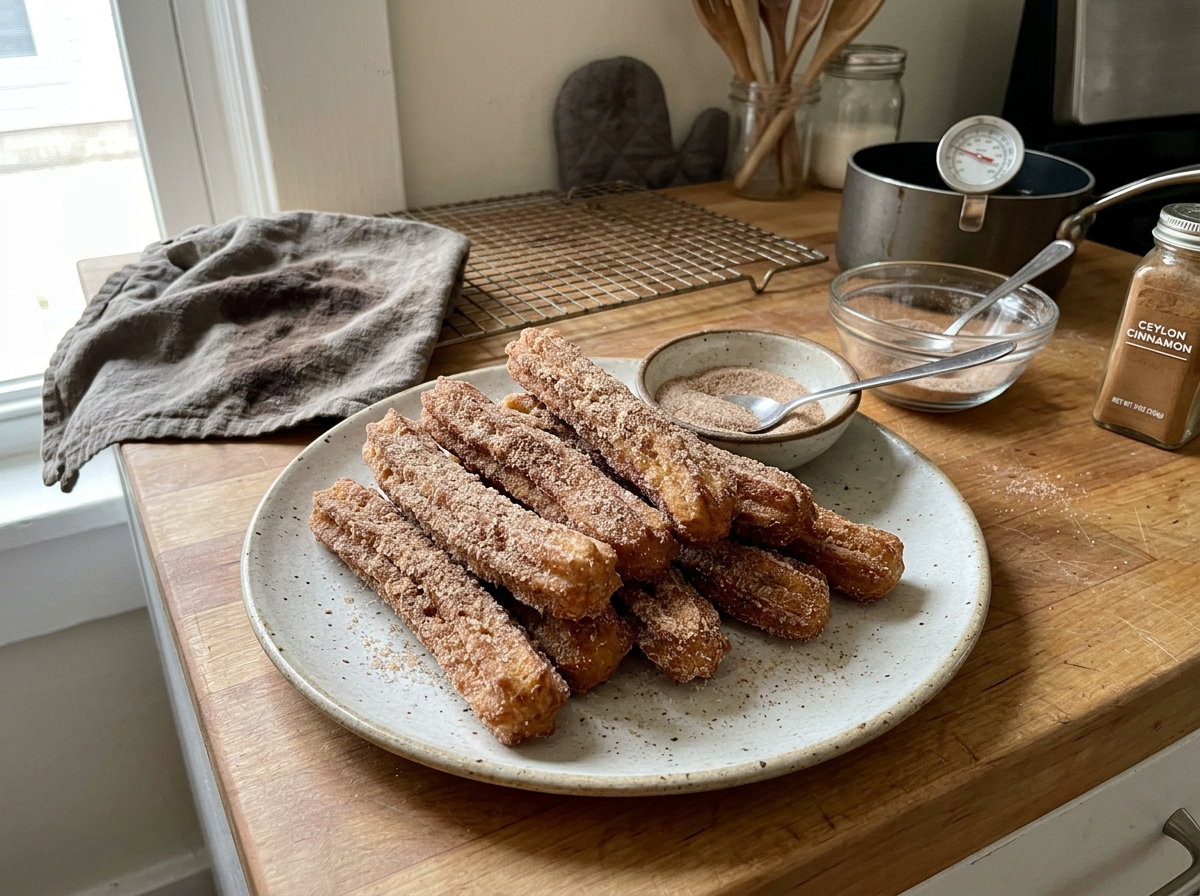
Piping churro dough through an open star tip creates distinct longitudinal ridges. These ridges double the surface area exposed directly to hot fat. Increased surface area accelerates the Maillard reaction—the chemical reaction between amino acids and reducing sugars—giving you maximum crisp crust per inch of dough. Smooth dough strands lack these ridges, which leads to soggy exteriors or uneven cooking.
Key Ingredients and Smart Substitutions
Getting consistent results comes down to choosing standard pantry items and understanding how each ingredient behaves in cooked dough.
- All-Purpose Flour: Unbleached all-purpose flour provides the ideal protein level (around 10 to 11 percent) to build structure without making the churros tough. Bread flour contains too much gluten and creates a rubbery chew, while cake flour lacks sufficient strength to hold piped ridges. A 1-to-1 gluten-free baking flour containing xanthan gum works as a direct substitute, though gluten-free churros brown slightly faster.
- Unsalted Butter: Butter supplies fat for tender internal texture and rich flavor. Using unsalted butter allows precise control over total salt concentration. If you substitute vegetable shorting or margarine, you lose the milk solids that assist with even browning, resulting in paler churros.
- Eggs: Large eggs bind dough, add fat, and provide moisture for steam expansion. Always bring your egg to room temperature so it incorporates smoothly into warm dough without curdling. For an egg-free version, replace one large egg with 3 tablespoons of aquafaba (canned chickpea liquid), though the interior will be slightly less rich.
- Frying Oil: A neutral oil with a high smoke point (400°F or higher) is essential. Vegetable oil, canola oil, or peanut oil all fry cleanly without smoking or altering flavor. Avoid unrefined olive oil or unrefined coconut oil, which smoke at low temperatures and leave a heavy taste.
- Cinnamon-Sugar Coating: Ground Ceylon or Saigon cinnamon combined with white granulated sugar forms the classic outer coating. Granulated sugar provides coarse texture that clings to hot oil; powdered sugar or fine baker’s sugar dissolves into a sticky film on warm churros.
Visual Cues for Perfect Frying and Piping
Timer counts are helpful guides, but sensory cues tell you exactly what is happening inside your pan during each stage of cooking.
Dough Stovetop Stage: When stirring flour into boiling liquid, cook over medium heat for 1 to 2 minutes. Look for a thin film forming across the bottom of the saucepan. The dough should gather into a smooth, glossy ball that pulls cleanly away from pan walls. This indicates enough water has evaporated and starches are set.
Piping Consistency: After adding the egg, the dough should look thick, smooth, and slightly shiny. When lifted with a spoon, it should form a stiff peak that holds its shape without slumping. If dough feels stiff to pipe, let it rest in a warm kitchen spot for 5 minutes rather than adding liquid, which ruins ridge definition.
Oil Temperature and Sound: Maintain frying oil between 350°F and 370°F using a clip-on thermometer. When you drop dough strips into the oil, you should hear a steady, brisk sizzling sound and see small bubbles rapidly surrounding the ridges. If dough sinks without bubbling, oil is under 340°F. If oil smokes or ridges turn dark brown in under 30 seconds, lower your heat source immediately.
Doneness: Churros are fully fried when they float steadily and reach a deep reddish golden-brown hue across all ridges, taking 2 to 3 minutes per side. When lifted with tongs, they should feel firm and rigid rather than soft or pliable in the center.
Troubleshooting Common Churro Pitfalls
Churro making is straightforward once you know how to avoid common technical mistakes.
- Raw or Doughy Center: This happens when frying oil is too hot (above 380°F). The exterior darkens quickly before heat penetrates to the middle. Use a thermometer to monitor oil temperature continuously, adjusting burner heat between batches.
- Soggy or Greasy Churros: Frying at temperatures below 340°F forces dough to absorb oil like a sponge instead of searing the crust. Never crowd the pan; fry only 3 or 4 pieces at once so oil temperature does not drop sharply when raw dough enters.
- Dough Splattering in Oil: Air pockets trapped in smooth dough can expand violently in hot oil. Using a star-shaped piping tip breaks up surface tension and lets steam vent safely. Ensure dough is completely smooth and free of dry flour lumps before filling your piping bag.
- Cinnamon Sugar Refuses to Stick: If you let fried churros cool on paper towels until cold, surface oil dries up and sugar grains roll right off. Rest churros on paper towels for only 15 seconds to catch excess fat, then roll them immediately in cinnamon sugar while still hot.
Flavor Variations to Try
Once you master base choux dough, simple additions to coatings or dipping sauces change the entire presentation.
Spicy Mexican Chocolate Dip: Serve hot churros alongside a thick dark chocolate dipping sauce. Melt 4 ounces of bittersweet chocolate with 1/2 cup of heavy cream, 1/4 teaspoon of ground cinnamon, and a tiny pinch of cayenne pepper in a small saucepan over low heat until smooth.
Cardamom Orange Coating: Replace half of the ground cinnamon in the sugar mixture with ground cardamom and add 1 teaspoon of freshly grated orange zest to the granulated sugar. Citrus oil combines with warm spice for a bright flavor profile.
Dulce de Leche Filled Churros: Pipe dough using a larger star tip (such as Ateco #845) to create thicker strands. After frying and sugar-rolling, allow churros to cool for 3 minutes. Poke a long wooden skewer down the center length of each churro, then pipe canned dulce de leche directly into the open core using a narrow filling tip.
Storage, Reheating, and Make-Ahead Instructions
Churros taste best within minutes of frying, but you can prepare dough ahead or store leftovers without losing texture.
Making Dough in Advance: Prepare choux dough completely, let it cool, and transfer it into a piping bag fitted with your star tip. Seal both ends of the bag tightly with rubber bands and store in the refrigerator for up to 24 hours. Let dough stand at room temperature for 20 minutes before piping into hot oil.
Storing Leftovers: Keep fried, sugared churros in an airtight container at room temperature for up to 2 days. Avoid refrigerating fried churros, as moisture turns the crispy crust soft and gummy.
Reheating to Restore Crunch: Preheat your oven or air fryer to 375°F. Arrange leftover churros in a single layer on a wire rack set inside a baking sheet. Bake for 3 to 5 minutes (or 2 to 3 minutes in an air fryer) until sizzling. Residual surface fat reheats and crisps the exterior back to original texture. Roll in fresh cinnamon sugar immediately after heating if desired.
Frequently Asked Questions
Why did my churros turn out hollow inside?
A small central air space is normal due to steam expansion during frying. Large empty gaps occur when too much water evaporates while cooking the flour mixture on the stove, or if the egg is undersized. Measure liquid accurately and remove the pan from heat as soon as a film forms on the bottom.
Can I bake churros instead of deep frying them?
You can bake piped dough on a parchment-lined sheet at 400°F for 20 minutes, but the texture resembles soft cream puff shells rather than crispy churros. If baking, brush hot churros with melted butter right out of the oven so the cinnamon sugar can stick.
What piping tip size works best for churros?
An open star tip measuring 1/2 inch to 5/8 inch across (such as Wilton 1M or Ateco 844) works best. Deep star grooves double the outer surface area for maximum crispness while letting internal steam vent safely without rupturing the dough strand.
Can I freeze cooked churros for later?
Yes. Freeze fried churros without cinnamon sugar on a flat tray until solid, then pack them into a freezer bag for up to 3 months. Reheat frozen churros in a 400°F oven for 6 to 8 minutes until sizzling, then roll immediately in cinnamon sugar.
Classic Homemade Churros
Ingredients
Equipment
Method
- Combine 1 cup water, 1/2 cup unsalted butter cut into pieces, 1 tbsp granulated sugar, and 1/2 tsp fine sea salt in a medium saucepan over medium-high heat, bringing to a rolling boil.
- Reduce heat to medium, add 1 cup all-purpose flour all at once, and stir vigorously with a wooden spoon until a smooth dough ball forms and a thin white film coats the bottom of the pan, about 1 to 2 minutes.
- Remove the pan from heat and let the dough cool for 5 minutes until warm to the touch but not scorching hot.
- Add 1 large room-temperature egg and 1 tsp vanilla extract to the dough, beating vigorously with a wooden spoon or electric mixer until fully incorporated and smooth.
- Transfer the warm dough into a heavy-duty piping bag fitted with a 1/2-inch open star tip.
- In a shallow bowl, whisk together 1/2 cup granulated sugar and 1 1/2 tsp ground cinnamon until thoroughly combined, then set aside near your frying station.
- Pour 4 cups vegetable oil into a deep Dutch oven or heavy saucepan (oil should measure roughly 2 inches deep) and heat over medium-high heat until it reaches 360°F to 370°F on a candy thermometer.
- Line a large baking sheet with two layers of paper towels and set it next to your stove.
- Hold the piping bag directly over the hot oil, pipe a 4-inch to 5-inch length of dough, and cut the end cleanly with kitchen shears, letting the dough drop gently into the oil.
- Pipe 3 to 4 churros per batch, avoiding overcrowding the pot so the oil temperature does not drop below 350°F.
- Fry churros for 2 to 3 minutes per side, turning with metal tongs or a slotted spoon, until deep reddish golden-brown on all sides and crisp to the touch.
- Use a slotted spoon to transfer fried churros to the paper towel-lined baking sheet for 15 seconds to drain excess oil.
- Roll warm churros immediately in the cinnamon-sugar mixture until evenly coated, then serve hot.