Homemade Turtle Clusters
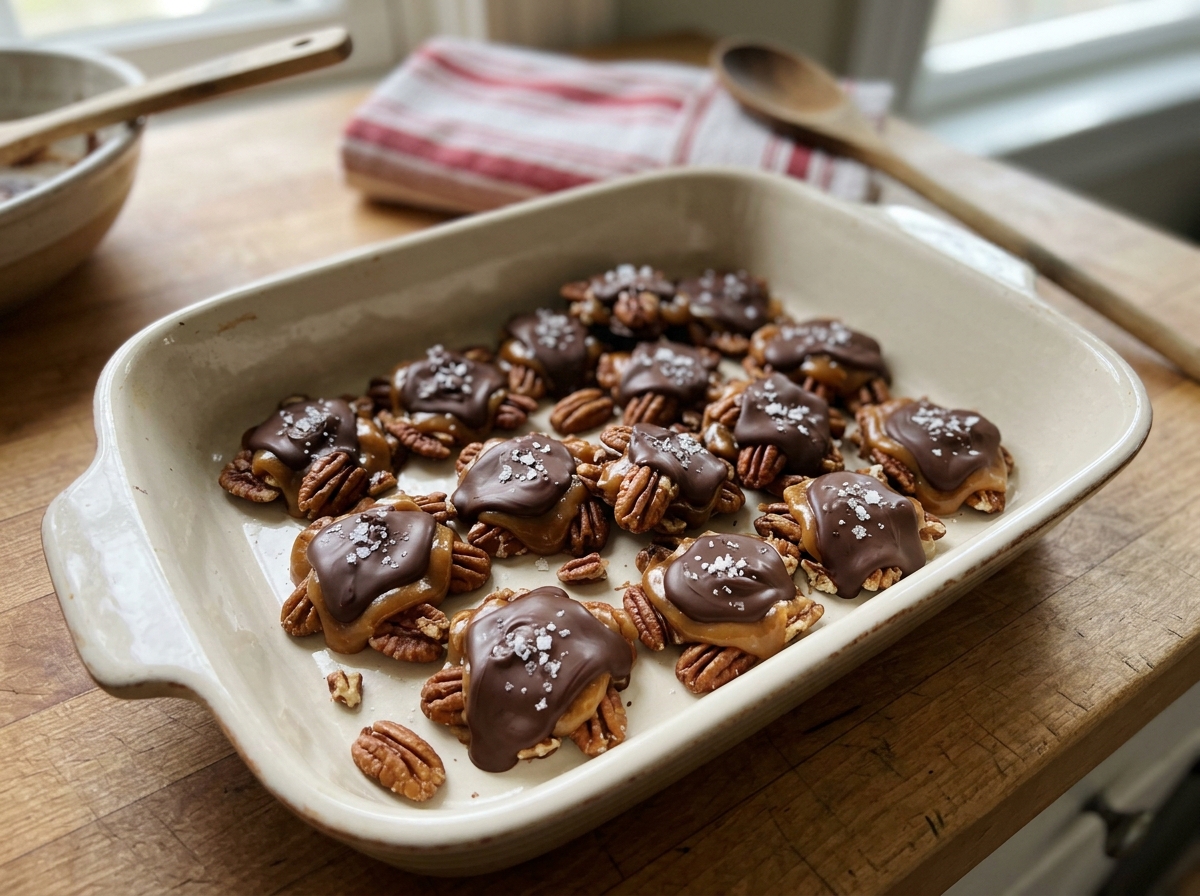
Toasting raw pecan halves in butter before assembling turtle clusters changes everything about how the final candy tastes and holds together. Most recipes call for raw nuts topped with melted caramel, but butter-toasting triggers the Maillard reaction, developing deep nutty flavor while coating the pecans in fat so they stay crisp under caramel. We melt soft caramels with a splash of heavy cream to ensure the center stays pliable at room temperature instead of turning rock hard. This method gives you candy-shop clusters with a snappy chocolate top, soft caramel middle, and crunchy toasted base every time.
The Science Behind Smooth Caramel and Crisp Nuts
The key to exceptional candy lies in managing moisture, fat, and heat. When raw pecans toast at 350°F, heat breaks down proteins and sugars through the Maillard reaction, creating rich flavor compounds that raw nuts lack. Tossing pecans in melted butter before roasting adds milk fat to the surface. This fat layer acts as a barrier, preventing liquid caramel from seeping into the nut tissue and softening it over time.
Caramel texture depends on controlling sugar crystallization. Commercially prepared soft caramels contain corn syrup to prevent sugar crystals from forming a hard lattice. However, melting caramel evaporates residual moisture. Adding heavy cream introduces butterfat and water back into the sugar matrix, keeping the caramel stretchable and soft at room temperature.
Chocolate behavior is governed by cocoa butter crystal formations. Unrefined or untempered chocolate heated past 90°F loses its stable beta crystals. Stirring in a tiny amount of vegetable shortening or coconut oil stabilizes liquid fats during cooling. This keeps the set chocolate glossy with a clean, firm snap without requiring professional tempering.
Ingredient Notes and Smart Substitutions
Selecting the right ingredients ensures your candies set properly without becoming greasy or brittle:
- Pecan Halves: Buy raw, unsalted jumbo pecan halves rather than pre-roasted nuts. Raw pecans let you control the degree of roasting and saltiness. Substitution: Raw walnuts work well, though their skins contain tannins that impart a subtle bitterness best paired with dark chocolate.
- Soft Caramels: Look for wrapped soft caramel squares or unwrapped caramel baking bits. Avoid liquid caramel ice cream toppings, which contain too much water to firm up. Substitution: Homemade soft caramels cooked to 242°F offer rich flavor but add prep time.
- Heavy Cream: Use heavy cream with 36% milk fat content. The fat coats sugar particles in the melted caramel, keeping the mixture elastic. Substitution: Whole evaporated milk works in a pinch, but low-fat milk causes caramel to separate.
- Semi-Sweet Chocolate: Choose chocolate chips or chopped baking bars with 50% to 60% cacao. Baking bars melt more fluidly than chips. Substitution: Dark chocolate yields a less sweet cluster, while milk chocolate creates a sweeter finish.
- Flaky Sea Salt: Large salt crystals provide a crisp texture and sharp saltiness that cuts through rich caramel. Substitution: Coarse kosher salt works, but use 25% less by volume.
Critical Visual and Sensory Doneness Cues
Cooking candy requires monitoring physical signs rather than relying strictly on timers:
- Toasting Nuts: Spread pecans on a rimmed sheet pan at 350°F. Watch for the color to shift from pale tan to amber brown between 7 and 9 minutes. You will hear a faint sizzle as moisture escapes and smell toasted butter. Remove immediately to stop cooking.
- Melting Caramel: Combine unwrapped caramels and heavy cream in a heavy saucepan over low heat, stirring continuously. The mixture is ready at 175°F to 180°F. It should transform from clumpy chunks into a smooth, glossy stream that flows off the spatula like warm honey.
- Assembling Pecan Nests: Cross four pecan halves on parchment paper in a star shape with overlapping ends. Spoon one tablespoon of warm caramel over the center junction. It should pool across the middle third of the nuts, binding them together. If it runs off rapidly, let the caramel cool for 2 minutes to thicken.
- Melting Chocolate: Heat chocolate in a heatproof bowl set over simmering water, stirring constantly. Stop when 80% is melted, then stir off heat until smooth (88°F to 90°F). The chocolate should look glossy, feel warm to the touch, and coat a spoon smoothly.
Common Mistakes and How to Avoid Them
Avoid these common candy-making mistakes for the best results:
- Chocolate Seizing: Moisture causes warm chocolate to bind into a dull, grainy paste. Prevention: Dry all equipment thoroughly before starting and never cover warm chocolate with a lid.
- Rock-Hard Caramel Centers: Overheating caramel evaporates essential moisture, causing sugar to harden. Prevention: Melt caramels over low heat and include heavy cream.
- Caramel Unraveling: Pouring caramel over cold or greasy nuts prevents adhesion. Prevention: Let toasted pecans cool to room temperature on parchment paper before spooning caramel.
- Fat Bloom Streaks: Freezing warm clusters causes cocoa butter to separate into chalky white streaks. Prevention: Let finished clusters set naturally at cool room temperature (65°F to 68°F) for 45 minutes.
Easy Recipe Variations
Customize your turtle clusters with these flavor variations:
- Dark Chocolate Espresso Turtles: Stir 1/2 teaspoon of instant espresso powder into melted dark chocolate (70% cacao). Top each cluster with crushed roasted coffee beans and flaky sea salt.
- Salted Caramel Cashew Clusters: Replace pecans with raw cashews tossed in butter and roasted at 325°F for 10 minutes. Cashews provide a buttery crunch that pairs well with milk chocolate.
- Smoky Bacon Pretzel Turtles: Lay two mini pretzel grids beneath the pecans before adding caramel. Top wet chocolate with crumbled cooked bacon for a salty-sweet twist.
- Dairy-Free Coconut Caramel Clusters: Use vegan soft caramel bites made with coconut syrup, substitute heavy cream with canned coconut cream, and use dairy-free dark chocolate chips.
Storage, Freezing, and Shelf-Life Guidelines
Keep your homemade candies fresh with proper storage techniques:
- Room Temperature Storage: Pack set clusters into an airtight container lined with parchment paper between layers. Store in a cool, dry pantry (65°F to 70°F) for up to 3 weeks.
- Refrigerated Storage: In humid climates, store clusters in the fridge for up to 6 weeks. Place a dry paper towel in the container to absorb moisture. Bring to room temperature 15 minutes before serving.
- Freezer Storage: Wrap clusters individually in parchment paper and place in a heavy-duty freezer bag. Freeze for up to 3 months. Thaw in the refrigerator overnight before bringing to room temperature.
Frequently Asked Questions
Why did my caramel run off the pecans into a puddle?
Caramel runs if it is poured while too hot or diluted with too much liquid. Let melted caramel sit off heat for 2 minutes to cool to 160°F and thicken to a warm honey consistency before spooning over the nuts.
Can I use chocolate melting wafers instead of real chocolate chips?
Yes, chocolate melting wafers contain vegetable oil, allowing them to melt smoothly and set firm without tempering. They resist bloom in warm environments, though real chocolate chips offer richer cocoa flavor.
How do I fix seized chocolate if water splashes into it?
Immediately stir in hot heavy cream one teaspoon at a time, whisking vigorously until smooth. The added liquid emulsifies the sugar crystals and restores a glossy texture suitable for drizzling.
Can I make these turtle clusters in a slow cooker?
You can keep caramel warm in a slow cooker set on the ‘Low’ or ‘Warm’ setting to assemble large batches. However, toast the pecans in the oven first for crisp texture and flavor before assembling in the slow cooker.
Homemade Turtle Clusters
Ingredients
Equipment
Method
- Preheat your oven to 350°F (175°C) and line two large rimmed sheet pans with parchment paper.
- In a medium bowl, toss the raw pecan halves with 2 tablespoons of melted unsalted butter until evenly coated.
- Spread the buttered pecans in a single layer on one sheet pan and bake for 7 to 9 minutes until fragrant and amber brown.
- Remove the pecans from the oven and allow them to cool completely on the pan at room temperature.
- Arrange the cooled pecans on the second parchment-lined sheet pan into 24 clusters of 3 to 4 cross-patterned halves.
- In a heavy saucepan over low heat, combine the unwrapped caramels and 2 tablespoons of heavy cream.
- Cook the caramel mixture, stirring continuously with a silicone spatula, for 5 to 7 minutes until completely melted and smooth (175°F to 180°F).
- Remove the caramel from heat and let rest for 2 minutes to thicken slightly to a warm honey consistency.
- Spoon 1 tablespoon of warm caramel over the center of each pecan cluster, ensuring it binds the nuts together.
- In a heatproof glass bowl set over a saucepan of simmering water, combine the chocolate chips and 1 teaspoon of vegetable shortening.
- Stir the chocolate constantly until 80% melted, then remove from heat and stir until completely smooth and glossy.
- Spoon 1 tablespoon of melted chocolate directly over the caramel core of each cluster, letting it pool slightly.
- Sprinkle a few flakes of sea salt over the top of each chocolate-covered cluster while the chocolate is still warm.
- Allow the clusters to set at cool room temperature (65°F to 68°F) for 45 minutes until the chocolate and caramel are firm.