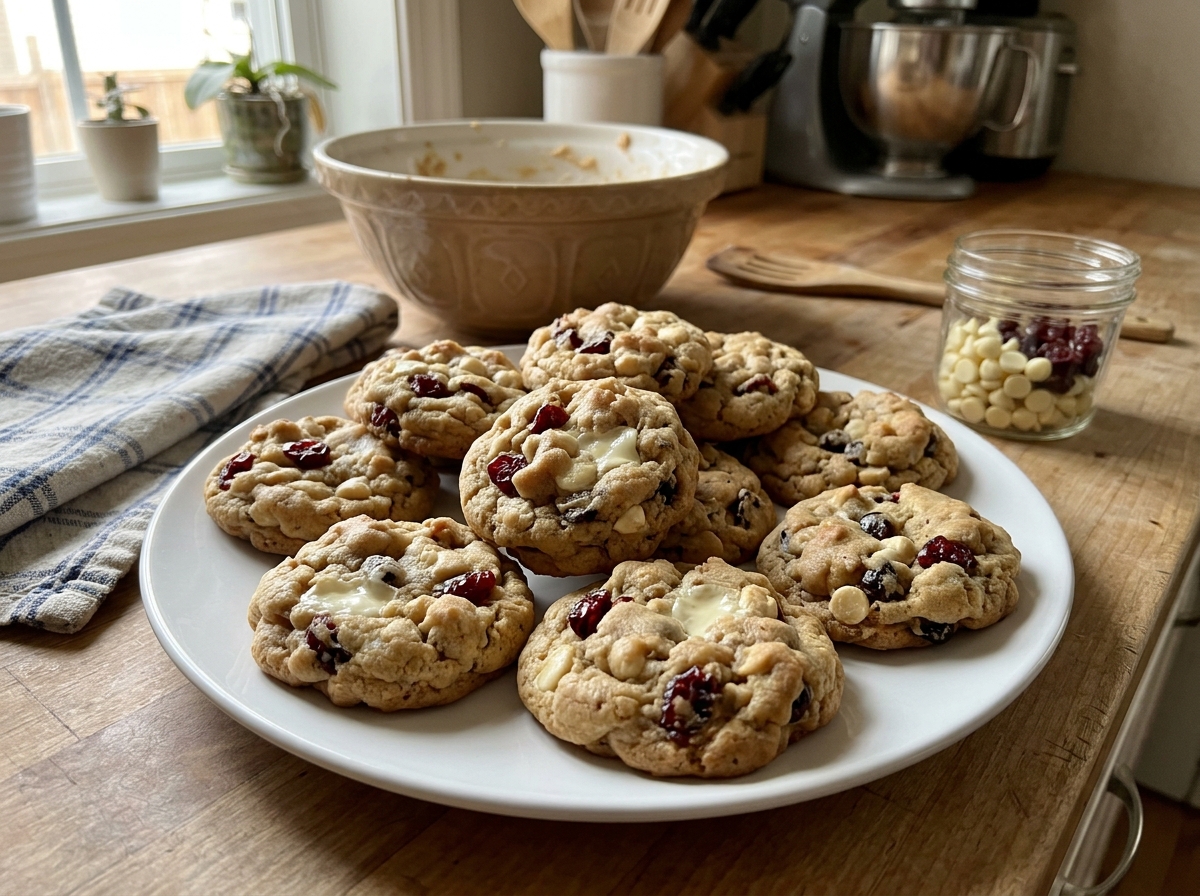
Soft and Chewy White Chocolate Cranberry Cookies
Soaking dried cranberries in hot water for ten minutes before mixing them into dough prevents them from robbing moisture from the surrounding crumb. Most white chocolate cranberry recipes turn dry within a day because dehydrated fruit pulls water out of the cookie matrix as it rests. Combining hydrated cranberries with cornstarch and a high ratio of dark brown sugar produces a thick cookie with crisp edges and a soft center.
Why This Cookie Chemistry Produces Soft, Chewy Centers
Understanding how fat, sugar, and moisture interact in cookie dough keeps your baked goods soft for days. We use three specific culinary science principles in this recipe to ensure consistent results every time you bake.
Hydrating Dried Fruit First
Dried cranberries are dehydrated to roughly 15 percent moisture content. When baked directly in dough, they act like tiny sponges, sucking up liquid from the surrounding flour matrix during baking and cooling. Soaking the berries in hot water for 10 minutes rehydrates the cell walls of the fruit. Draining and patting them dry ensures they stay juicy without watering down your cookie dough.
The Role of Cornstarch and Extra Egg Yolk
Cornstarch tenderizes the dough by diluting gluten formation from the all-purpose flour. Gluten forms strong protein webs when liquid hits flour; cornstarch interrupts those webs, creating a softer crumb structure. Adding an extra egg yolk introduces lecithin and emulsified fat without adding extra egg white water. This increases richness and creates a bendable, chewy bite.
Brown Sugar and Moisture Retention
Dark brown sugar contains molasses, which is naturally hygroscopic. This means it actively attracts and holds onto atmospheric moisture even after baking. Using a high ratio of brown sugar to granulated white sugar creates rich caramel flavors while keeping the center of the cookie dense and moist. Granulated sugar provides crispness around the outer edges.
Key Ingredients and Smart Substitutions
Every ingredient in this recipe serves a technical purpose. Here is how to select the right components and what happens if you need to swap them out.
- White Chocolate Chips or Bar: Look for white chocolate made with real cocoa butter rather than palm oil or hydrogenated fats. True white chocolate melts smoothly into creamy pockets. If you substitute dark chocolate or milk chocolate chips, reduce the added brown sugar by two tablespoons to balance overall sweetness.
- Dried Cranberries: Choose sweetened dried cranberries that feel soft before soaking. For a tarter flavor, you can use dried tart cherries, though you should chop them coarsly if they are large.
- Unsalted Butter: Softened room-temperature butter (around 65°F) traps air when whipped with sugar, creating structure. If you only have salted butter, omit the added fine sea salt entirely. Avoid melted butter unless you plan to chill the dough for at least four hours, as warm fat causes excessive spreading.
- Cornstarch: This starch softens the protein structure of all-purpose flour. If you do not have cornstarch, substitute an equal amount of arrowroot powder or use cake flour for a portion of the all-purpose flour.
- Dark Brown Sugar: Dark brown sugar delivers 10 percent molasses content, providing moisture and a slight acidity that reacts with baking soda. Light brown sugar works as a direct substitute, though the final cookie will have a lighter color and milder flavor.
Step-by-Step Baking Cues and Timing
Relying solely on an oven timer can lead to overbaked, dry cookies. Use these visual and physical cues to gauge perfection at every stage of the baking process.
Step 1: Hydrating and Drying the Cranberries
Pour boiling water over the cranberries in a small bowl and let them sit for 10 minutes. The berries should plump up slightly and look shiny. Drain them in a strainer and press them firmly between paper towels until the exterior feels completely dry. Excess surface water will alter the dough’s hydration ratio.
Step 2: Creaming the Butter and Sugars
Beat the softened butter, dark brown sugar, and granulated sugar on medium speed for a full 2 minutes. The mixture should change from dense and dark to pale brown and fluffy. Stop when the sugar granules are largely incorporated and no butter lumps remain.
Step 3: Mixing Dry Ingredients and Add-Ins
Fold the dry ingredients into the wet mixture using a silicone spatula just until no streaks of raw flour remain. Overmixing develops gluten, which makes cookies tough. Gently fold in the drained cranberries and white chocolate chunks by hand to keep the chocolate pieces intact.
Step 4: Judging Doneness in the Oven
Bake at 350°F (177°C) for 10 to 12 minutes. Look for pale golden-brown edges that are set, while the center still appears soft and slightly underbaked. The top surface should lose its wet sheen but remain puffy. Do not wait for the centers to brown; carryover heat on the hot baking sheet finishes cooking the centers during the 10-minute rest on the tray.
Common Cookie Pitfalls and Quick Fixes
Even small errors in measuring or temperature can ruin the texture of white chocolate cranberry cookies. Here are the most frequent mistakes home cooks make and how to prevent them.
- Problem: Cookies spread into thin, greasy puddles.
Cause: The butter was too warm when creamed, or the dough was baked immediately without chilling.
Fix: Chill the shaped dough balls in the refrigerator for 60 minutes before baking. Chilling solidifies the fat so the cookie sets before the butter melts completely in the oven. - Problem: Hard, dry, or cakey cookies.
Cause: Scooping flour directly with a measuring cup packs down the flour, adding up to 25 percent extra dry weight. Skipping the cranberry soak also steals moisture.
Fix: Fluff your flour with a fork, spoon it into the measuring cup, and sweep it level with a knife. Always rehydrate the dried fruit. - Problem: White chocolate burns or turns grainy.
Cause: High-heat baking burns cocoa butter, and low-quality chips with vegetable oils scorch easily.
Fix: Use quality white chocolate containing real cocoa butter, keep pieces embedded in dough, and do not bake above 350°F. - Problem: Pale cookies with no edge crispness.
Cause: Oven temperature running too low or using cold baking sheets.
Fix: Use an oven thermometer to verify your oven reaches 350°F. Always let baking sheets cool completely between batches.
Flavor Variations and Custom Additions
Once you master the base recipe, try these simple tweaks to customize the flavor profile for different occasions.
- Orange Zest and Pecan: Grate 1 tablespoon of fresh orange zest into the sugar before creaming, and add 1/2 cup of toasted chopped pecans along with the cranberries. Citrus oils highlight the tartness of the cranberries and balance sweet white chocolate.
- Gluten-Free Swap: Substitute the all-purpose flour with an equal weight of a 1-to-1 gluten-free baking flour blend that contains xanthan gum. Rest the prepared dough in the refrigerator for 45 minutes to allow the rice flour to hydrate properly before baking.
- Spiced Edition: Whisk 1/2 teaspoon of ground cinnamon and 1/4 teaspoon of ground nutmeg into the dry ingredients. This adds a warm spice note that complements white chocolate.
- Dark Chocolate Chunk Swap: Replace half of the white chocolate with semi-sweet dark chocolate chunks (60% cacao) to cut through sweetness for a more complex flavor.
Storage, Freezing, and Reheating Instructions
Proper storage maintains the chewy texture of these cookies for up to a week at room temperature.
Room Temperature Storage: Store baked, cooled cookies in an airtight container at room temperature for up to 5 days. Place a single slice of plain white sandwich bread inside the container; the cookies absorb moisture from the bread without absorbing flavor, staying soft longer.
Freezing Baked Cookies: Allow cookies to cool completely on a wire rack. Layer them between sheets of parchment paper in a freezer-safe container or zip-top bag. Freeze for up to 3 months. Thaw at room temperature for 20 minutes before serving.
Freezing Cookie Dough Balls: Scoop portioned dough balls onto a parchment-lined baking sheet and freeze for 1 hour until solid. Transfer frozen balls to a sealed freezer bag for up to 3 months. Bake straight from the freezer at 350°F, adding 1 to 2 extra minutes to the total bake time.
Reheating: Warm individual cookies in the microwave on high power for 8 to 10 seconds to restore the fresh-baked texture and soften the white chocolate chunks.
Frequently Asked Questions
Why did my white chocolate cranberry cookies turn out hard?
Hard cookies usually result from overmeasuring flour or skipping the step of soaking dried cranberries. Measuring flour by scooping directly into the cup packs in extra weight, creating a dry dough. Additionally, dry cranberries absorb liquid from the batter during baking if they are not hydrated first, drying out the surrounding crumb.
Can I use fresh cranberries instead of dried cranberries?
Fresh cranberries contain significantly more liquid and acid, which will cause the dough to spread excessively and turn soggy. If you want to use fresh cranberries, chop them coarsely, toss them with one tablespoon of granulated sugar, and roast them at 350°F for 10 minutes to reduce water content before folding them into the dough.
Should I chill white chocolate cranberry cookie dough before baking?
While chilling is not strictly mandatory, resting the dough for 60 minutes in the refrigerator improves flavor and controls spread. Chilling solidifies the butter so the fat melts slowly in the oven, resulting in a thicker cookie with a soft, bendable center.
Can I substitute white chocolate chips with white chocolate baking bars?
Chopped white chocolate baking bars actually work better than standard chips because quality bars contain real cocoa butter without chemical stabilizers. Chopping a bar creates small flakes that disperse through the dough alongside larger melting pockets.
Soft and Chewy White Chocolate Cranberry Cookies
Ingredients
Equipment
Method
- Place 1 cup of dried cranberries in a small bowl, pour 0.5 cup of hot water over them, and let stand for 10 minutes to plump.
- Drain the cranberries through a fine-mesh strainer and press them thoroughly between layers of paper towels to remove all surface moisture.
- Whisk together 2.25 cups all-purpose flour, 1 tsp cornstarch, 0.75 tsp baking soda, and 0.5 tsp fine sea salt in a medium bowl until blended.
- Combine 0.75 cup softened unsalted butter, 0.75 cup packed dark brown sugar, and 0.5 cup granulated sugar in a stand mixer bowl; beat on medium speed for 2 minutes until pale and fluffy.
- Add 1 large egg, 1 large egg yolk, and 2 tsp vanilla extract to the creamed mixture; beat on medium-low speed for 1 minute until incorporated.
- Scrape down the sides of the bowl, add the dry ingredient mixture, and mix on low speed just until no white flour streaks remain.
- Gently fold in the dried cranberries and 1.25 cups white chocolate chips using a silicone spatula until evenly distributed.
- Cover the bowl with plastic wrap and chill in the refrigerator for 60 minutes.
- Preheat your oven to 350°F (177°C) and line two large baking sheets with parchment paper.
- Scoop 2-tablespoon balls of dough using a #40 cookie scoop and place them 2 inches apart on the prepared baking sheets.
- Bake at 350°F for 10 to 12 minutes, until the edges are light golden brown and the centers remain soft and slightly pale.
- Remove sheets from the oven and let cookies rest on the warm trays for 10 minutes before transferring them to a wire cooling rack.